
Home · Science · Oct 8 archive
Neutrino Physicist Halzen Wins 2026 Nobel Prize
Confirmed
In Short: Francis Halzen, a physicist at the University of Wisconsin-Madison, was awarded the 2026 Nobel Prize in Physics for his work on the IceCube Neutrino Observatory.
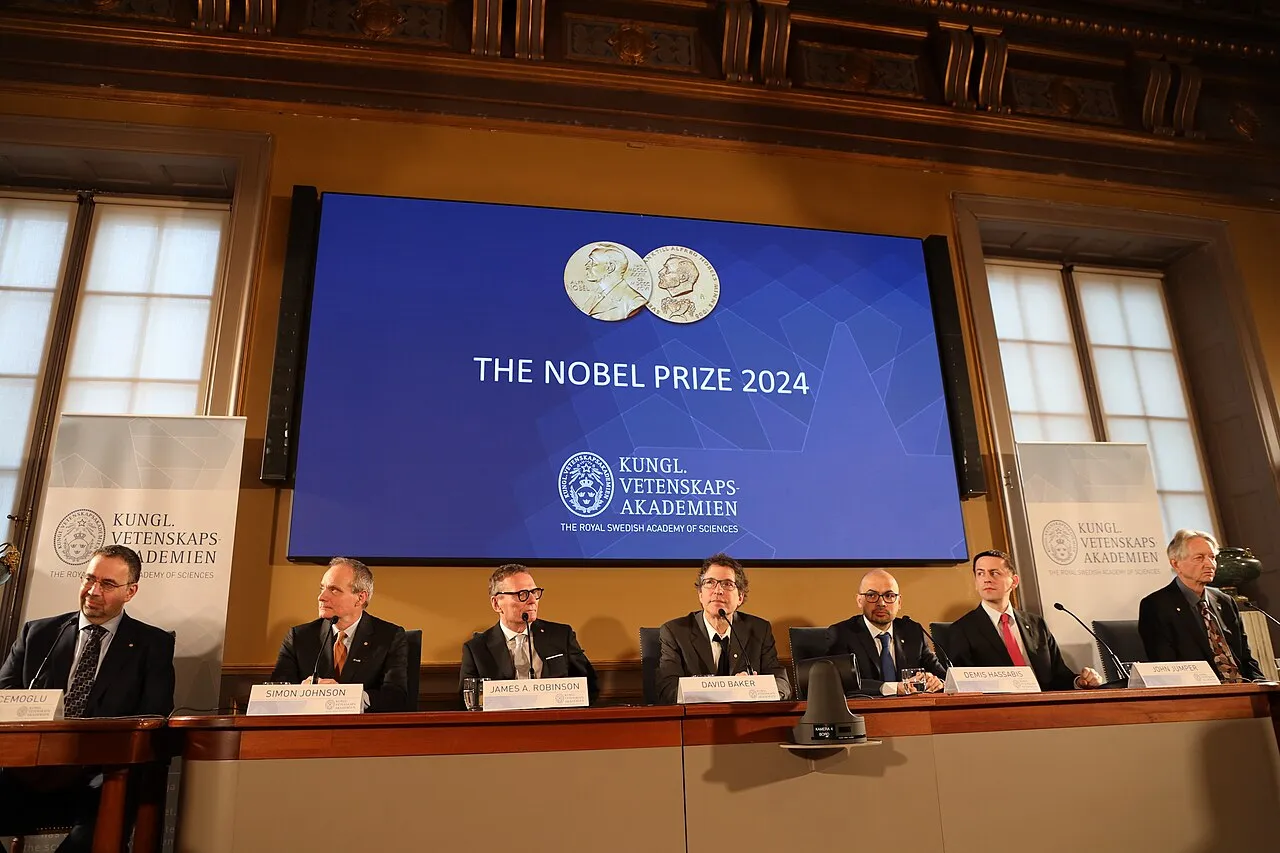
Francis Halzen, a physicist at the University of Wisconsin-Madison, was awarded the 2026 Nobel Prize in Physics for his work on the IceCube Neutrino Observatory, which has transformed our understanding of the universe by detecting high-energy neutrinos from beyond our galaxy.
Halzen, 82, led the development of IceCube, a cubic kilometer of Antarctic ice fitted with light sensors to detect particles called neutrinos.
The observatory, funded by the National Science Foundation and completed in December 2010, opened up the hunt for ghostly neutrinos from the depths of space.
In 2017, IceCube detected a high-energy neutrino from a supermassive black hole at the center of a distant galaxy in the direction of the constellation Orion.
Halzen emphasized that his work was the result of a large collaboration with other researchers, stating, “This reflects on the really courageous people who joined me in this project when really no respectable conservative physicist would have joined me.”
Michael Moloney, chief executive officer for the American Institute of Physics, said, “This experiment in the Antarctic is a revolutionary way of understanding the universe that we didn't have before.”
The Nobel Committee for Physics praised Halzen, saying, “Francis Halzen has led an international team of researchers and engineers who have provided us with a fantastic instrument.”
Halzen, speaking by phone from Italy, said, “It was a great surprise, and I obviously didn’t expect it.”
The IceCube Neutrino Observatory has detected dozens of high-energy neutrinos, but only a few could convincingly be traced back to objects and phenomena in the distant universe.
The observatory’s ability to detect neutrinos has opened an entirely new field of neutrino astronomy, providing scientists with an almost direct pointer to the source of these particles.
In 2022, IceCube identified neutrinos streaming from the active galaxy NGC 1068, and in 2023, it produced the first image of the Milky Way made with neutrinos rather than light.
Halzen’s work has been recognized with the full prize of 12 million Swedish kronor, about $1.2 million, which he will accept in Stockholm on Dec. 10.
What this adds
The 2026 Nobel Prize in Physics recognizes Halzen's leadership in developing IceCube, which has significantly advanced our understanding of high-energy neutrinos and their origins.
Halzen's work builds on decades of neutrino research, including the discovery of the muon neutrino in 1962 and the solution to the solar neutrino problem in 2002.
The IceCube Neutrino Observatory's multimessenger astronomy approach combines different sources of information to provide a more comprehensive view of cosmic phenomena.
Halzen's Nobel Prize is the latest in a series of recognitions for neutrino research, including previous Nobel Prizes in 1988, 1995, 2002, and 2015.
Background
Francis Halzen, a physicist at the University of Wisconsin-Madison, was awarded the 2026 Nobel Prize in Physics for his pioneering work on the IceCube Neutrino Observatory, which has transformed our understanding of the universe by detecting high-energy neutrinos from beyond our galaxy.
The Nobel Prize in Physiology or Medicine 2026 was awarded to Karl Deisseroth, Peter Hegemann, and Georg Nagel for their work in optogenetics.
What's confirmed
- Francis Halzen of University of Wisconsin-Madison led development of IceCube Neutrino Observatory.
- Halzen, a physicist at the University of Wisconsin-Madison in the U.S., said the work was a massive collaborative effort.
- "This experiment in the Antarctic is a revolutionary way of understanding the universe that we didn't have before," said Michael Moloney, chief executive officer for the American Institute of Physics.
- Funded by the National Science Foundation and completed in December 2010, IceCube opened up the hunt for ghostly neutrinos from the depths of space.
- “It was a great surprise, and I obviously didn’t expect it,” Halzen said during a news conference in Stockholm, Sweden, speaking by phone from Italy.
What's still developing
- In 2002, scientists at the Sudbury Neutrino Observatory (or SNO) announced they had solved the solar neutrino problem.
- John Updike’s 1960 poem, “ Cosmic Gall,” pays tribute to the two most defining features of neutrinos: They have no charge, and for decades, physicists believed they had no mass (they actually have a teeny bit of mass).
- In 1962, physicists discovered a second type (“flavor”) of neutrino, the muon neutrino.
- Neutrinos were first proposed by Wolfgang Pauli in a 1930 letter to colleagues.
- That’s why Isaac Asimov dubbed them “ghost particles.” That low rate of interaction makes neutrinos extremely difficult to detect, but because they are so light, they can escape unimpeded (and thus largely unchanged) by collisions with other particles of matter.
- The only time we detected neutrinos from beyond our solar system was in 1987 when a supernova in the Large Magellanic Cloud triggered the detection of a handful of neutrinos at multiple observatories around the globe.
- In 1988 it was awarded for the discovery of the muon neutrino, in 1995 for the detection of neutrinos, in 2002 for detecting cosmic neutrinos, and in 2015 for neutrino oscillations.
- That is exactly what Hegemann, Nagel and the third Nobel-prize winner, Karl Deisseroth, a psychiatrist and bioengineer at Stanford University in California, went on to do.... and how it’s used, with a cool example: The ability to control nerve cells with light is called optogenetics.
- There’s a clear discussion of the Prize-winning research at The Conversation (click below to read): Scientists who worked out how to control brain cells with light have won this year’s Nobel prize in physiology or medicine.
- Halzen, 82, a professor at the University of Wisconsin-Madison, was visiting the city of Turin in northern Italy and spoke to reporters there a day after the Nobel announcement.
- "In fact, the first neural nets appeared in the late 1980s, and I am very proud that I wrote a paper in 1991 proposing to use AI to analyse the data of part of the classical physics experiment," Halzen said.
- Together, these different sources of information have been dubbed “multimessenger” astronomy.
Sources
- Ars Technicalink
- Los Angeles Timeslink
- Nature World Newslink
- Nwaonlinelink
- Skyandtelescopelink
- The Indian Expresslink
- UW–Madison Newslink
- Universe Todaylink
- Whyevolutionistruelink
- Thepeninsulaqatarlink
- BBClink
- WarpBeat — background on Neutrino Physicist Wins 2026 Nobel Prize for IceCube Discovery link
- WarpBeat — background on Nobel Prizes 2026: What to Know link
- Al Jazeera English — video link