
Home · Politics
EPA Says Iowa Detonation Did Not Increase Lead Levels in Water
· Confirmed
In Short: The Environmental Protection Agency reported that the controlled detonation of a stockpile of deteriorating explosives in Iowa did not result in an increase of lead in water bodies that serve as sources of drinking water.
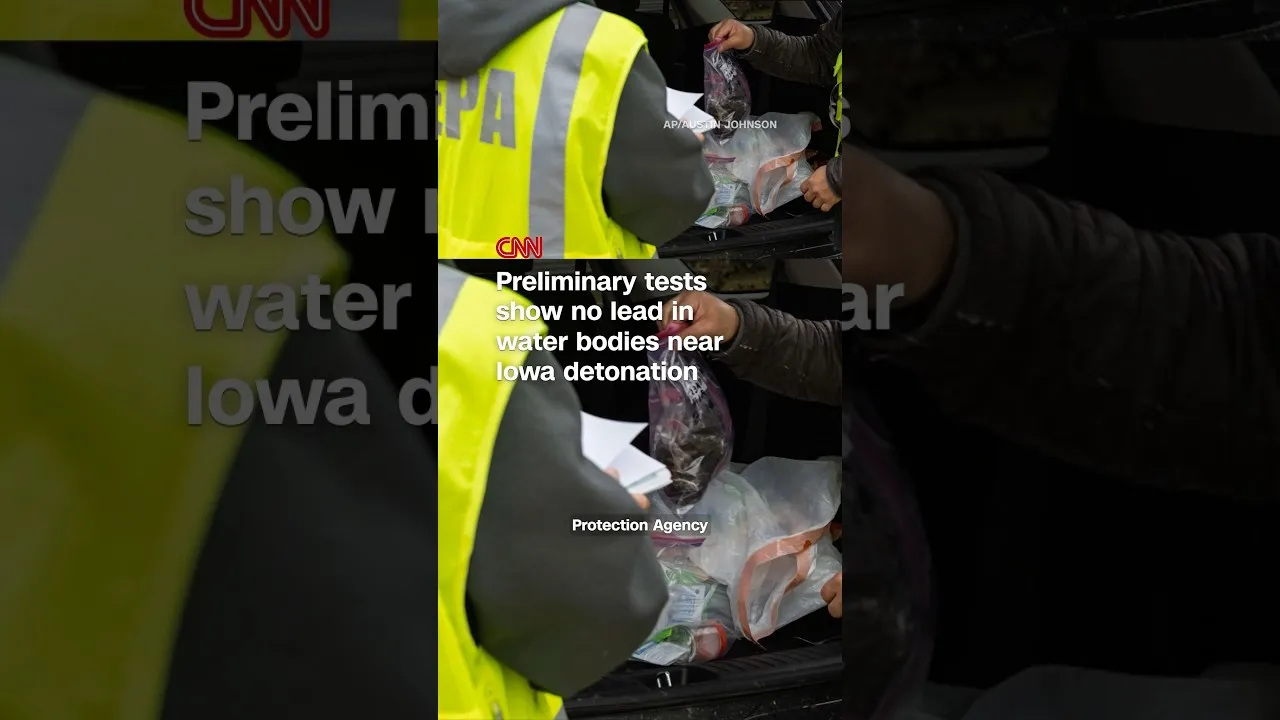
Preliminary tests show no lead in water bodies near Iowa detonation. CNN
The EPA reported Saturday that preliminary results from water samples taken from public water supplies following the blast did not detect lead, according to AZ Family and Azfamily.
The agency collected more than 1,500 samples of air, water, soil, and dust before the detonation and took over 1,600 samples afterward.
The EPA said its air monitors did not detect lead for 30 hours after the detonation, leading the agency to turn off those monitors Thursday afternoon.
First laboratory results following the detonation show no detectable lead in drinking water sources tested after the blast, according to the U.S. Environmental Protection Agency.
The EPA reported that crews had completed 88% of follow-up sampling at homes where they collected samples before the detonation.
Environmentalists had sued to stop the detonation, winning a stay from the appeals court, but the federal appeals court later cleared the way for the detonation.
The detonation of 68 barrels of lead azide, used in military munitions and deteriorating underground, was initially planned for Friday but was delayed multiple times due to public concern.
The Army acknowledged that the blast would release lead particles and hazardous gas, like hydrazoic acid, which is colorless, volatile, and explosive.
FEMA advised residents within 20 miles southwest of the plant to stay indoors with windows closed to avoid airborne lead dust, noise, and vibration.
The plaintiffs argued that nearby residents were only given a week’s notice and that the blasts could send lead dust as far as 160km (100 miles).
The EPA said it collected more than 1,632 air, water, soil and dust samples ahead of Wednesday's destruction of the lead azide stockpile, followed by 1,607 samples after the detonation, the agency said.
The agency did find low levels of lead at four water-sampling locations in Illinois and Missouri, including on the Mississippi River.
What this adds
The EPA found low levels of lead at four water-sampling locations in Illinois and Missouri, including on the Mississippi River.
The detonation was postponed to Monday, Nov. 23, by Adam Telle, noting that “public safety is the Army’s top priority.”
Background
The Environmental Protection Agency (EPA) reported Saturday that the controlled detonation of a stockpile of deteriorating explosives in Iowa did not result in an increase of lead in water bodies that serve as sources of drinking water.
The U.S. Army has postponed the controlled detonation of nearly 10,000 pounds of lead azide at the Iowa Army Ammunition Plant in Middletown until early next week, Army officials announced Thursday.
What's confirmed
- The EPA reported that preliminary results did not detect lead in the 38 water samples taken from public water supplies following the blast.
- The EPA reported that its air monitors did not detect lead for 30 hours after Wednesday’s detonation, so the agency turned those monitors off Thursday afternoon.
- The EPA took more than 1,500 samples of air, water, soil and dust before the detonation.
- The agency did find low levels of lead at four water-sampling locations in Illinois and Missouri, including on the Mississippi River.
- MIDDLETOWN, Iowa — The first laboratory results following Wednesday's controlled detonation of lead azide at the Iowa Army Ammunition Plant show no detectable lead in drinking water sources tested after the blast, according to the U.S. Environmental Protection Agency.
- Earlier Friday, the EPA reported crews had completed 88% of follow-up sampling at homes where they collected samples before the detonation.
- The Environmental Protection Agency announced Saturday that initial post-detonation testing found no evidence of increased lead levels in nearby drinking water sources following the controlled detonation of deteriorating explosive material in Middletown, Iowa.
- Video footage from several miles away showed two white plumes rising over the detonation site before quickly dissipating.
- The detonation of 68 barrels of lead azide was initially planned for Friday, but the Army has since changed the date three times following an outpouring of public concern about potential health and environmental effects.
What's still developing
- The controlled detonation of more than 60 barrels — roughly five tons — of unstable lead azide at the Iowa Army Ammunition Plant in Middletown, Iowa is complete, according to Army officials.
- United States President Donald Trump has ordered the military to delay a planned controlled detonation of more than four tonnes of explosives in the Midwestern state of Iowa until a federal appeals court and the state’s governor sign off on it.
- A federal appeals court on Monday cleared the way for the U.S. Army to detonate several tons of degraded bomb-making material at an Iowa ammunition plant, finding that the proposal should adequately limit the dispersal of lead dust into the atmosphere.
- Environmentalists sued last week to stop the detonation at the site near Middletown, not far from the Mississippi River about 90 miles (140 km) south of Cedar Rapids.
- A U.S. appeals court said Monday that it would allow the Trump administration and the Army to move forward with the detonation of lead azide in Iowa, denying an emergency request by environmental groups to halt the Army’s permit.
Sources
- Azfamilylink
- CBS Newslink
- Cbs2Iowalink
- NPRlink
- Scrippsnewslink
- Wkowlink
- PBSlink
- Iowacapitaldispatchlink
- BBClink
- Livemintlink
- Al Jazeeralink
- Kccilink
- Foodfixlink
- NBC Newslink
- Fox9link
- WarpBeat — background on EPA Says Iowa Detonation Did Not Increase Lead Levels in Water link
- CNN — video link
- 12 AM Update — video link
- NWN — video link
- Fox News — video link
- We Are Iowa Local 5 News — video link
- Mortal News — video link