
Home · World · Nov 10 archive
Greenland's Ice Sheet Once Retreated 60 Miles Due to Massive Flood
· Confirmed
In Short: Scientists discovered a massive flood of subglacial lakewater caused Greenland's ice sheet to retreat over 60 miles, highlighting the impact of climate change.
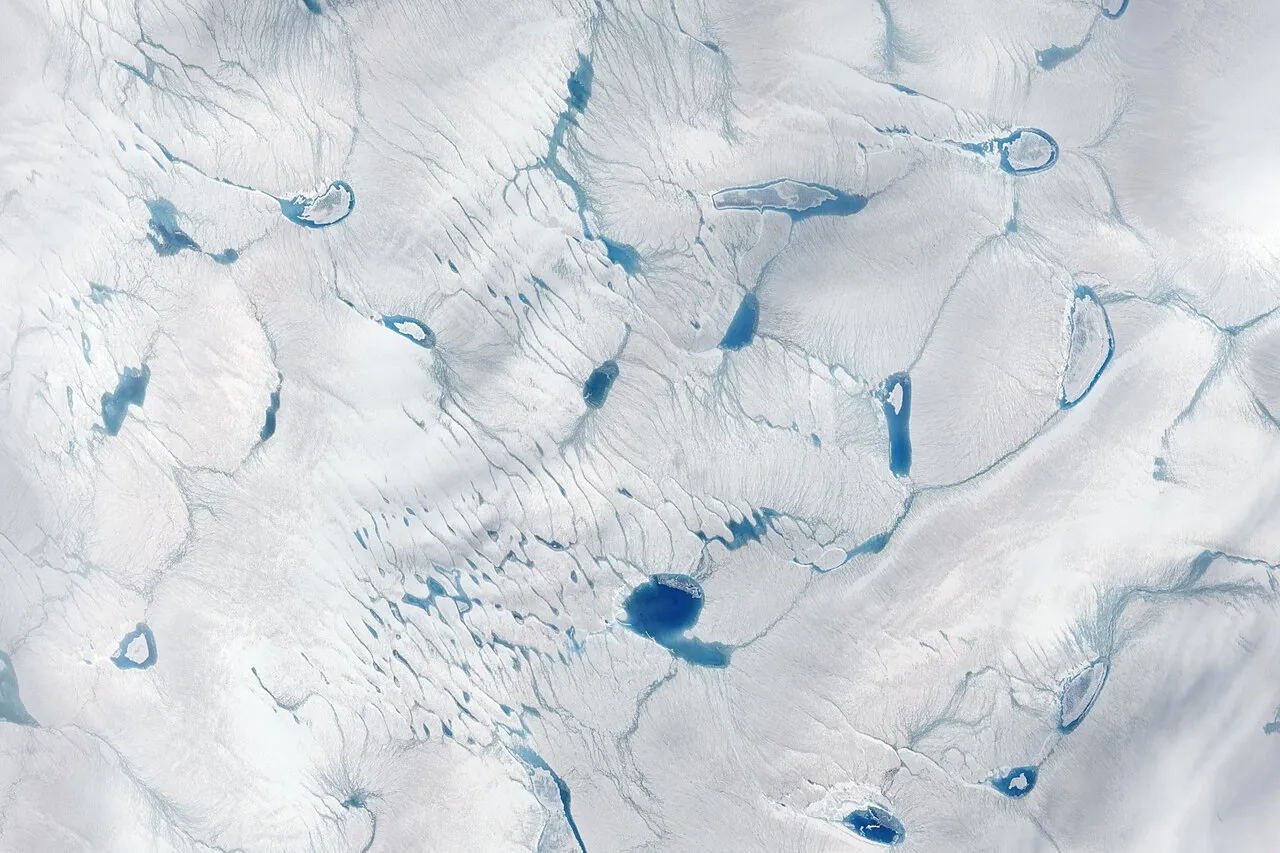
A new study published in the journal Nature Geoscience reveals that a massive flood of subglacial lakewater caused Greenland's ice sheet to retreat over 60 miles, a phenomenon never before observed.
The event, which occurred in 2014, saw a 278-feet-deep crater open up across a 0.7-square-mile area, causing 23 billion gallons of water to flood out over just ten days.
Lead author Jade Bowling from Lancaster University explained, “The existence of subglacial lakes beneath the Greenland Ice Sheet is still a relatively recent discovery, and — as our study shows — there is still much we don’t know about how they evolve and how they can impact on the ice sheet system.”
Scientists were caught off guard by the sheer volume of water that burst through the ice sheet, spilling across its surface. “When we first saw this, because it was so unexpected, we thought there was an issue with our data,” Bowling said.
The discovery highlights the fierce power stored in meltwater lurking beneath the thick ice sheet. “Importantly, our work demonstrates the need to better understand how often they drain, and, critically, what the consequences are for the surrounding ice sheet,” Bowling added.
The Greenland Ice Sheet, which spans 1.7 million square kilometers and measures more than 3 kilometers at its thickest point, is under threat from global warming. “Satellites represent an essential tool for monitoring the impacts of climate change, and provide critical information to build realistic models of how our planet may change in the future,” said coauthor Mal McMillan.
The event also defies predictions of how the Greenland ice sheet evolves over time, even when taking climate change and the accelerating melting of ice sheets into consideration. “The type of molecular analysis we did in this study is something we do all the time in my lab, but interpreting the results was unusually challenging,” said Thomas.
What this adds
The study adds to the understanding of how subglacial lakes and their drainage events impact the Greenland Ice Sheet, providing new insights into the dynamics of ice sheet behavior under climate change.
The research also underscores the importance of continued monitoring and analysis of subglacial environments to better predict future changes in ice sheet dynamics.
Background
Scientists discovered a massive flood of subglacial lakewater caused Greenland's ice sheet to retreat over 60 miles, highlighting the impact of climate change.
Scientists discovered a massive flood of subglacial lakewater caused Greenland's ice sheet to retreat over 60 miles, highlighting the impact of climate change.
What's confirmed
- As global warming continues to threaten the Earth’s polar ice sheets, scientists are hopeful that these kinds of measurements can give us a better sense of how human activity is actively reshaping the planet.
- The event also defies our predictions of how the Greenland ice sheet evolves over time, even when taking climate change and the accelerating melting of ice sheets into consideration.
- Sediment beneath a secret Cold War base reveals a time when warmer summers helped push Greenland’s ice more than 60 miles back from its current edge.
- Greenland is capped with a vast ice sheet that spans 1.7 million square kilometers (656,000 square miles) and measures more than 3 kilometers (1.9 miles) at its thickest point.
- Using the technique, researchers manually mapped 1,943 subglacial valleys beneath the Greenland Ice Sheet, about a third of which are newly identified.
- Over just ten days in 2014, they watched as a 278-feet-deep crater opened up across a 0.7-square-mile area, causing 23 billion gallons of water to flood out.
What's still developing
- Exposing the ground at Camp Century would have required the ice sheet’s edge in that region to retreat more than 60 miles (97 kilometers) from its present position.
- In addition to the volcano, the authors discovered a 5,000-km2 (1930 square mile) area of volcanic deposits within the volcano’s perimeter presenting a large number of low, rounded and elongated, blister-like mounds.
- A scientist who spent decades convincing colleagues that the Antarctic ice sheet could serve as a telescope has won the 2026 Nobel Prize in Physics.
- See Also Analysis: Newly Released Version of Once-Classified Report Presents New Clues About the U.S. Government’s UAP Investigations “Mars Express can also track how the cloud is changing on timescales of mere hours, which gives us an unrivalled view of short-lived phenomena on the planet,” says ESA Mars Express Project Scientist Colin Wilson.
- Some scientists have argued it was caused by erosion by massive ice sheets during the Snowball Earth period between 720 million years and 635 million years ago.
- This map shows locations of the perennial aquifer on the Greenland ice sheet detected by radar and cores in 2011.
- Scientists found the reservoir while drilling in southeast Greenland in 2011 to study snow accumulation.
- About 416,000 years ago, the ground beneath Greenland’s Camp Century was exposed to the sky.
- During drilling in the 1960s, researchers recovered sediment from nearly a mile (1.6 kilometers) below the surface.
- J. 7 216 Gilbert-Janizek didn't start from scratch.
- Trump has described the arrangement as giving the US "permanent control" over security in Greenland and said Washington would begin developing a larger military presence on the island.
- Now, the US president says Washington has secured a deal giving it permanent control over Greenland's security, while Denmark and Greenland insist that sovereignty remains where it is.