
Home · Science · Nov 8 archive
Chinese Scientists Set Record for Coldest Temperature in Space
· Confirmed
In Short: Scientists aboard China's Tiangong space station achieved a record-low temperature of about 10 trillionths of a kelvin in a Bose-Einstein condensate experiment.
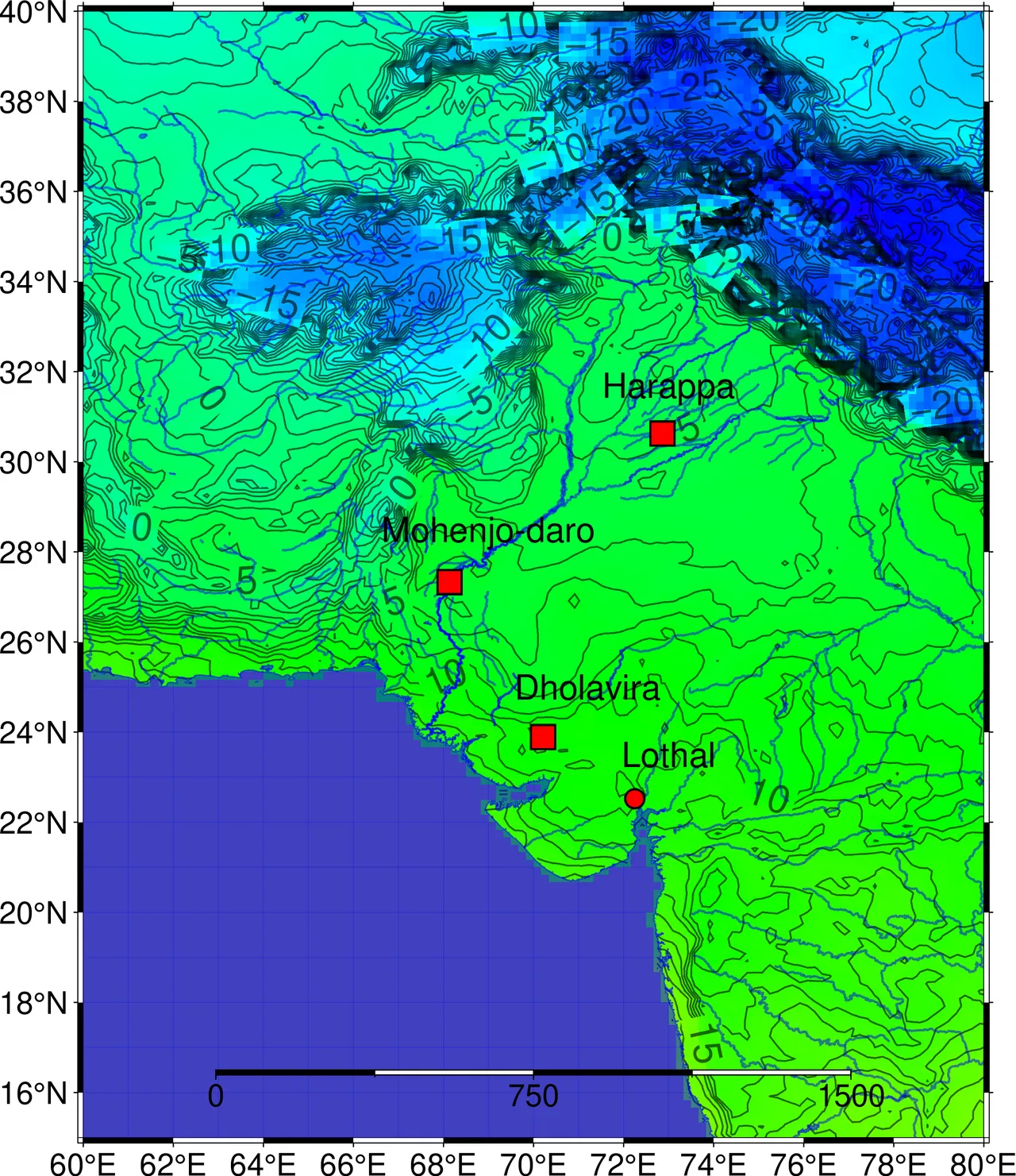
Harappan culture area present temperature of coldest month 1 1 1 1.
China sets world record for coldest temperature aboard space station. CGTN Podcasts
Scientists aboard China's Tiangong space station achieved a record-low temperature of about 10 trillionths of a kelvin in a Bose-Einstein condensate (BEC) experiment, marking a significant milestone in the quest to approach absolute zero.
The experiment, conducted in microgravity conditions, utilized the apparent weightlessness of atoms to reach this unprecedented temperature. Temperature is tied to atomic motion, and in microgravity, atoms can spread more slowly, allowing scientists to define an effective temperature based on their behavior.
The team cooled a cloud of rubidium atoms to an equivalent temperature of 9.7 picokelvin, 14 orders of magnitude below the roughly 300 kelvin room temperature on Earth, and kept it stable for observation for seven seconds.
The research team, organized by the Technology and Engineering Center for Space Utilization under the Chinese Academy of Sciences, included Beijing University and the Shanghai Institute of Optics and Fine Mechanics (SIOM) of the CAS.
The record matters less for the number than for what it buys. The extended window to explore physics at such insanely low temperatures could lead to new discoveries in fundamental physics.
The team used laser traps to prepare a rubidium cloud with a record-low equivalent temperature of 9.7 picokelvin. Images taken from two directions revealed how quickly the cloud spread along three axes, providing measurements that suggested the temperature had fallen somewhere between 7.0 and 12.9 picokelvin.
Finding ways to further loosen their grip on the buzzing atomic swarm could allow physicists to tweak the magnetic field to reduce this influence while also hitting even lower temperatures.
The average background temperature of space hovers around 2.7 kelvins, but even empty space is not completely cold. This remarkable accomplishment not only shatters the previous record but also brings scientists closer to the elusive concept of absolute zero, which denotes a temperature of zero kelvins—the theoretical limit where thermal energy is completely absent.
What this adds
The experiment on the Tiangong space station achieved a temperature of about 10 trillionths of a kelvin, which is barely above absolute zero. This is the lowest equivalent temperature ever measured, according to the researchers.
The team's success in achieving such a low temperature in space is a testament to the engineering and scientific advancements made possible by microgravity conditions.
Background
Scientists aboard China's Tiangong space station achieved a record-low temperature of about 10 trillionths of a kelvin in a Bose-Einstein condensate experiment.
Scientists aboard China's Tiangong space station achieved a record-low temperature of about 10 trillionths of a kelvin in a Bose-Einstein condensate experiment.
What's confirmed
- To achieve that record-low chill, scientists took their work to space.
- The atoms orbited Earth aboard China’s Tiangong space station.
- Its equivalent temperature came out at 9.7 picokelvin, with an uncertainty running from 7.0 to 12.9 picokelvin.
- The record matters less for the number than for what it buys.
- It was organized by the Technology and Engineering Center for Space Utilization under the CAS, while completed by Beijing University and the Shanghai Institute of Optics and Fine Mechanics (SIOM) of the CAS.
- Images taken from two directions revealed how quickly the cloud spread along three axes, providing measurements that suggested the temperature had fallen somewhere between 7.0 and 12.9 picokelvin.
- The cloud’s expansion was also tracked far longer than in previous experiments, offering future researchers an extended window to explore physics at such insanely low temperatures.
- At sufficiently low temperatures, multiple atoms occupy the same quantum state, effectively becoming a single wave of matter.
- Aboard China's Tiangong space station in Earth orbit, physicists have achieved a record equivalent temperature of just 9.7 picokelvins – or 0.0000000000097 kelvins – "which is, to our knowledge, the lowest equivalent temperature ever measured," the researchers write in a paper published in Science.
What's still developing
- That’s barely a smidge above absolute zero (−273.15° Celsius).
- Those experiments cooled the atoms to about 100 nanokelvins (nK).
- To create colder BECs, physicists had to get their atoms away from gravity, which squeezes the particles against the electromagnetic field suspending them, driving their temperature up.
- Call it the coolest scientific result ever: Physicists in China have attained a temperature of just 9.7 picokelvins (pK)—less than ten-trillionths of a degree above absolute zero—in a quantum mechanical soup of atoms.
- The UK recorded its hottest summer since records began in 1884, with an average temperature of 16.5°C, exceeding last year's record by 0.4°C.
- The global average surface air temperature reached 16.96°C in August, matching July 2023 as the highest recorded for any month and putting temperatures 1.65°C above the 19th-century pre-industrial average.
- England's driest July on record contributed to drought declarations across half the country, with 54 weather stations breaking daily maximum temperature records.
- Meanwhile, Lake Powell and Lake Mead, fed by the Colorado River, hit record-low levels in August 2026, continuing a trend of water scarcity.
- The result, announced by the Chinese Academy of Sciences' Technology and Engineering Center for Space Utilization on Friday, marks a major step toward absolute zero, the lowest temperature theoretically possible, creating the coldest artificial substance known to date.
- NASA-supported scientists have discovered an organism that lives at extreme temperatures previously thought impossible for complex life.
- Last month was the world’s joint hottest month on record, and the hottest August in history, scientists have said.
- Here are four ways that rising temperatures are affecting weather extremes.
Sources
- JournalArtalink
- Martin Cid Magazinelink
- SSBCracklink
- Science Newslink
- Science | AAASlink
- The Brighter Side of Newslink
- Warpbeatlink
- ScienceAlertlink
- Newatlaslink
- WarpBeat — background on Chinese Scientists Set Record for Coldest Temperature in Space link
- WarpBeat — background on Chinese Scientists Achieve Record-Cold Temperature on Tiangong Space Station link
- CGTN Podcasts — video link
- Science News — video link