
Home · Science · Oct 31 archive
ULA's Vulcan Rocket Set for Return to Flight on November 13
· Confirmed
In Short: Air & Space Forces Magazine and Ars Technica reported that ULA's Vulcan rocket will return to flight on November 13, 2026, following a nine-month pause due to a nozzle issue.
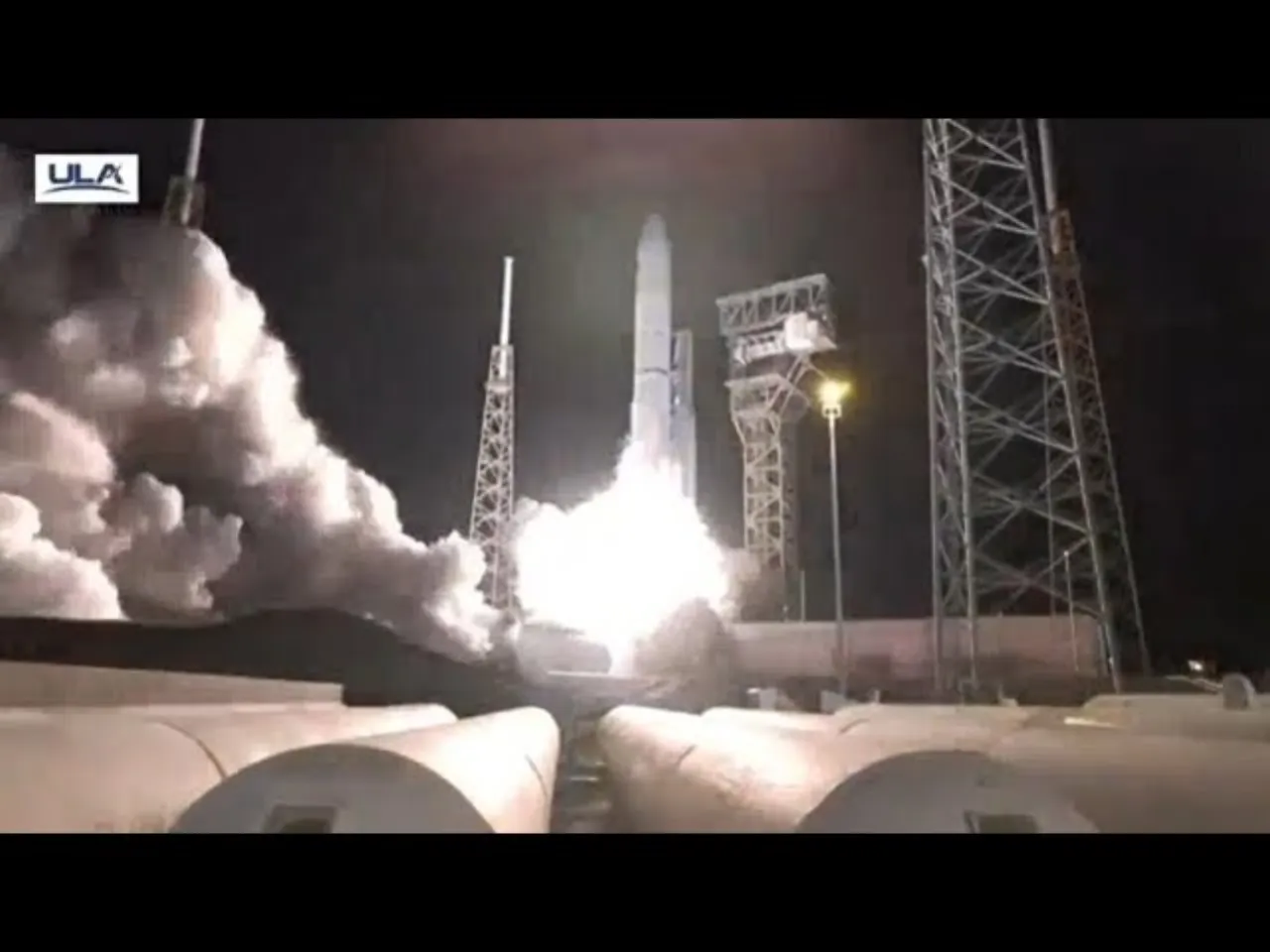
Air & Space Forces Magazine and Ars Technica reported that ULA's Vulcan rocket will return to flight on November 13, 2026, following a nine-month pause due to a nozzle issue. Both outlets noted that the rocket's last flight on February 12, 2026, experienced a nozzle failure, but the payload still reached orbit.
Orlando Sentinel and Spaceflight Now provided additional details, stating that the upcoming mission will launch 40 satellites for Amazon's Leo broadband constellation. The mission, known as Vulcan Leo 1, will be the first to use the shortened LEO-optimized Centaur V upper stage and will be integrated in ULA's new Vertical Integration Facility (VIF-A).
According to Air & Space Forces Magazine, ULA has redesigned the solid rocket booster nozzle to address the anomaly. The company stated, 'The integrated team has made great strides in improving our understanding of the solid rocket booster anomaly and have identified several potential contributors which have been mitigated through design and process improvements to the nozzle.'
Ars Technica reported that ULA has a backlog of more than two dozen national security launches lined up for Vulcan, in addition to another 37 launches for Amazon. The company needs to get the rocket flying regularly to meet its launch manifest.
Orlando Sentinel noted that ULA has only managed five launches this year, with one Vulcan launch and four more with Atlas V rockets. The company had planned to ramp up to 24 launches a year from Florida but has fallen behind.
Spaceflight Now and TalkOfTitusville.com reported that the upcoming mission will add to the nearly 400 Amazon Leo satellites currently in orbit. The mission will be the first to use the Blue Origin BE-4 engine after a previous anomaly that immolated a New Glenn on its launch pad.
Air & Space Forces Magazine and The Register reported that ULA is working closely with Northrop Grumman and the Space Force to resolve the anomaly. General Eric Zarybnisky, the Space Force’s portfolio acquisition executive for space access, said, 'We’re doing our due diligence to make sure that we’re understanding the real fundamental physics that are going on, and making sure we understand what happened and how we correct that.'
Despite the issues, both Air & Space Forces Magazine and Technology Org noted that the rocket's payload still reached orbit in the previous flight, indicating that the anomaly did not prevent the mission from being successful.
All outlets agree that ULA's Vulcan rocket will return to flight on November 13, 2026, with the redesigned nozzle and enhanced integration processes. The mission will launch 40 Amazon Leo satellites and is a critical step for ULA to resume its launch schedule.
What this adds
The BACKGROUND notes that on ULA's plans for the Vulcan rocket's return to flight on November 13, 2026.
Background
United Launch Alliance (ULA) announced Wednesday that its Vulcan rocket will return to flight on November 13, 2026, following a nine-month hiatus due to a solid rocket booster anomaly.
What's confirmed
- “The integrated team has made great strides in improving our understanding of the solid rocket booster anomaly that occurred on the previous Vulcan flight and have identified several potential contributors which have been mitigated through design and process improvements to the nozzle,” ULA said in a statement.
- 28, saying the launch vehicle will fly a redesigned solid rocket booster nozzle that it hopes will correct the issue that caused a Feb.
- “It’ll depend a lot on what we see, not only on the engineering and tests that we’re doing on the ground, but also what we see from the flight data from the commercial missions they fly,” he said.
- ULA revealed Vulcan’s highly anticipated return date Oct.
- United Launch Alliance said its fledgling Vulcan rocket would return to flight Friday, November 13, after a nine-month grounding due problems with its solid rocket boosters.
- United Launch Alliance said Wednesday it plans to launch its Vulcan rocket Friday, November 13th, pending approval from range authorities, ending a nearly nine-month pause in flights.
- It is the first planned launch of Vulcan’s most powerful configuration, the first to use the shortened LEO-optimized Centaur V upper stage and the first Vulcan integrated in ULA’s new VIF-A facility.
- On February 26th, the Space Force announced it would fly no more national security missions on Vulcan until the investigation was complete.
- The mission, called Vulcan Leo 1, will lift off from Space Launch Complex 41 at Cape Canaveral Space Force Station.
- A booster nozzle failed during the rocket’s second certification flight in October 2024.
- The rocket was grounded after a nozzle failed on one of four Northrop Grumman GEM 63XL solid rocket boosters less than 30 seconds into the USSF-87 mission in February.
- A pair of BE-4 engines will power the booster, along with six Solid Rocket Boosters (SRBs).
What's still developing
- “Those flights will have a significant number of solids,” Zarybnisky said.
- Amazon has already flown nine missions with ULA, but only on the few remaining Atlas V rockets, which are smaller and had only sent up 29 satellites at a time.
- But ULA said it’s ready to try Vulcan again implementing some fixes it expects will be more reliable, although it’s not entirely certain why the nozzles were burning through.
- United Launch Alliance thought it had put the problem behind it, but a similar nozzle failure afflicted one of the four boosters less than 30 seconds into Vulcan’s fourth flight in February 2026 on the USSF-87 mission.
- The rocket’s second flight was marred by the disintegration of a nozzle on one of the two 63XL Graphite Epoxy Motors.
- Further testing and analysis will run in parallel with the return-to-flight mission.
- “One of the challenges we see on some swaps is integration timelines and doing the work to understand loads and dynamics and all the analysis work it takes to do that,” he said.
- While the launch was successful—the solid rocket booster anomaly occurred after liftoff—the fallout from the nozzle issue has left Vulcan grounded and has caused significant delays to the slate of military and commercial missions the rocket was scheduled to fly.
- Separately, Blue Origin has been retrofitting BE-4 engines in ULA’s inventory after an anomaly tied to a main oxygen valve in May.
- United Launch Alliance aims to fly Vulcan again on Friday the 13th, targeting Nov.