
Home · World · Oct 20 archive
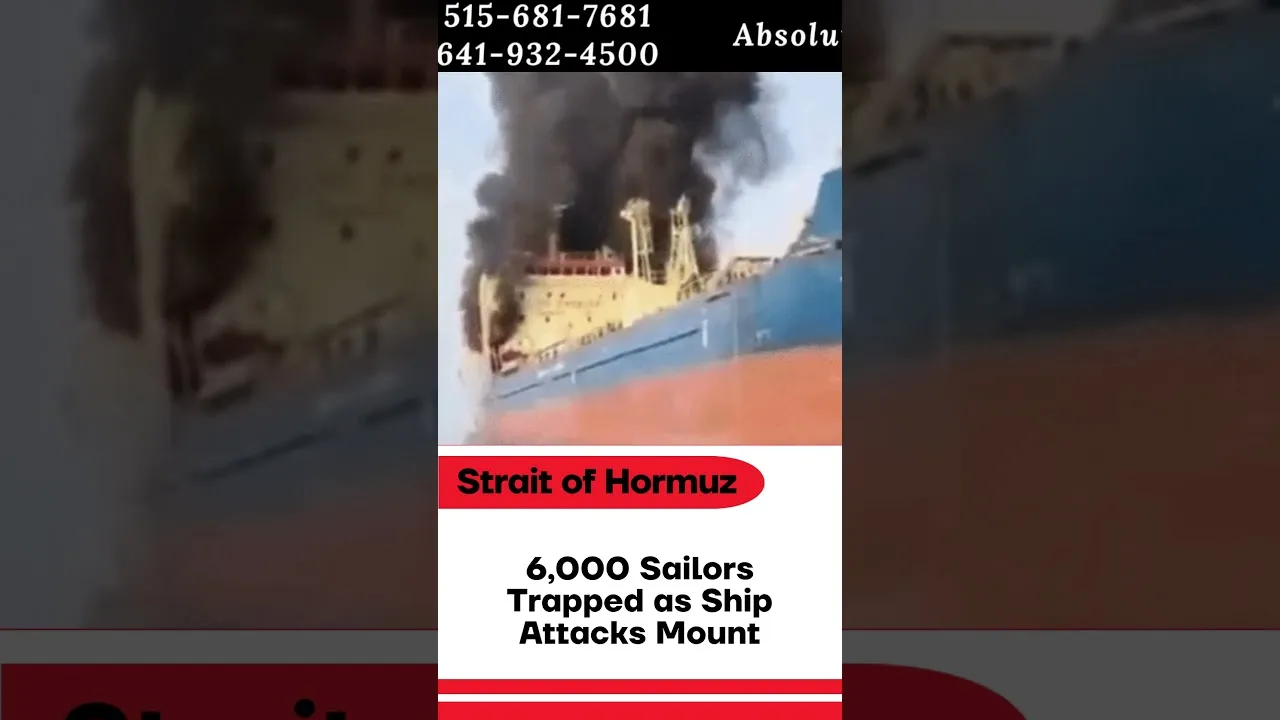
Strait of Hormuz crisis traps 6,000 sailors as attacks on ships mount, UN maritime chief says
· Confirmed
In Short: At least 12 ships were attacked in the week ending October 16, according to the United Kingdom Maritime Trade Operations (UKMTO), with 6,000 sailors trapped in the Strait of Hormuz, amid escalating maritime tensions.
The month has seen the highest number of ship attacks since the start of the US-Israel war on Iran, which began on February 28, with the UKMTO reporting a total of 125 outbound and 129 inbound transits over the last seven days.
The International Maritime Organization (IMO) had recorded 100 confirmed maritime incidents across the region as of October 9, with 24 seafarers killed since the conflict began.
Three oil tankers with their transponders switched off were hit by projectiles while transiting the Strait of Hormuz this week, according to shipping intelligence firm Marisks.
Daily oil shipments through the strategic waterway fell to 12.6 million barrels on October 13, raising fresh concerns over global energy supplies.
Before the United States-Israel war on Iran began on February 28, the strait typically handled about 125 large commercial vessels a day, and shipments through it accounted for about 20 percent of global crude and liquefied natural gas supplies.
The UKMTO has recorded 135 incidents related to the Iran-US conflict since hostilities began on February 28, including 114 reports of vessel damage and 76 people killed or injured.
Iran has offered the United States a deal under which the Strait of Hormuz could be reopened and normal maritime traffic restored within seven days if certain conditions are met, according to Iranian Foreign Minister Abbas Araghchi.
However, a US official told the BBC that Washington was “in a very strong position with control of the Strait of Hormuz” and was therefore “not in a rush.”
The Islamic Revolutionary Guard Corps Navy continues its campaign of attacking vessels and exploiting the incidents to assert that it has total control over the Strait of Hormuz.
The US military has provided a starkly different outlook on the situation in and around the Strait of Hormuz, which accounted for roughly a fifth of global oil and natural gas flows before the war began.
The US has managed to increase energy transits through the Strait of Hormuz and surrounding waterways through a shuttle system coordinated with Arab powers.
Russia and China back Iran diplomatically as maritime tensions persist near Hormuz, with Iranian Revolutionary Guards claiming that their naval mines halted two tankers attempting to circumnavigate through the strategic Strait of Hormuz via routes considered illegal by Tehran.
Background
At least 12 ships were attacked in the week ending October 16, with 6,000 sailors trapped in the Strait of Hormuz, amid escalating maritime tensions.
The United States and Iran are in a standoff over control of the Strait of Hormuz, with Iran claiming full control and the US asserting regional partners manage it.
What's confirmed
- Offers Another 17 Million SPR Barrels as Fuel Crisis Deepens What I Cover Tsvetana Paraskova is an energy and commodities journalist who has contributed to Oilprice.com for nearly a decade, covering global energy markets, commodities,… Three oil tankers have been hit by unknown projectiles while transiting the Strait of Hormuz this week, shipping intelligence and security companies say.
- “UKMTO is struggling to accurately report true number of attacks with majority of vessels attacked refusing to report to UKMTO,” the maritime security organisation stated.
What's still developing
- At least 12 ships were attacked in the week ending on October 16, the United Kingdom Maritime Trade Operations (UKMTO) reported late Friday, with one important caveat.
- The warning also came amid reports that 24 ships had been attacked on the waterway over roughly two weeks, underscoring growing concerns about maritime safety in the region, according to Financial Times.
- Tehran also said 26 ships crossed the strait in the past day, which could include smaller, coastal vessels.
- While the oil major recently freed three of its 11 ships stranded in the Persian Gulf, Pouyanne said he would pursue other redress mechanisms rather than pay Iranian tolls.
- “The kingdom stresses the importance of guaranteeing the protection of freedom of navigation in all international waterways, foremost among them the Strait of Hormuz, the Bab al-Mandab Strait, the Red Sea, the Gulf of Aden,” he said.
- Video posted on social media showed containers floating off the coast of Oman's Musandam peninsula A Singapore-flagged container ship has sunk after being struck by an unknown projectile while transiting the Strait of Hormuz, according to Singaporean authorities.
- One seafarer was killed when the Cape Dao's bridge and accommodation area were hit by an unknown projectile as it transited through the Strait of Hormuz, north-east of Khasab, Oman, on 23 September.
- Navigation in the Hormuz Strait remains unsafe amid U.S-Iran war (Photo: Amirhosein Khorgooi/ISNA/via WANA) An oil tanker caught fire after being struck by an unidentified projectile in the Strait of Hormuz, the the United Kingdom Maritime Trade Operations (UKMTO) reported on Oct. 1.
- Initial reports of the maritime incident were transmitted by a third party at approximately 5:50 p.m.
- The escalation comes as US Navy data showed that the number of vessels assisted through the Strait of Hormuz during the first 10 days of October rose 85 per cent compared with the same period in August.
- Maritime security firm Vanguard Tech identified the latest Hormuz casualty as the Kuwait-flagged Kazimah III, which was struck by an unknown projectile while transiting the Strait of Hormuz on Thursday.
- Satellite imagery from September 27 showed almost 10m barrels being loaded across Yanbu and the nearby Al Muajjiz terminal as Saudi Arabia stepped up use of its Red Sea outlet to reduce reliance on Hormuz.