
Home · World · Oct 17 archive
US and Iran Clash Over Strait of Hormuz Control Amid Attacks
· Confirmed
In Short: The United States and Iran are in a dispute over control of the Strait of Hormuz, with Iran claiming full authority and the US asserting its dominance.
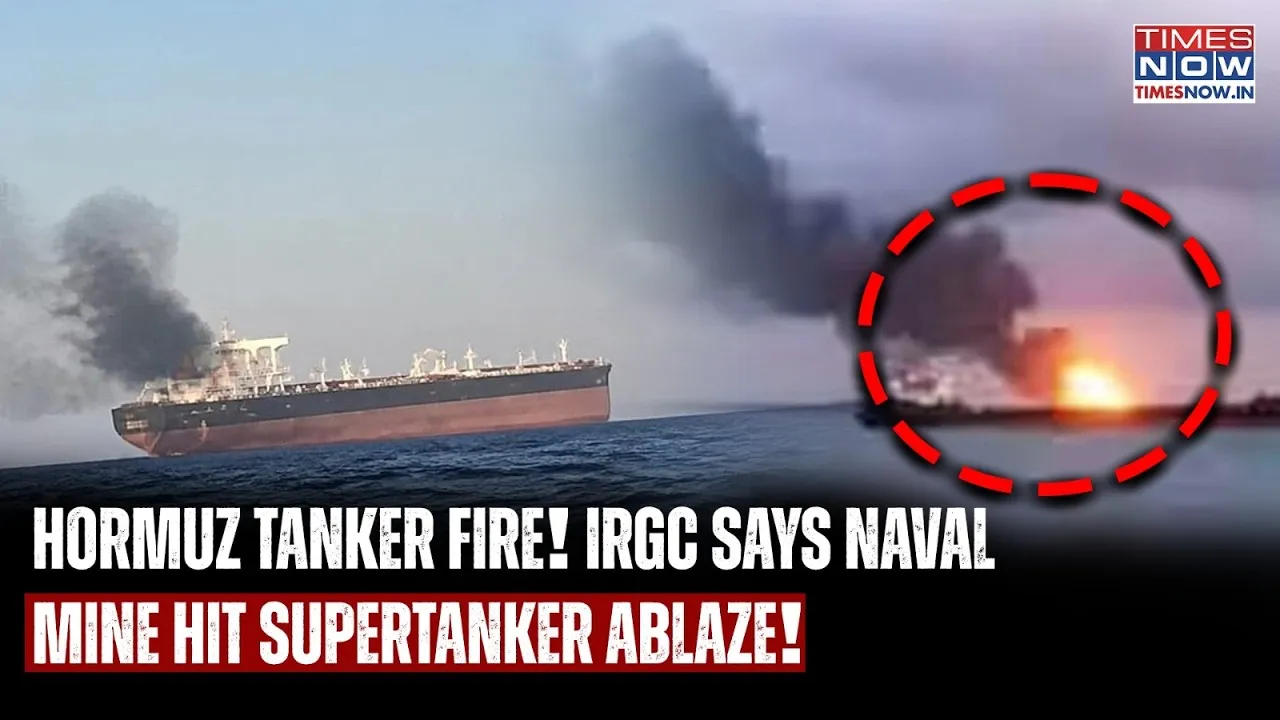
The United Kingdom Maritime Trade Operations (UKMTO) reported that at least 12 ships were attacked in the week ending October 16, according to Al Jazeera. The attacks include a supertanker carrying over two million barrels of crude oil that caught fire after striking a mine while moving through an unauthorized route, as claimed by Iran's Islamic Revolutionary Guard Corps (IRGC).
US officials, however, maintain that the Strait of Hormuz remains under their control and that of their regional partners. US Central Command Spokesperson U.S. Navy Capt. Tim Hawkins told Fox News Digital that the majority of Iran's attempted attacks on shipping in the strait are unsuccessful, highlighting the precision and professionalism of US troops.
Iran's IRGC has warned ships against using unauthorized routes since the conflict erupted in late February following US and Israeli strikes. Tehran has asserted control over maritime transit through the strait and warned ships against using unauthorized routes, according to Trtworld.
Al Jazeera reported that the attacks could potentially include the use of the GBU-43/B Massive Ordnance Air Blast bomb, nicknamed the 'mother of all bombs.' Meanwhile, Iran's IRGC claims that the US and its regional partners are responsible for the increased ship attacks, attributing them to 'desperation.'
The conflict has also extended to the Bab el-Mandeb Strait, with Yemen's Iran-backed Houthis expanding their control over the Red Sea coast. The Houthis have captured strategic islands in the southern Red Sea, according to the Independent (United Kingdom), which reported that the rebels deployed fighters on the islands of Greater Hanish and Lesser Hanish, 160 kilometers north of the Bab el-Mandeb Strait.
The United Arab Emirates has announced plans to bypass the Strait of Hormuz to continue trading and exports, following months of blockade, according to The Indian Express. Meanwhile, Iran claims full control over the strait, while the US asserts that no vessel can pass without authorization from Washington.
Tensions have also risen in other parts of the region. Saudi Arabia is planning an offensive against Yemen's Houthis to reverse their seizure of the Bab el-Mandeb Strait, with Turkish drones and Pakistani military equipment already in use in Yemen, regional and Western officials told Reuters, as reported by Turkiyetoday (Türkiye).
The situation in the Strait of Hormuz has also affected oil prices, with Oilprice reporting that LNG tankers are pushing through Hormuz again as Qatar and Kuwait restore 70% of pre-war oil exports through the strait.
What this adds
The conflict in the Strait of Hormuz has escalated, with Iran claiming full control over maritime transit and the US asserting its dominance alongside its regional partners. The attacks on ships and the use of powerful weapons like the 'mother of all bombs' highlight the severity of the situation.
The dispute over control of the Strait of Hormuz and the Bab el-Mandeb Strait has broader implications for regional stability and global oil trade, with multiple countries and factions involved in the conflict.
Background
Iran's Revolutionary Guards say a ship sank after hitting a naval mine in the Strait of Hormuz, while other reports suggest multiple attacks on vessels.
An adviser to Iran's Revolutionary Guards has announced plans to block what Tehran deems as 'illegal' routes in the Strait of Hormuz, according to reports from Arabnews (Saudi Arabia) and Türkiye Today (Türkiye).
What's confirmed
- The United Kingdom Maritime Trade Operations (UKMTO) reported that at least 12 ships were attacked in the week ending October 16, according to Al Jazeera. The attacks include a supertanker carrying over two million barrels of crude oil that caught fire after striking a mine while moving through an unauthorized route, as claimed by Iran's Islamic Revolutionary Guard Corps (IRGC).
- US officials, however, maintain that the Strait of Hormuz remains under their control and that of their regional partners. US Central Command Spokesperson U.S. Navy Capt. Tim Hawkins told Fox News Digital that the majority of Iran's attempted attacks on shipping in the strait are unsuccessful, highlighting the precision and professionalism of US troops.
- Iran's IRGC has warned ships against using unauthorized routes since the conflict erupted in late February following US and Israeli strikes. Tehran has asserted control over maritime transit through the strait and warned ships against using unauthorized routes, according to Trtworld.
- The conflict has also extended to the Bab el-Mandeb Strait, with Yemen's Iran-backed Houthis expanding their control over the Red Sea coast. The Houthis have captured strategic islands in the southern Red Sea, according to the Independent (United Kingdom), which reported that the rebels deployed fighters on the islands of Greater Hanish and Lesser Hanish, 160 kilometers north of the Bab el-Mandeb Strait.
- The United Arab Emirates has announced plans to bypass the Strait of Hormuz to continue trading and exports, following months of blockade, according to The Indian Express. Meanwhile, Iran claims full control over the strait, while the US asserts that no vessel can pass without authorization from Washington.
- Tensions have also risen in other parts of the region. Saudi Arabia is planning an offensive against Yemen's Houthis to reverse their seizure of the Bab el-Mandeb Strait, with Turkish drones and Pakistani military equipment already in use in Yemen, regional and Western officials told Reuters, as reported by Turkiyetoday (Türkiye).
- The situation in the Strait of Hormuz has also affected oil prices, with Oilprice reporting that LNG tankers are pushing through Hormuz again as Qatar and Kuwait restore 70% of pre-war oil exports through the strait.
What's still developing
- "So that shows the precision, dedication, and professionalism of our troops who are executing this complex mission — not just one — but two at the same time." More than 50,000 U.S.
- President Donald Trump said that Russia had "lost control" of its diesel industry due to the ongoing fighting with Ukraine and called for an end to the war.
- "A large number of their Diesel refineries have been blown up and are, at least temporarily, out of commission. This ridiculous and never ending War with Ukraine must be ended. The whole World suffers as 25,000 people, mostly soldiers, are being killed each month."
- "will not hesitate to respond firmly to any threat or attack aimed at undermining our security."
- LNG Tankers Push Through Hormuz Again as Qatar, UAE Fight Supply Crunch What I Cover Tsvetana Paraskova is an energy and commodities journalist who has contributed to Oilprice.com for nearly a decade, covering global energy markets, commodities,… Oil prices continued to rise early on Tuesday, rallying by 1.7% in Asian trade, as the Iran-backed Houthis in Yemen are expanding their control over the west coast along the Red Sea, while the attacks on a key Saudi onshore oil pipeline triggered concerns about additional disruptions to already severely disrupted oil supply from the Middle East.
- Refineries Maxed Out Saudi Arabia Discovers 110 Million Tonnes of Uranium-Bearing Ore Satellite Images Show Seven Tankers Loading Iraqi Crude at Once Qatar and Kuwait Restore 70% of Pre-War Oil Exports Through Hormuz The materials provided on this Web site are for informational and educational purposes only and are not intended to provide tax, legal, or investment advice.
- Houthis, Saudi-led forces claim victories as Yemen fighting rages on Forces aligned with Yemen’s internationally recognised government have launched an operation to capture a strategic mountainous district from the Houthis as part of a wider push to retake the Red Sea coast and the Bab al-Mandeb Strait.
- “These are the mountains that the Houthis took control of prior to the takeover of the city of Mocha,” Al Jazeera’s Yousef Mawry said, reporting from Sanaa.
- “He understands that a trade war with Canada, it forces us to pay $5,600 a year on average to destroy jobs in our own community,” El-Sayed said.
- "We are waiting for American warships to approach the entrance to the Strait of Hormuz so that we can sink them," Azmaei told state television, claiming Iranian forces are "counting down" for an encounter.
- The Iraqi government is seeking to exercise control over the rogue state-affiliated militias with a strategy to integrate them into the state apparatus.
- "Iraq has embarked on a new direction under the leadership of Prime Minister Al-Zaidi in full partnership with the United States. As President Trump made clear when he hosted Prime Minister Al-Zaidi’s historic July 14 visit, the United States strongly supports his vision to ensure a brighter future for all Iraqis free from terrorism, to prevent attacks in and from Iraqi territory, and to deliver a strong and mutually beneficial U.S.-Iraq partnership."
Sources
- Al Jazeeralink
- Gcaptainlink
- Justthenewslink
- Turkiyetodaylink
- Oilpricelink
- Al Jazeeralink
- Independentlink
- Breitbartlink
- The Indian Expresslink
- Trtworldlink
- Fox Newslink
- Timeskuwaitlink
- BBClink
- CBS Newslink
- WarpBeat — background on Iran Reports Ship Sinking After Mine Strike in Strait of Hormuz link
- WarpBeat — background on Iran Plans to Block 'Illegal' Routes in Strait of Hormuz link
- Times Now — video link