
Home · World · Oct 20 archive
Eastern Libya Parliament Approves 2019 Maritime Deal With Turkiye
· Confirmed
In Short: Eastern Libya's parliament approved a 2019 maritime agreement with Turkiye, reversing a 2020 boycott.
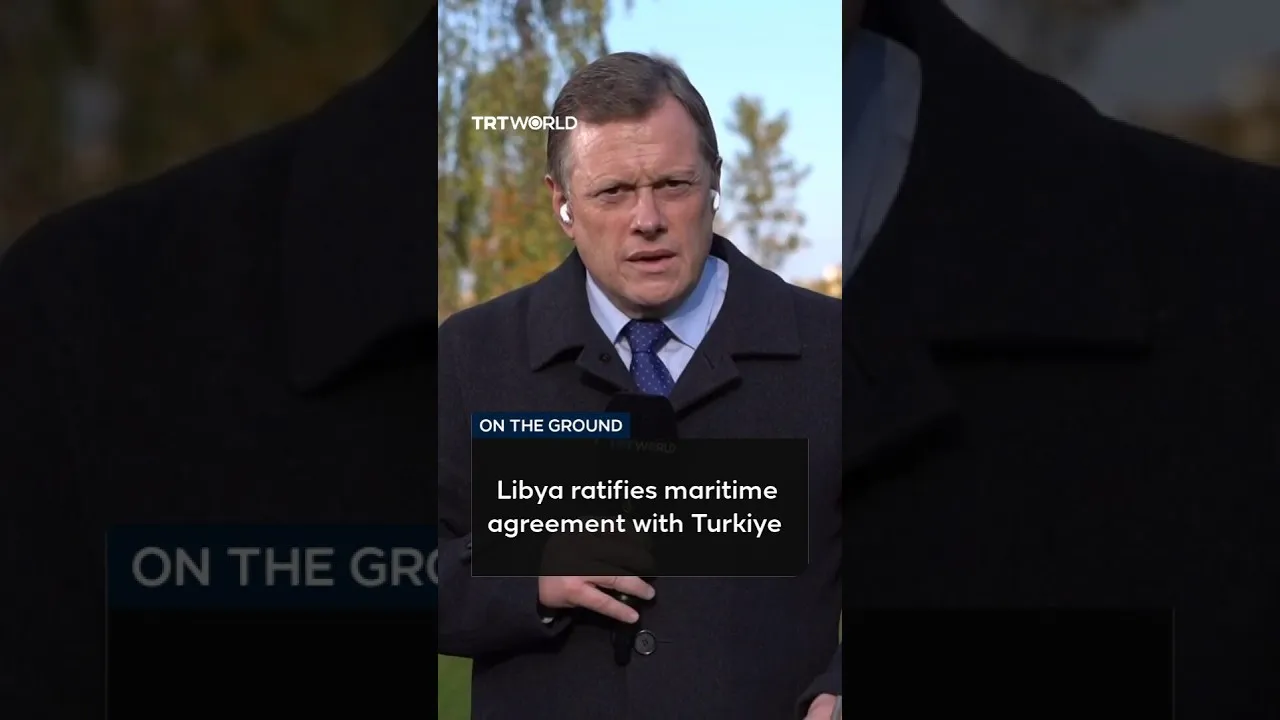
Eastern Libya's parliament, based in Tobruk, unanimously approved the 2019 maritime agreement with Turkiye on Tuesday, according to Al Jazeera (Qatar) and Arabnews (Saudi Arabia).
Al Jazeera (Qatar) reported that the parliament's approval came six years after it had rejected the deal in 2020, cutting political ties with Ankara. Arabnews (Saudi Arabia) noted that the parliament's approval marks a strategic shift, consolidating military and economic cooperation with Turkiye.
Turkiyetoday (Türkiye) confirmed that the agreement, signed in November 2019, established maritime boundaries between the two countries, including their Exclusive Economic Zones (EEZ).
The Greek Foreign Ministry argued that the agreement violated international law and infringed on the sovereign rights of states in the region, while Turkiye welcomed the approval as a significant step toward strengthening bilateral relations and protecting shared interests.
Al Jazeera (Qatar) and Arabnews (Saudi Arabia) both reported that the parliament had previously rejected the deal in 2020, cutting political ties with Ankara.
Al Jazeera (Qatar) and Arabnews (Saudi Arabia) also noted that the parliament's approval of the agreement marks a strategic shift, consolidating military and economic cooperation with Turkiye.
All outlets agreed that the parliament's approval of the agreement marks a significant shift in Libya's strategic alignment, reversing its previous rejection and cutting political ties with Ankara.
The Greek Foreign Ministry's criticism and Turkiye's welcoming stance highlight the differing perspectives on the agreement's legal and strategic implications.
What this adds
Turkiyetoday (Türkiye) provided additional details on the specific terms of the maritime agreement, including the delimitation of maritime jurisdiction areas.
Al Jazeera (Qatar) and Arabnews (Saudi Arabia) both emphasized the strategic implications of the agreement for Libya's national interests and its relations with Turkiye.
What's confirmed
- Haftar’s Benghazi-based government said in a statement on Tuesday that his Tobruk-based House of Representatives voted unanimously to approve the 2019 memorandum of understanding signed between Turkiye and Libya’s UN-recognised former Government of National Accord (GNA) on the delimitation of maritime boundaries between the two countries in the Mediterranean Sea.
- Specialised committees presented a full and detailed explanation of the deal’s provisions, lawmaker Aisha al-Tabalqi told the Reuters news agency.
- Reacting to the latest announcement on Tuesday, Greece’s Foreign Ministry said the 2019 memorandum violated international law of the sea and infringed on the sovereign rights of states in the region, calling on Libya to refrain from actions that undermine stability in the Mediterranean.
- Earlier, Tarek al-Jeroushi, a lawmaker in the eastern-backed parliament said “some countries may be upset by this agreement, but what matters to us is our national interest”.
- Libyan lawmaker Tarek Al-Jeroushi told Reuters the agreement would strengthen Libya’s position as a political, military and economic partner to major powers.
- The vote by the eastern-based parliament, which had long opposed the deal, strengthens the legal standing of an agreement that underpins Türkiye's claims in the Eastern Mediterranean.
- President Recep Tayyip Erdogan and Sarraj signed the maritime agreement, which was approved by Türkiye’s parliament and registered with the United Nations.
What's still developing
- The repealing of those moves on Tuesday consolidates a strategic shift in the works since last year, building on Ankara’s military-to-military contacts with Haftar’s self-styled Libyan National Army (LNA), including a deal in July to develop military facilities and advanced surveillance systems.
- Libya’s eastern-based parliament, backed by military commander Khalifa Haftar, which runs as an alternative to the UN-recognised legislature in Tripoli, has approved a maritime deal with Turkiye, ending years of acrimony.
- In 2019, Turkiye signed an agreement with the Tripoli-based government delineating the maritime boundaries between the two countries in the Mediterranean, triggering protests from Greece and Cyprus.
- TRIPOLI: Libya’s eastern parliament on Tuesday backed a maritime deal with Turkiye which will bring strategic advantages in economic, political and national security affairs, two lawmakers told Reuters, and which overturns a 2020 decision to cut political ties with Ankara.
- The maritime deal covering claims in the eastern Mediterranean had been agreed with Turkiye in 2019 by the GNA, but was rejected by authorities in eastern Libya, sparking a boycott, and in Egypt and Greece.
- Turkiye has in the past been a major backer of the internationally recognized Government of National Accord (GNA) in the west.
- Control of Libya is split between rival western and eastern administrations, with the east under military commander Khalifa Haftar.
- Libya’s eastern administration also expanded cooperation into energy exploration, with the Turkish Petroleum Corporation (TPAO) signing a memorandum of understanding with Libya’s National Oil Corporation (NOC) for a 2D seismic survey in Libyan waters, covering four offshore blocks and an area of 10,000 kilometers (6,214 miles).
- Jalel Harchaoui, a Libya specialist with the Royal United Services Institute, said the vote could open the way to an expanded Turkish military presence in the east, describing “Today’s parliamentary ratification is a watershed” for Libyan politics.
- This article is an automated aggregation of coverage from news outlets.
- The approval also came alongside Libya’s eastern parliament reversing its 2020 boycott decision and repealing resolutions that had called for severing political relations with Ankara, a shift that analysts said could strengthen Turkiye’s position in the region while Greece and others continued to contest the agreement’s legal basis. whether the vote reflects Saddam Hifter’s presidential ambitions Al-Monitor links the vote to Saddam Hifter’s presidential ambitions, while The Libya Observer focuses on parliamentary reversals and provides no motive details.
- The Greek Foreign Ministry also argued that “Turkey and Libya do not have opposite or adjacent coastlines that would justify such a maritime delimitation,” and Athens called on Libya to refrain from actions that undermine stability in the Eastern Mediterranean.