
Home · Science · Oct 20 archive
Deep-Space Radiation Linked to Heart Damage in Rats
· Confirmed
In Short: Scientists warn that exposure to deep-space radiation could cause lasting damage to the human heart, raising concerns about the health risks of sending people to Mars.
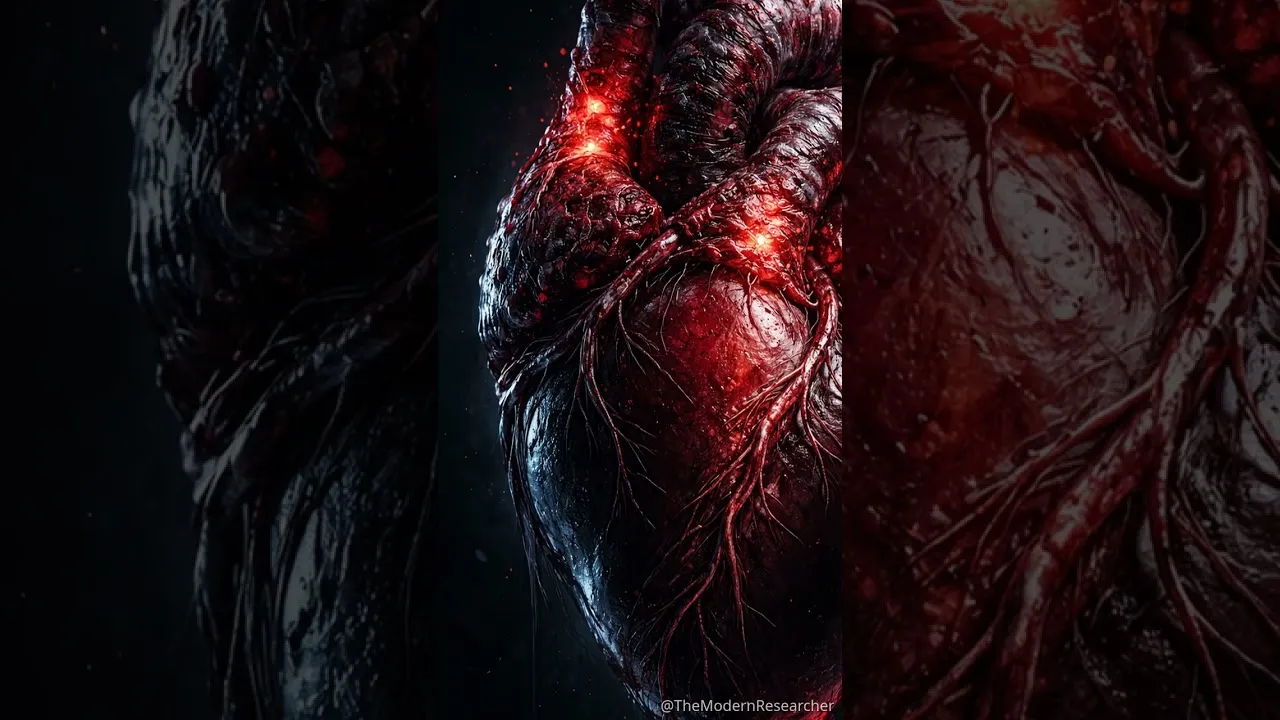
Scientists are warning that exposure to deep-space radiation could cause lasting damage to the human heart, raising new concerns about the health risks of sending people to Mars. According to a study, prolonged exposure to the radiation found in deep space could lead to significant heart damage, potentially increasing the risk of sudden cardiac death.
The research, conducted on rats, found that exposure to radiation led to persistent mutations in several genes associated with clonal hematopoiesis of indeterminate potential (CHIP). After 235 days, the rats showed persistent genetic changes that could weaken their hearts.
The study, which used rats as a model, simulated the radiation environment astronauts would face on a mission to Mars. The rats were exposed to a dose of 1.5 Gray, a measure of absorbed radiation dose, and began to develop perivascular fibrosis, a type of scar tissue that wrapped around the coronary vessels feeding blood to the heart.
By 270 days after radiation exposure, the size of the scar tissue had doubled, squeezing the blood vessels to a point where a heart attack became much more likely. The findings suggest that deep-space radiation may cause progressive damage to the heart, weaken immune defenses, and trigger genetic changes associated with serious cardiovascular problems.
Testing prolonged radiation exposure on humans would be impractical and unethical, so the team used rats to investigate the potential risks. The researchers noted that the heart scarring wasn’t visible right away when the rats were exposed to a lower dose more akin to the total amount of radiation exposure astronauts would receive over the course of a three-year mission to Mars.
The NASA Space Radiation Laboratory at Brookhaven National Laboratory was used to simulate the radiation environment that constantly bombards the solar system outside the protective shell of Earth’s atmosphere. The rats were allowed to live out the rest of their lives, with the monitoring period of about a year equivalent to around 25 years of human life.
The researchers found that radiation exposure had lasting consequences for the animals’ immune systems, raising new concerns about the health risks of deep-space missions.
While scientists know both cosmic radiation and microgravity can affect human health, the long-term consequences remain unclear. With future Mars missions expected to keep astronauts away from Earth for months or even years, the journey could permanently weaken their hearts.
What this adds
The study adds to existing concerns about the health risks of deep-space missions, particularly regarding the heart. It highlights the need for further research and protective measures to mitigate these risks.
Background
Scientists warn that exposure to deep-space radiation could cause lasting damage to the human heart, raising concerns about the health risks of sending people to Mars.
Scientists warn that prolonged exposure to deep-space radiation could cause lasting damage to the human heart, raising new concerns about the health risks of sending people to Mars.
What's confirmed
- Scientists are warning that exposure to deep-space radiation could cause lasting damage to the human heart, raising new concerns about the health risks of sending people to the Red Planet.
- At 235 days after radiation exposure, they identified persistent mutations in several genes associated with clonal hematopoiesis of indeterminate potential (CHIP).
What's still developing
- Read on to learn what researchers found and why it could change how we prepare for human exploration of Mars.
- Recreating radiation is harder, and requires some specialized equipment.
- Fraser talks about one of the ways we can protect astronauts from radiation - with a magnetosphere.
- When astronauts first travel to Mars, or anywhere else in deep space, they will have to contend with two problems that our planet itself protects us from on its surface - radiation and weightlessness.
- In the heated waters of California’s Lassen Volcanic National Park, a team of scientists observed an amoeba that can reproduce by division at an astonishing 145 degrees Fahrenheit (63 degrees Celsius), setting a record for the upper temperature limit for all known eukaryotes.
- A remarkably preserved fossil from northeastern Spain is giving scientists a rare look at the skin, soft tissues, and possible coloration of an ancient crocodile relative that lived about 125 million years ago.
- Scientists have discovered a human genetic element in a poxvirus and found it to be both an important gene for brain function and a jumping gene capable of moving and inserting itself in genomes.
- They found that fast shockwaves are also launched out from the black hole, and across the nine galaxies, these shocks extended perpendicular to the bicones of radiation.
- Each glowing core outshines the rest of its galaxy combined, thanks to a supermassive black hole that’s devouring matter, pushing out jets and winds, and driving emissions of every type of electromagnetic radiation, from radio waves to gamma rays.
- Scientists mapped out the structure of nine bright cores of galaxies located near the Milky Way and revealed common patterns that could shed light on how the universe evolved At the heart of some galaxies lie extremely bright spots— far too luminous to be lit by stars alone.
- Scientists already know both can have a profound impact on the human body, but just how much of one, and how long that impact can last, remain a mystery.
- Middle-aged male rats had their hind legs suspended at a 30-degree angle for 30 days.