
Home · Science · Oct 20 archive
Bleached Coral Rebounds After Touching Healthy Coral
· Confirmed
In Short: A study published in Science Advances shows that bleached coral fragments can recover within a week of touching healthy coral from the same colony.
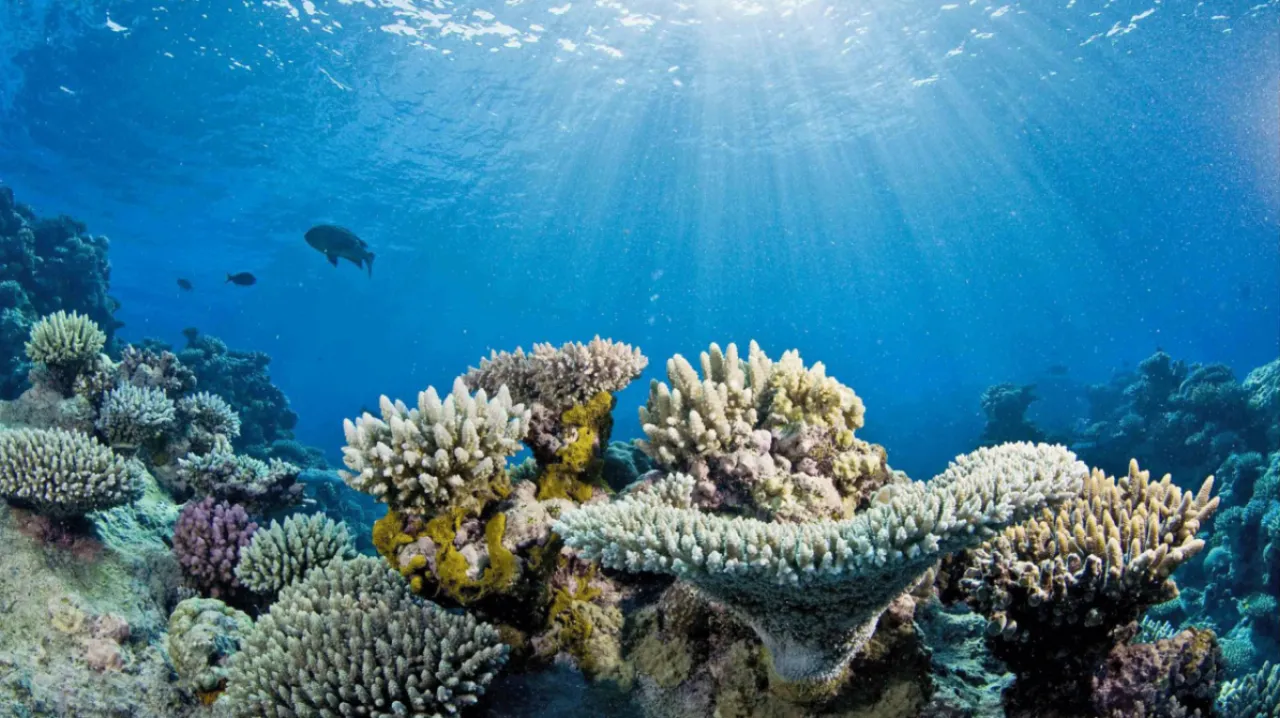
Researchers at Stanford University have discovered that bleached coral fragments can recover within a week of touching healthy coral from the same colony, according to a study published in Science Advances.
The study, which was conducted in a laboratory setting, involved genetically identical fragments of the cauliflower coral, Pocillopora damicornis. One fragment was bleached, while the other was healthy.
The researchers observed that when the two fragments touched, the bleached fragment began to regain its color within just one week.
The recovery process was attributed to the transfer of beneficial algae, known as symbionts, from the healthy coral to the bleached one.
"We were curious about what would happen if we used contact to reintroduce something good – the beneficial algae from healthy corals," said one of the researchers.
The team found that the algae moved from the healthy to the bleached fragments within just 36 hours of contact.
"Algal symbionts started moving between fragments as early as 36 hours after contact," noted another researcher.
The recovery process was rapid, with algae doubling every four days in the bleached fragments, which is approximately ten times faster than the rate observed in wild corals.
"By fusing tissues, healthy corals sent enough life-giving algae and nutrients to their bleached counterparts to kickstart the recovery process in three days," explained the researchers.
However, the method has important limitations. Successful recovery required a healthy donor genetically matching the bleached recipient, a major constraint on wider use.
"The key to the method’s success, informally dubbed ‘helping hands’ by the team, is the transfer of healthy photosynthetic algae known as symbionts, which give corals their color," said the researchers.
"While bleached corals may be dying, they are not dead yet," noted a researcher.
What this adds
This study adds to the understanding of coral recovery mechanisms, showing that direct contact with healthy coral can significantly accelerate the process.
The research highlights the importance of genetic matching between donor and recipient corals, which limits the applicability of this method in wild reef environments.
The study does not address the broader implications for coral conservation or the feasibility of implementing this method on a larger scale.
Background
A study published in Science Advances shows that bleached coral fragments can recover within a week of touching healthy coral from the same colony.
A new study published in Nature Medicine finds menopause causes sudden changes in bone density, liver function, and blood fats, challenging previous assumptions.
What's confirmed
- A bleached coral regained its color after just one week of touching a healthy piece of the same colony, according to a laboratory study published Oct. 14 in Science Advances by researchers at Stanford University.
- The finding offers a rare bit of hopeful news after the most widespread coral bleaching on record, which exposed about 84% of the world's reef area to bleaching-level heat stress.
- The experiment used genetically identical fragments in tanks, and the effect disappeared when the corals were from different genetic backgrounds or were not touching.
- Two fragments of the same cauliflower coral colony, Pocillopora damicornis, one bleached and one healthy, had fallen against each other in a tank, and color began returning to the bleached piece where they touched, according to ScienceAlert.
- He told ABC News the method "requires contact of corals of the same genetic clone," which makes it unlikely to work across wild reefs.
- "While bleached corals may be dying, they are not dead yet."
- Nature World News recently reported on another reef recovery tool, underwater speakers that drew more baby coral in Hawaii.
- He found that the touching corals fused their tissues, creating a bridge that carried nutrients and symbiotic algae from the healthy coral into the bleached one.
- The healthy fragment passed along the tiny algae that corals depend on, jump-starting the bleached coral's recovery.
- Bleached corals can take months or years to recover naturally, and many die before they do.
- In just a few days, life-giving algae flow from healthy corals to bleached corals, kickstarting the recovery process. (Danny Collins via SWNS) In a laboratory setting, researchers have shown that corals can fully recover from bleaching within seven weeks through brief contact with healthy corals. (Danny Collins via SWNS) In the experiment, gaps of just a few millimeters between pairs of coral fragments – one bleached, one healthy – prevented the bleached fragments from recovering. (Danny Collins via SWNS) It is the first time scientists have observed bleached corals on the brink of death fully recover through brief contact with healthy clones.
- During the second week of contact with healthy corals, algae within bleached fragments doubled every four days, around ten times quicker than the rate observed in wild corals.
What's still developing
- The paper "Percent cover of healthy and bleached coral in Pacific Panama using the transect method in 2019". was published in Biological and Chemical Oceanography Data Management Office in 2019.
- The paper "Percent cover of healthy and bleached coral in Pacific Panama using the transect method in 2019". was published in Biological and Chemical Oceanography Data Management Office in 2019. The authors are Richard Aronson, Lauren Toth. DOI 10.1575/1912/bco-dmo.776377.1.
- The rescue required no chemicals and no genetic engineering, only direct contact with a healthy piece of the same coral.
Sources
- Crossreflink
- Biological and Chemical Oceanography Data Management Officelink
- Nature World Newslink
- Caledonianrecordlink
- Goodnewsnetworklink
- Technologynetworkslink
- Themountainpresslink
- Thebrightersidelink
- Intelligentlivinglink
- Insidenovalink
- Bgneslink
- Discoverlink
- WarpBeat — background on Bleached Coral Rebounds After Touching Healthy Coral link
- WarpBeat — background on Bones liver and blood fats all shift abruptly at menopause huge study finds link
- Wonder Circuit — video link