
Home · Politics · Oct 19 archive
Supreme Court to Hear Case on Maryland School Admissions
· Confirmed
In Short: The Supreme Court has agreed to hear a case brought by a group of Asian-American parents challenging the admissions policy of four elite public middle schools in Montgomery County, Maryland.
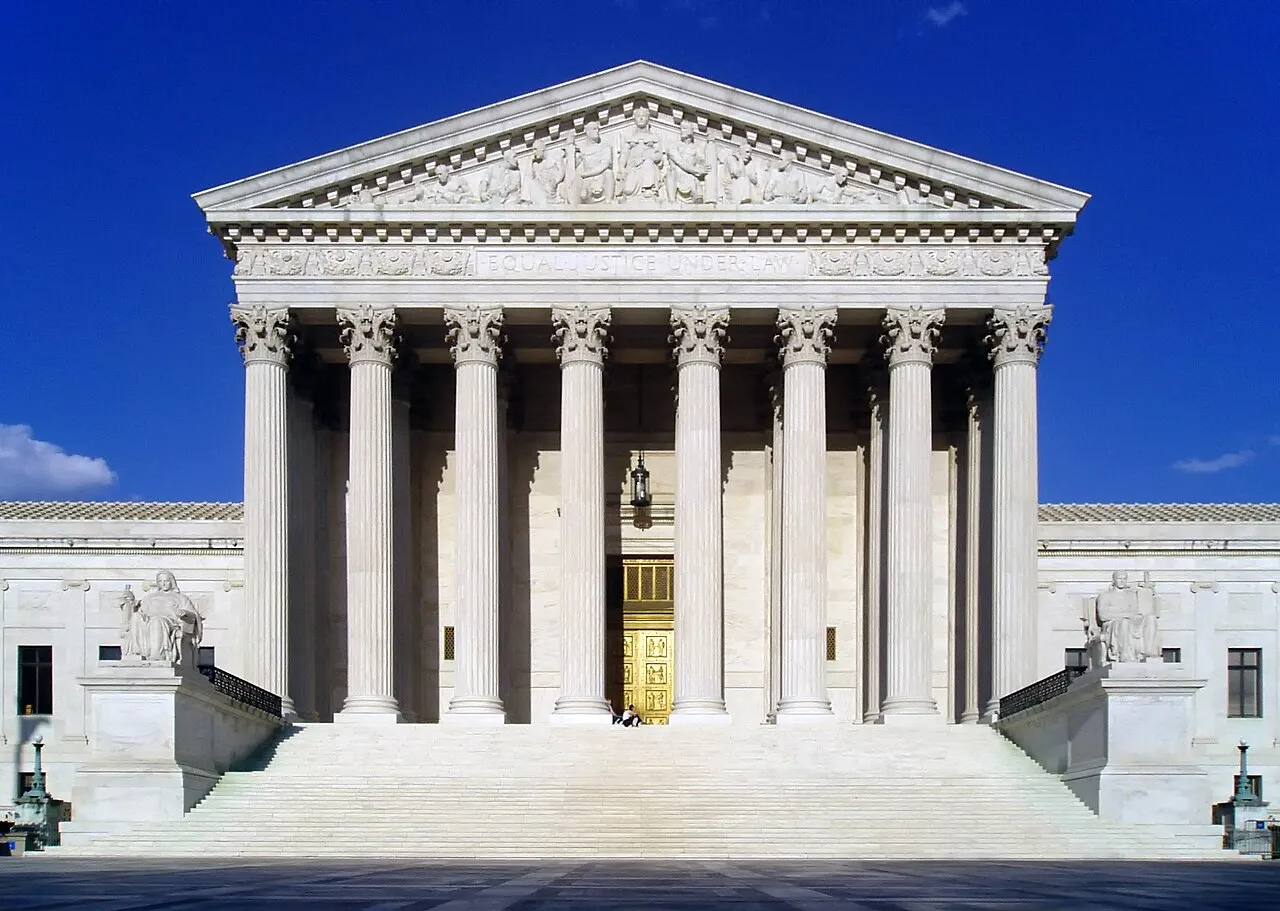
The lawsuit argues that the policy, which screens students for academic potential and then randomly assigns them to magnet schools or local schools for enriched instruction, disadvantages Asian American students who are often in high-performing, low-poverty schools.
The case is part of a broader debate on the role of race in education, especially in light of previous rulings and policies.
The plaintiffs claim that the policy, which uses proxies like socioeconomic status to achieve diversity, discriminates against Asian American students.
The Supreme Court granted the petition, limited to the question of whether a plaintiff challenging a facially neutral admissions policy as racially discriminatory must establish that the targeted racial group suffered an aggregate disparate impact relative to its share of the applicant pool.
The case is narrower than previous affirmative action cases, focusing on the technical question of what evidence challengers need to bring such a claim.
The case is expected to be heard and a ruling issued by the end of June.
Legal experts believe that affirmative action is at risk after the high court’s conservative majority expressed serious doubts about the necessity of the practice during oral arguments this fall.
The case is part of a series of challenges to affirmative action policies, following the Supreme Court's 2023 ruling that struck down race-conscious admissions policies in colleges.
The case has divided two federal circuit courts, with conflicting decisions issued in April.
The Association for Education Fairness (AFEF) asked the Court to decide whether families alleging intentional racial discrimination must first clear a statistical threshold before a judge will consider their evidence.
The case is not the first to challenge race-conscious policies in education. In 2023, the Supreme Court cited the same amendment in striking down the use of race in college admissions.
The case is also part of a broader trend of challenges to diversity, equity, and inclusion programs in various sectors.
Background
The case could set a precedent for how the government handles asylum claims and the definition of 'material support' for terrorism.
On Monday, September 28, 2026, the Supreme Court began its new term with oral arguments in two significant cases: one challenging the Video Privacy Protection Act (VPPA) in the digital age and another on climate change liability.
What's confirmed
- The case, brought by a group of Asian-American parents, questions whether the policy violates the 14th Amendment's guarantee of equal protection under the law.
- The legal challenge comes after the Supreme Court's 2023 ruling that struck down race-conscious admissions policies in colleges, a decision that has influenced similar challenges across the country.
- The lawsuit claims that the system disadvantages Asian American students who are often in high-performing, low-poverty schools, as reported by Yahoo News.
- The Maryland case will explore if race-neutral policies can still result in discrimination, particularly when proxies like socioeconomic status are used to achieve diversity.
- The policy screens students for academic potential and then randomly assigns them to magnet schools or local schools for enriched instruction.
- The US Supreme Court has agreed to hear a case challenging the admissions policy of four elite public middle schools in Montgomery County, Maryland.
- This case is part of a broader debate on the role of race in education, especially in light of President Donald Trump's policies against diversity, equity, and inclusion programs in various sectors.
- The Supreme Court is expected to hear arguments and issue a ruling by the end of June.
- The court granted the petition, limited to the following question: Whether a plaintiff challenging a facially neutral admissions policy as racially discriminatory must establish that the targeted racial group suffered an aggregate disparate impact relative to its share of the applicant pool.
What's still developing
- By MICHAEL KUNZELMAN Updated 7:34 AM PDT, October 19, 2026 WASHINGTON (AP) — The Supreme Court agreed on Monday to consider whether Congress had the constitutional authority to impose a ban on distilling spirits in private homes more than 150 years ago.
- “And because the location restrictions were enacted only after lengthy experience with tax evasion, upholding those restrictions would not open the door to hypothetical laws restricting other conduct lacking that history,” they wrote.
- “The Constitution protects students as individuals, not as members of a racial group,” said Chris Kieser, a senior attorney at Pacific Legal Foundation.
- That program, sparked by a report that said Black and Latino students were underrepresented and Asian students overrepresented in the middle school magnet programs in Montgomery County schools, included outreach to students and a cognitive test.
- The challengers argue that a policy in Montgomery County's STEM and humanities magnet schools unfairly elevates Black and Latino students for admission in violation of the 14th Amendment.
- Last year, the court ruled in favor of parents who objected on religious grounds to LGBTQ-themed books approved for use in elementary school classrooms.
- The court agreed to take up an appeal brought by the Association for Education Fairness seeking to revive a lawsuit it filed against the Montgomery County Board of Education.
- Entry to the lottery is based on how well students perform on tests when ranked against others in their school, which the plaintiffs say adversely affects Asian students in high-performing schools.
- A federal judge in Maryland and the 4th U.S. Circuit Court of Appeals both ruled in favor of the school district.
- Conservative legal activist Edward Blum and his group Students for Fair Admissions sued both the private Harvard University and the public University of North Carolina at Chapel Hill in 2014 over the schools’ admission policies.
- The two separate affirmative action cases under discussion this month are the most recent attempts to overturn the court’s 2003 precedent, Grutter v. Bollinger, which allowed college admissions to consider race when deciding whom to accept.
- It applies to all higher education institutions, including undergraduate, graduate, law and medical schools.
Sources
- 1150 WIMAlink
- Pacific Legal Foundationlink
- iHeartlink
- NBC Newslink
- Baltimoresunlink
- Scotusbloglink
- WarpBeat — background on Supreme Court to Hear Case on Asylum and 'Material Support' for Terrorism link
- WarpBeat — background on Court to hear argument on how a video privacy law applies in the internet age link