
Home · World · Oct 13 archive
MI5 Chief Warns of Escalating Hybrid Threats From Iran and Russia
Confirmed
In Short: MI5's Director General Ken McCallum warned of escalating hybrid threats from Iran and Russia, emphasizing the use of artificial intelligence in cyber warfare during an annual speech in London.
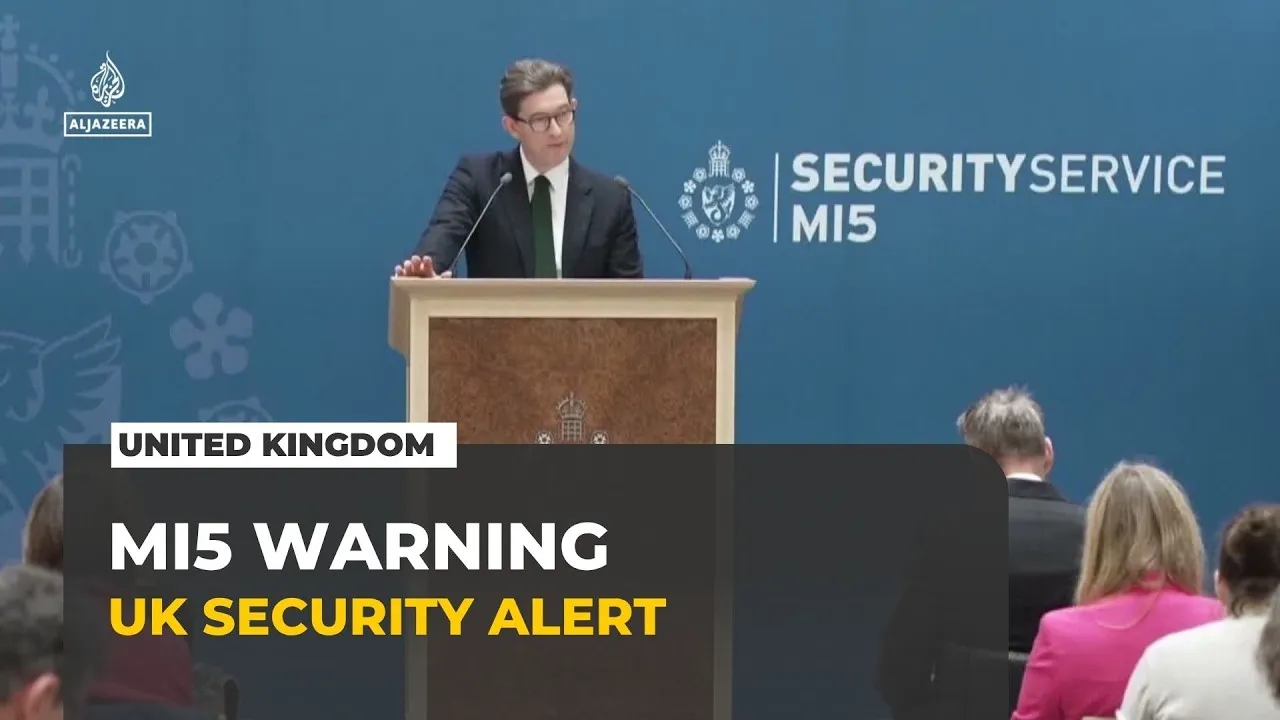
MI5's Director General Ken McCallum warned of escalating hybrid threats from Iran and Russia, emphasizing the use of artificial intelligence in cyber warfare during an annual speech in London. The BBC (United Kingdom) reported that McCallum said Russia was waging hybrid warfare at a time when AI was 'supercharging the cyber-security contest between attackers and defenders.'
According to the BBC (United Kingdom), McCallum noted that Russia had stopped short of conventional conflict against NATO and was instead trying to unsettle European countries while its progress in Ukraine was 'minimal and horrifically costly.' McCallum also highlighted that the National Security Act, a 2023 law targeting individuals working against UK interests for foreign powers, had been heavily used to tackle threats from China, Iran, and Russia.
The BBC (United Kingdom) and Kyivindependent (Ukraine) both reported that Russia had denounced what it called 'unfriendly actions' by Germany and ordered the German consulate in St. Petersburg to close by September 18, with all staff to leave by then. Kyivindependent (Ukraine) noted that Russia's Foreign Ministry announced this on September 7 in retaliation for similar steps taken by Berlin.
The BBC (United Kingdom) and Kyivindependent (Ukraine) also reported that Ukraine's military intelligence chief Oleh Ivashchenko said Ukrainian strikes were contributing to Russia's budget deficit, which today stands at $82 billion. McCallum warned that Iran was seeking to hit harder targets such as military sites in the UK and elsewhere, and that there had been 50 arrests in the last year over Iran-linked activities.
The BBC (United Kingdom) and Kyivindependent (Ukraine) agreed that Russia was scaling up its daily hybrid activity against the UK and Europe. McCallum warned that Britons must increase their resilience and prepare to be 'tested' by 'escalating' Russian hybrid warfare.
McCallum also noted that the interconnected financial systems, energy grids, supply chains, and manufacturing bases were vulnerable to malicious disruption and coercion. He emphasized that the security service was now devoting more resources to hostile state threats than during the Cold War.
The BBC (United Kingdom) and Kyivindependent (Ukraine) both reported that Russia had attempted a drone attack on an airport in Leipzig, Germany, and that the Kremlin was likely to step up hybrid aggression. Germany's government said the attempted attack represented a new level of hybrid warfare.
The BBC (United Kingdom) and Kyivindependent (Ukraine) agreed that Russia was seeking to sow distrust and fear among societies, and that the move by German authorities marked a significant deterioration in relations between Berlin and Moscow.
The BBC (United Kingdom) and Kyivindependent (Ukraine) both reported that Iran was suspected of involvement in an airbase plot in the UK, with the UK blaming Iran for the incident and Tehran denouncing it as a 'false flag' operation.
The BBC (United Kingdom) and Kyivindependent (Ukraine) both reported that McCallum warned of the increased risk of terror attacks driven in significant part by extreme right-wing terrorism, and that Islamist groups like Al Qaeda and so-called Islamic State both continue to direct and inspire attacks.
The BBC (United Kingdom) and Kyivindependent (Ukraine) both reported that McCallum emphasized the importance of the National Security Act in tackling threats from China, Iran, and Russia, and that the UK was establishing a dedicated AI Threat Assessment Centre to examine emerging risks and strengthen Britain’s national security response.
The BBC (United Kingdom) and Kyivindependent (Ukraine) both reported that McCallum warned of the increased risk of terror attacks driven in significant part by extreme right-wing terrorism, and that Islamist groups like Al Qaeda and so-called Islamic State both continue to direct and inspire attacks.
Background
The NSC warned of a heightened risk of terror attacks against Israelis and Jews on Wednesday, the third anniversary of the October 7 onslaught, as security chiefs huddled to discuss threats in the lead-up to Israel’s October 27 Knesset election.
What's confirmed
- According to the BBC (United Kingdom), McCallum noted that Russia had stopped short of conventional conflict against NATO and was instead trying to unsettle European countries while its progress in Ukraine was 'minimal and horrifically costly.' McCallum also highlighted that the National Security Act, a 2023 law targeting individuals working against UK interests for foreign powers, had been heavily used to tackle threats from China, Iran, and Russia.
- The BBC (United Kingdom) and Kyivindependent (Ukraine) both reported that Russia had denounced what it called 'unfriendly actions' by Germany and ordered the German consulate in St. Petersburg to close by September 18, with all staff to leave by then. Kyivindependent (Ukraine) noted that Russia's Foreign Ministry announced this on September 7 in retaliation for similar steps taken by Berlin.
- The BBC (United Kingdom) and Kyivindependent (Ukraine) also reported that Ukraine's military intelligence chief Oleh Ivashchenko said Ukrainian strikes were contributing to Russia's budget deficit, which today stands at $82 billion. McCallum warned that Iran was seeking to hit harder targets such as military sites in the UK and elsewhere, and that there had been 50 arrests in the last year over Iran-linked activities.
- The BBC (United Kingdom) and Kyivindependent (Ukraine) agreed that Russia was scaling up its daily hybrid activity against the UK and Europe. McCallum warned that Britons must increase their resilience and prepare to be 'tested' by 'escalating' Russian hybrid warfare.
- McCallum also noted that the interconnected financial systems, energy grids, supply chains, and manufacturing bases were vulnerable to malicious disruption and coercion. He emphasized that the security service was now devoting more resources to hostile state threats than during the Cold War.
- The BBC (United Kingdom) and Kyivindependent (Ukraine) both reported that Russia had attempted a drone attack on an airport in Leipzig, Germany, and that the Kremlin was likely to step up hybrid aggression. Germany's government said the attempted attack represented a new level of hybrid warfare.
- The BBC (United Kingdom) and Kyivindependent (Ukraine) agreed that Russia was seeking to sow distrust and fear among societies, and that the move by German authorities marked a significant deterioration in relations between Berlin and Moscow.
- The BBC (United Kingdom) and Kyivindependent (Ukraine) both reported that Iran was suspected of involvement in an airbase plot in the UK, with the UK blaming Iran for the incident and Tehran denouncing it as a 'false flag' operation.
- The BBC (United Kingdom) and Kyivindependent (Ukraine) both reported that McCallum warned of the increased risk of terror attacks driven in significant part by extreme right-wing terrorism, and that Islamist groups like Al Qaeda and so-called Islamic State both continue to direct and inspire attacks.
- The BBC (United Kingdom) and Kyivindependent (Ukraine) both reported that McCallum emphasized the importance of the National Security Act in tackling threats from China, Iran, and Russia, and that the UK was establishing a dedicated AI Threat Assessment Centre to examine emerging risks and strengthen Britain’s national security response.
- The BBC (United Kingdom) and Kyivindependent (Ukraine) both reported that McCallum warned of the increased risk of terror attacks driven in significant part by extreme right-wing terrorism, and that Islamist groups like Al Qaeda and so-called Islamic State both continue to direct and inspire attacks.
What's still developing
- He said it was a matter of public record that there were pieces in Russian media and "so-called internet trolls and bot farms" seeking to influence the Brexit debate, but also stressed that the result of the 2016 referendum was "not in dispute".
- As early as the 1920s and continuing throughout the Cold War, the Soviets relied on what they called “active measures”: the use of local proxies, front groups, and irregular forces to achieve political aims.
- To address the threat, allies reinforced critical infrastructure, increased patrols in the Baltic Sea, and expanded intelligence sharing.
- In late July, a Russian cruise missile crashed into Polish territory.
- Director GCHQ said that we are at a “moment of consequence” where we’re seeing increasingly brazen behaviour from adversaries.
- Addressing an audience of media, experts, academia, government and national security partners, Director GCHQ warned that we are in a “new era of radical uncertainty, contested geopolitics and rapidly changing technology”.
- UK PM says RAF base incidents ‘likely coordinated’ by Iran | US-Israel war on Iran News UK blames Iran for airbase plot, sanctions two Iranian nationals Iran sees ‘false flag’ operations after UK blames IRGC for airbase incident UK spy chief says Iran is stepping up targeting of military bases Britain warns of Iranian threats to its military bases 29 countries including Britain and the United States accuse Iran of involvement in the Fairfield base incident Britain and America accuse Iran of involvement in the Fairford base incident, and Tehran denounces it.
- MI5 Director General Ken McCallum issued an urgent warning about digital threats from abroad.
- These aggressive actions reflect a sustained push in modern hybrid warfare.
- Read more: Russia’s Escalating Hybrid Attacks Put Europeans in a Bind “Russia shows no willingness to reach an understanding,” Wadephul told reporters in Berlin.
- The company announced it will give Ukraine’s government free access to Daybreak, its AI-powered cyber defense system, in a move that puts OpenAI Ukraine cyber defense cooperation at the center of an escalating hybrid war fought as much through code as through missiles.