
Home · Technology · Oct 8 archive
Nvidia's big bet on physical AI aims for safer robotaxis, humanoid robots
Confirmed
In Short: Nvidia's full-stack safety solution for physical AI is already being used by robotics companies, and the company is betting that owning the full stack—from AI training to edge inference to motor control—will make them indispensable to every humanoid manufacturer.
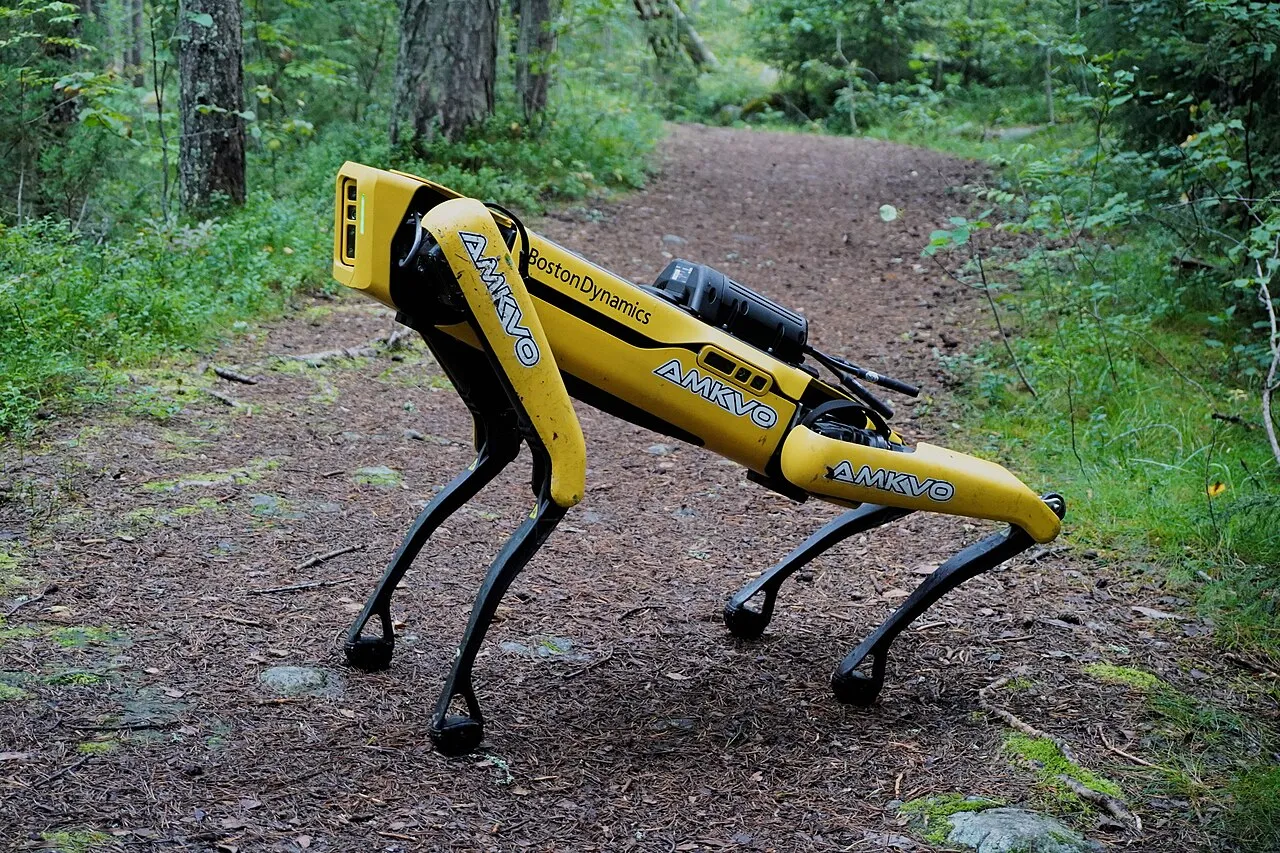
Nvidia, the AI chipmaker, has launched its Halos for Robotics program to ensure safer autonomous systems in factories and warehouses. The program is designed to address the safety challenges faced by autonomous mobile robots and humanoid robots, such as Boston Dynamics' Spot and Atlas robots, which are set to be deployed in automotive factories by 2028.
Amit Goel, head of robotics ecosystem and edge computing at Nvidia, explained that the Halos for Robotics program is a response to the growing capabilities of AI models and robot hardware, which have outpaced safety measures. 'Now the AI models are getting capable, the robot hardware is getting capable, and a thing we thought is going to be the next bottleneck is safety,' Goel told Ars Technica.
The Halos for Robotics program includes hardware such as the Nvidia IGX Thor computing module, which has an independent processor dedicated to safety-related workloads. The program also includes software, such as the Halos operating system, which is designed to enable constant monitoring of every hardware block and every software library to swiftly spot any failures.
Nvidia's CEO, Jensen Huang, highlighted physical AI as the company's second-most important growth category in 2025, and the company has already been generating nearly $10 billion in annual revenue from this business. The company's multi-trillion-dollar market capitalization is also being fueled by investors bullish on AI data centers.
The Halos for Robotics program is part of Nvidia's broader initiative to build a trust layer for safe agent systems. The company is working with robotics pioneers such as Gecko Robotics, Figure, and Skild AI to apply strict safety boundaries to physical machinery and autonomous hardware.
Boston Dynamics, a robotics company based in Massachusetts, has been an early partner in the Nvidia Halos safety accreditation program, focusing on building a safety platform that encompasses their Spot robot dogs, wheeled Stretch robots with a large robotic arm, and Atlas humanoid robots.
The program aims to enable safe deployments of autonomous mobile robots in warehouses, humanoid robots walking around inside a factory, or even surgical robots. 'Now they can operate everywhere in a factory or a warehouse without having to set up a brand new infrastructure every time they want to do a new task,' Goel told Ars Technica.
Background
Tesla workers are pushing back against training their robotic replacements as the company faces challenges in scaling up production of its Optimus humanoid robots.
What's confirmed
- Nvidia, the AI chipmaker, has launched its Halos for Robotics program to ensure safer autonomous systems in factories and warehouses. The program is designed to address the safety challenges faced by autonomous mobile robots and humanoid robots, such as Boston Dynamics' Spot and Atlas robots, which are set to be deployed in automotive factories by 2028.
- Amit Goel, head of robotics ecosystem and edge computing at Nvidia, explained that the Halos for Robotics program is a response to the growing capabilities of AI models and robot hardware, which have outpaced safety measures. 'Now the AI models are getting capable, the robot hardware is getting capable, and a thing we thought is going to be the next bottleneck is safety,' Goel told Ars Technica.
- The Halos for Robotics program includes hardware such as the Nvidia IGX Thor computing module, which has an independent processor dedicated to safety-related workloads. The program also includes software, such as the Halos operating system, which is designed to enable constant monitoring of every hardware block and every software library to swiftly spot any failures.
- Nvidia's CEO, Jensen Huang, highlighted physical AI as the company's second-most important growth category in 2025, and the company has already been generating nearly $10 billion in annual revenue from this business. The company's multi-trillion-dollar market capitalization is also being fueled by investors bullish on AI data centers.
- The Halos for Robotics program is part of Nvidia's broader initiative to build a trust layer for safe agent systems. The company is working with robotics pioneers such as Gecko Robotics, Figure, and Skild AI to apply strict safety boundaries to physical machinery and autonomous hardware.
- Boston Dynamics, a robotics company based in Massachusetts, has been an early partner in the Nvidia Halos safety accreditation program, focusing on building a safety platform that encompasses their Spot robot dogs, wheeled Stretch robots with a large robotic arm, and Atlas humanoid robots.
- The program aims to enable safe deployments of autonomous mobile robots in warehouses, humanoid robots walking around inside a factory, or even surgical robots. 'Now they can operate everywhere in a factory or a warehouse without having to set up a brand new infrastructure every time they want to do a new task,' Goel told Ars Technica.
What's still developing
- “We had to reimagine and do a lot of foundational work to build a platform that is programmable, that gives all the hooks to the developers to actually define custom safety functions, but at the same time not break the underlying infrastructure that we built,” Goel told Ars.
- However, adapting Nvidia Halos from autonomous vehicles to robotics required accommodating many different definitions of safety.
- Anthropic is integrating its Claude Managed Agents with NVIDIA's OpenShell software and BlueField hardware.
- "But its full promise can only be realised when people have confidence that AI is being built to be safe and deployed with wisdom and responsibility."
- "AI is extraordinary technology that will advance discovery, productivity, security, health, and prosperity for generations to come."
- NVIDIA's move could signal a fundamental change in how the industry approaches agent containment and control mechanisms.
- "trust and innovation are not in conflict. Safety is how trust is earned. We must build not only the most capable AI, but the most trusted AI, so that this extraordinary technology can realise its enormous promise for the world."
- It oversees the software programs that act as agents, the physical servers and processing power that run those programs, and the automated machinery or devices that physically perform real-world tasks.
- Beyond software applications, physical autonomous systems are embedding these safeguards directly into real-world operations.
- NVIDIA is betting that owning the full stack—from AI training to edge inference to motor control—will make them indispensable to every humanoid manufacturer.
- Unitree files $610M IPO, UBTech targets 10K robots with Siemens, Tesla confirms Optimus Gen 3 summer production, NVIDIA expands chip partnerships.
- “If you are a robot coming down an aisle at six miles per hour, your senses do not see what are the blind spots and what is coming around the corner,” Gold said.