
Home · Technology · Sep 28 archive
Tesla Workers Resist Training Humanoid Robots as Replacements
Confirmed
In Short: Tesla workers are pushing back against training their robotic replacements as the company faces challenges in scaling up production of its Optimus humanoid robots.
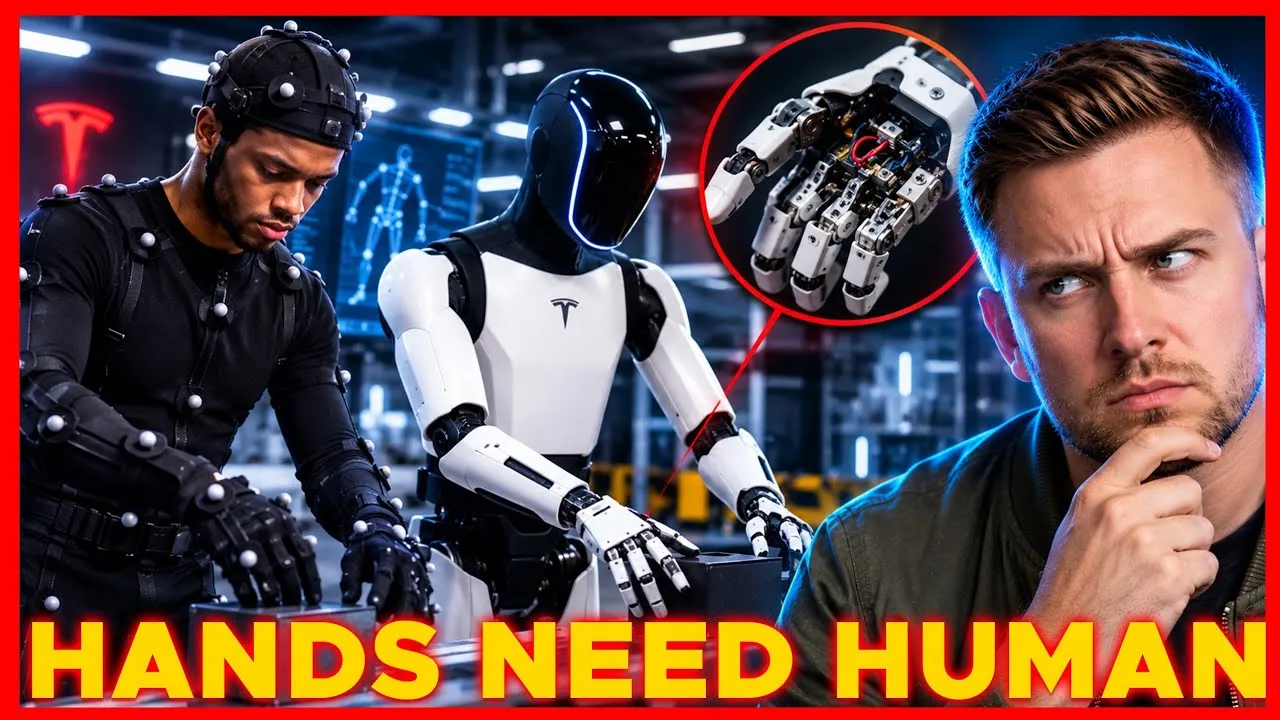
Tesla's Fremont factory in California has ceased production of the Model S sedan and Model X SUV, shifting resources to the development and production of Optimus humanoid robots.
According to reports, Tesla aims to produce over 1,000 Optimus robots per week by the end of 2026, but the company is currently producing several hundred per week, a significant increase from the few dozen units produced during small-batch testing in the second quarter.
The newest version of Optimus, called Optimus V3, has proven challenging from both a development and manufacturing standpoint.
Tesla CEO Elon Musk has described Optimus as potentially “the biggest product ever” during Tesla’s second-quarter 2026 earnings call, but he also acknowledged that making an autonomous humanoid robot capable of handling many different tasks is “one of the hardest things to solve.”
The Information reported that most Optimus units are used internally for testing, training, and data collection, with the V3 robots currently being built not even the version Tesla plans to commercialize.
One of the biggest challenges facing all robotics companies is getting enough training data to help robots visually learn a wide variety of manual tasks.
Tesla is trying to build a library of basic movements the robot can recombine for new jobs, but the AI can’t yet reliably handle a wide range of tasks, and its behavior can be unpredictable in situations it hasn’t been trained on.
Managers are reportedly aiming for a continuous automated line capable of more than 1,000 robots a week by the end of the year, with an eventual target of about 20,000 a week.
The robots working inside Tesla’s factories are confined to tightly controlled, supervised areas and are programmed for specific tasks rather than running as general-purpose machines.
Tesla has been converting former Model S and Model X lines at Fremont to assemble Optimus robots, aiming for a capacity of one million units per year as production ramps up.
Despite these efforts, Tesla workers are pushing back against training their robotic replacements, highlighting the complex challenges in developing and scaling up production of humanoid robots.
The struggle to scale up production comes as Tesla CEO Elon Musk has bet the company’s future on AI and robotics.
What this adds
Tesla's challenges in scaling up production and training data acquisition are not unique to the company, as other automakers and robotics companies face similar issues.
The current version of Optimus being produced is not the commercial version, indicating that Tesla is still in the developmental phase and facing significant hurdles.
The pushback from workers highlights the broader societal and economic implications of integrating humanoid robots into the workforce.
What's confirmed
- Tesla's Fremont factory in California has ceased production of the Model S sedan and Model X SUV, shifting resources to the development and production of Optimus humanoid robots.
- According to reports, Tesla aims to produce over 1,000 Optimus robots per week by the end of 2026, but the company is currently producing several hundred per week, a significant increase from the few dozen units produced during small-batch testing in the second quarter.
- The newest version of Optimus, called Optimus V3, has proven challenging from both a development and manufacturing standpoint.
- The Information reported that most Optimus units are used internally for testing, training, and data collection, with the V3 robots currently being built not even the version Tesla plans to commercialize.
- One of the biggest challenges facing all robotics companies is getting enough training data to help robots visually learn a wide variety of manual tasks.
- Tesla is trying to build a library of basic movements the robot can recombine for new jobs, but the AI can’t yet reliably handle a wide range of tasks, and its behavior can be unpredictable in situations it hasn’t been trained on.
- Managers are reportedly aiming for a continuous automated line capable of more than 1,000 robots a week by the end of the year, with an eventual target of about 20,000 a week.
- The robots working inside Tesla’s factories are confined to tightly controlled, supervised areas and are programmed for specific tasks rather than running as general-purpose machines.
- Tesla has been converting former Model S and Model X lines at Fremont to assemble Optimus robots, aiming for a capacity of one million units per year as production ramps up.
- Despite these efforts, Tesla workers are pushing back against training their robotic replacements, highlighting the complex challenges in developing and scaling up production of humanoid robots.
- The struggle to scale up production comes as Tesla CEO Elon Musk has bet the company’s future on AI and robotics.
What's still developing
- Tesla and many other automakers and robotics companies are betting that humanoid robots coupled with advances in AI models could eventually unlock general-purpose robots that can handle a diverse array of tasks while fitting more seamlessly into human workplaces.
- Toyota plans to invest billions of dollars in upgrading factories with robots, including some humanoids, while Hyundai is planning to deploy up to 25,000 Atlas humanoid robots developed by US subsidiary Boston Dynamics over the next several years.
- The automotive industry and other industries have already been using specialized industrial robots, such as robotic arms, for decades.
- In January 2025, he said Tesla would build about 10,000 Optimus robots in 2025 and that “several thousand” would be doing useful work by year-end.
- XPeng started running an automated IRON humanoid production line in Guangzhou this month, targeting commercial sales in 2027.
- But the robots coming off the line still can’t handle generalized tasks – limiting their usefulness.
- Those are the two problems that decide whether humanoid robots make money: generalization and reliability.
- “Optimus is not a canned video. It’s not walled off. The Optimus robots will walk among you,” Musk said at the event.
- The leak was first surfaced by Tesla enthusiast @WholeMars, who discovered the renders tucked into a recent Tesla Android app update.
- According to Tesla, Optimus Gen 3 has 22 degrees of freedom in its hands, almost reaching human-like functionality.
- Tesla has been pretty quiet about its humanoid robot program over the past few months, but its own mobile app may have just let the cat out of the bag.