
Home · Science · Oct 7 archive
Masaya Volcano May Have Two Active Magma Reservoirs
Confirmed
In Short: Researchers studying Nicaragua's Masaya Volcano have found evidence suggesting it may be fed by two active magma reservoirs, according to a study published in Geophysical Research Letters.
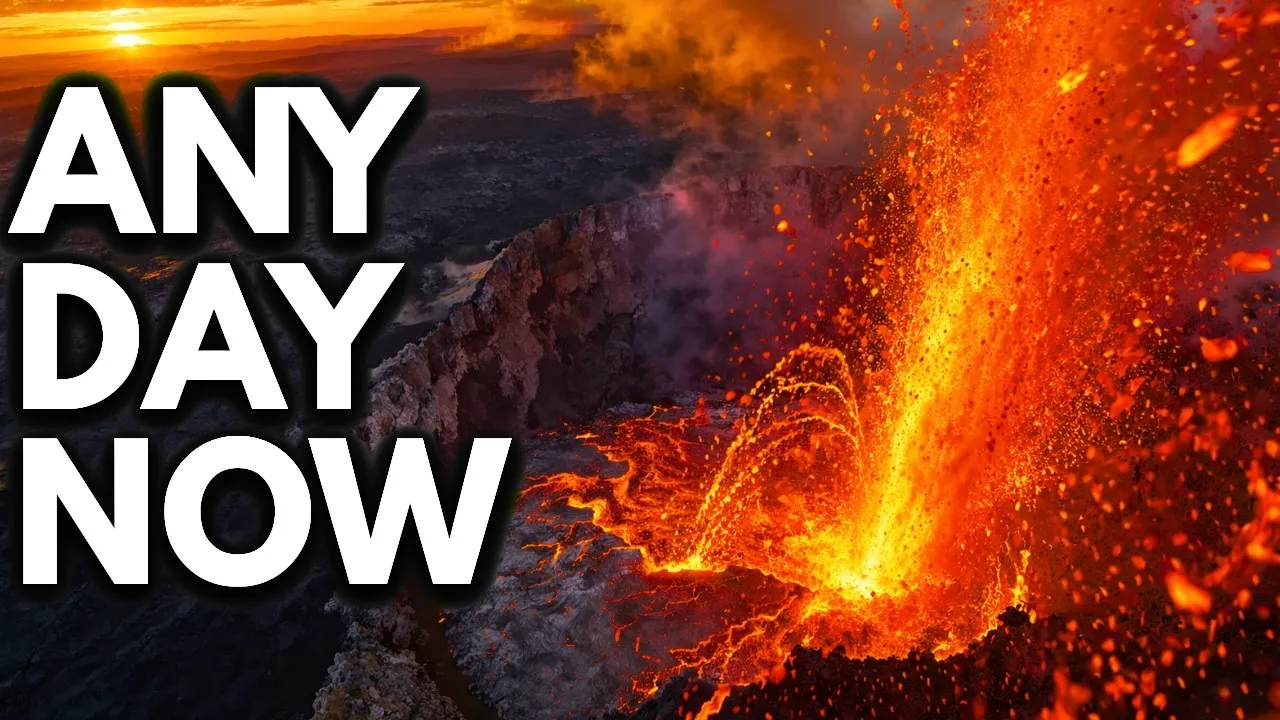
Researchers studying Nicaragua's Masaya Volcano have found evidence suggesting it may be fed by two active magma reservoirs, according to a study published in Geophysical Research Letters.
The volcano, known as the 'Mouth of Hell,' has been a subject of fascination since Spanish conquistadors first observed its lava lake in the early 1500s.
Lizzie Johnson, who led the research as an undergraduate at Penn State and is now pursuing her PhD at the University of Hawaii at Manoa, said, 'Having a thorough understanding of Masaya’s volcanic activity and its related hazards is critical, as around 2 million people live near Masaya, and the caldera is a national park and popular tourist destination.'
The study found that the area around the active Santiago crater consistently sank over a six-year period, indicating a second, shallower magma reservoir located about 200 meters underground.
Johnson explained, 'When it’s subsiding, that means that there’s probably magma draining away from the volcano, but once the ground starts uplifting again, that can mean that there’s potentially new magma moving in.'
Masaya Volcano is a complex caldera system that includes a nested series of cones and craters with an active vent in the Santiago crater.
The volcano's recent activity has mostly consisted of passive degassing, lava lake formation, and vent-clearing blasts, but it has also produced at least four massively explosive Vesuvian eruptions throughout its history.
Although Masaya last produced a major lava flow in 1772, its persistent degassing often produces dangerously high concentrations of sulfur dioxide volcanic gas.
The researchers noted that the area directly around the active Santiago crater deflated over the entire study period independently of the transition to inflation of the main reservoir, indicating a more complex plumbing system.
Further long-term geodetic and modeling studies will provide a more thorough understanding and allow for effective hazard monitoring and mitigation at Masaya and other lava-lake hosting basaltic volcanoes.
Understanding what drives these transitions is critical to assessing the threat the volcano poses to millions living within 13 miles of it.
Background
A hellmouth is a depiction of the entrance to Hell as the gaping mouth of a huge monster. Hellmouths are first present in Anglo-Saxon art and often appear in scenes of the Last Judgment and Harrowing of Hell in the late medieval period in Europe and at times, during the Renaissance and later.
What's confirmed
- “Having a thorough understanding of Masaya’s volcanic activity and its related hazards is critical, as around 2 million people live near Masaya, and the caldera is a national park and popular tourist destination,” Lizzie Johnson, who led the research as an undergraduate in Penn State’s geosciences program and is now pursuing her PhD in Earth sciences at the University of Hawaii at Manoa, said in a statement.
- “When it’s subsiding, that means that there’s probably magma draining away from the volcano, but once the ground starts uplifting again, that can mean that there’s potentially new magma moving in,” Johnson said.
- “Although Masaya last produced a major lava flow in 1772, its persistent degassing often produces dangerously high concentrations of sulfur dioxide volcanic gas,” Johnson added.
What's still developing
- Its buried magma systems are equally complex, and this has made it difficult for researchers to understand how they work, according to Johnson.
- Proposing that Guðlac’s vision borrows Hell’s traditional location in the north but instantiates it north of East Anglia, the article discusses how the Guðlac narrative combines patristic hell-mouth imagery with an Anglo-Saxon social imaginary.
- In the Dialogues of Gregory of the Great, immensely popular in Anglo-Saxon England, a volcano is described, functionally, as the mouth of hell.
- Click here to read this article from the Postgraduate English Journal Click here to read this article from Academia.edu Top Image: Volcano in Iceland – photo by Global Panorama / Flickr Become a member to get ad-free access to our website and our articles.
- Given how many people are on and around this well-and-truly active volcano, scientists are keeping a very close eye on what it's up to.
- Then, from mid-2022 to 2024, it started rising again, as if the reservoir was once again filling up with magma.
- The volcano's famous lava lake is just a small surface feature of the much larger volcano complex, which researchers are still trying to understand, so they can better understand what risks face nearby residents and the droves of tourists that come through daily.
- The volcano has also produced several explosions over the past five decades, though luckily, very few people have been injured.