
Home · Politics · Oct 6 archive
Supreme Court Weighs Climate Change Lawsuits in New Term
Confirmed
In Short: The Supreme Court began its new term with a high-profile case on whether federal or state courts should handle climate change lawsuits.
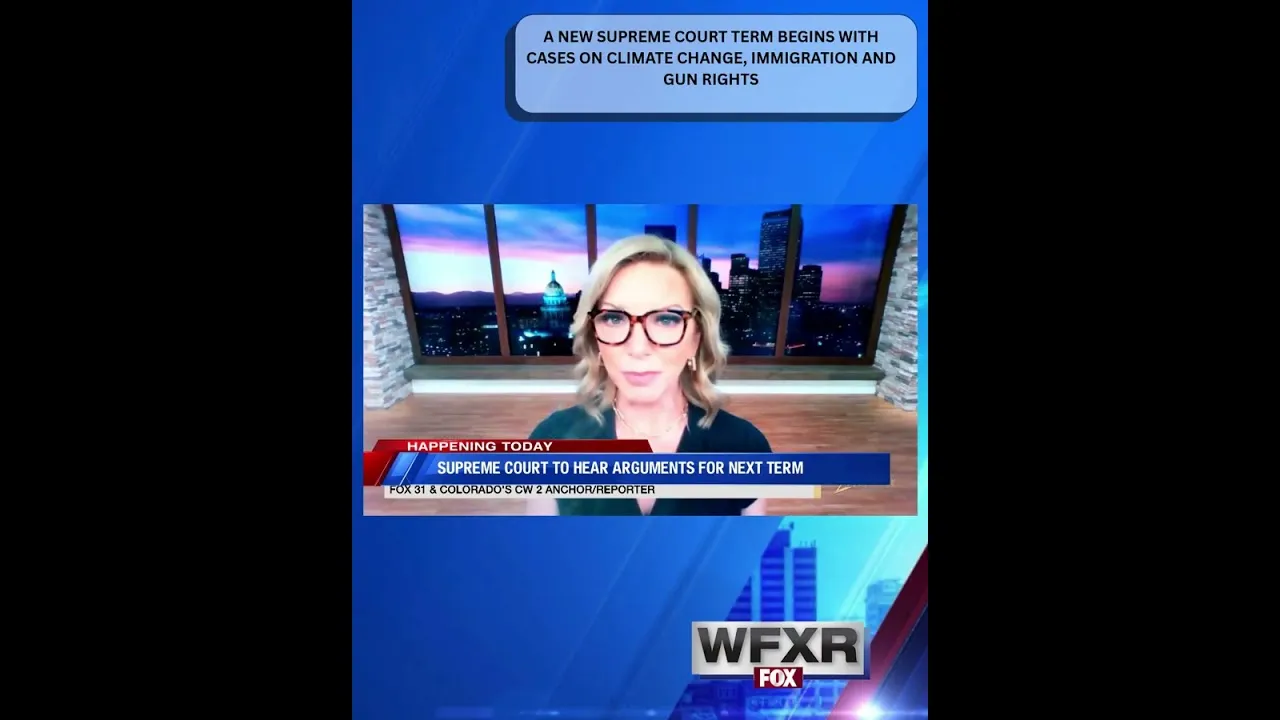
The Supreme Court launched its new term on Monday with a blockbuster oral argument over whether federal or state laws and courts should handle civil lawsuits against energy companies for alleged climate change harms.
Justice Roberts questioned whether the case was different from other situations where similar claims were allowed to proceed in state courts.
Justice Kagan argued that the court had previously established that certain types of pollution were federal matters unless Congress specified otherwise.
Sarah Harris, a Justice Department lawyer, told the court that interstate air pollution is an inherently federal area.
The companies, backed by the Trump administration, argue that emissions are a national issue that should be heard in federal court, where similar suits have been dismissed.
The Supreme Court specifically asked both parties to address whether it should even hear the case, at least at this stage.
It was unclear after the public session how the court might rule.
Colorado's highest court had previously allowed the case brought by Boulder County to proceed.
What this adds
The Supreme Court's decision could have significant implications for how climate change lawsuits are handled in the future.
The court's docket for the new term includes controversial cases ranging from religion and climate change to immigration and gun control.
Background
The Supreme Court formally opens its new term on Monday, with a docket filled with controversial cases ranging from religion and climate change to immigration and gun control.
The Supreme Court, with no dissents, upheld a state court order requiring Missouri to use the 2022 election map, which favors Republicans in six of the eight districts but preserves a key seat for Democrats.
What's confirmed
- The Supreme Court launched its new term on Monday with a blockbuster oral argument over whether federal or state laws and courts should handle civil lawsuits against energy companies for alleged climate change harms.
- Justice Roberts questioned whether the case was different from other situations where similar claims were allowed to proceed in state courts.
- Justice Kagan argued that the court had previously established that certain types of pollution were federal matters unless Congress specified otherwise.
- Sarah Harris, a Justice Department lawyer, told the court that interstate air pollution is an inherently federal area.
- The companies, backed by the Trump administration, argue that emissions are a national issue that should be heard in federal court, where similar suits have been dismissed.
- The Supreme Court specifically asked both parties to address whether it should even hear the case, at least at this stage.
- It was unclear after the public session how the court might rule.
- Colorado's highest court had previously allowed the case brought by Boulder County to proceed.
What's still developing
- Environmental Protection Agency Headquarters Building in Washington, D.C. (Getty) The justices will also decide whether they have jurisdiction to hear this dispute, or whether it belongs in state courts.
- "There are a lot of familiar situations where conduct outside of the state has broad effects among other states, and yet we allow state courts in a particular state to bring litigation," said Roberts.
- "I guess I'm not quite sure what makes this situation different from all those other ones, where we've allowed them to proceed in state court."
- "This is the same kind of lawsuit against the same kind of actors for the same kind of harm," said Kagan.
- "We don't have to reinvent the wheel because we've said this multiple times," he added, "and Congress, presumably, when doing the Clean Air Act and doing the Clean Air Act amendments, has relied on this Court's precedents establishing that this kind of pollution is a federal law matter unless Congress speaks otherwise."
- "This suit egregiously exceeds constitutional limits on state authority," Harris told the justices.
- SCOTUS approved the administration’s petition to reverse the lower court with a grant, vacate, and remand order reading, “Petition GRANTED. Judgment VACATED and case REMANDED,” the Rio Times reported.
- Supreme Court has reversed a lower court’s restriction and approved the Trump administration’s plan to end Temporary Protected Status (TPS) for hundreds of thousands of Venezuelan migrants.
- On October 5, the top court reversed the Ninth Circuit’s January ruling that claimed the Trump administration did not have the authority to end President Joe Biden’s TPS policy, which would allow the president to end the status of more than 500,000 Venezuelans.
- The SCOTUS has now vacated the Ninth Circuit’s ruling and sent the case back to the lower court for review.
- The SCOTUS reversed the lower court’s ruling twice, once in May and a second time in October.
- But in June, the government won a favorable ruling maintaining that the TPS law bars courts from reviewing non-constitutional challenges to an administration’s termination of the program.
Sources
- Fox Newslink
- Breitbartlink
- Dallasnewslink
- Barandbenchlink
- Fox Newslink
- Americanprogresslink
- BBClink
- Lawcommentarylink
- The Guardianlink
- Talkingpointsmemolink
- Slatelink
- Ars Technicalink
- The Indian Expresslink
- WarpBeat — background on Supreme Court Kicks Off Controversial New Term link
- WarpBeat — background on Supreme Court Rejects Missouri's GOP Map link
- WFXR NEWS — video link