
Home · Politics · Oct 3 archive
Supreme Court Kicks Off Controversial New Term
Confirmed
In Short: The Supreme Court formally opens its new term on Monday, with a docket filled with controversial cases ranging from religion and climate change to immigration and gun control.
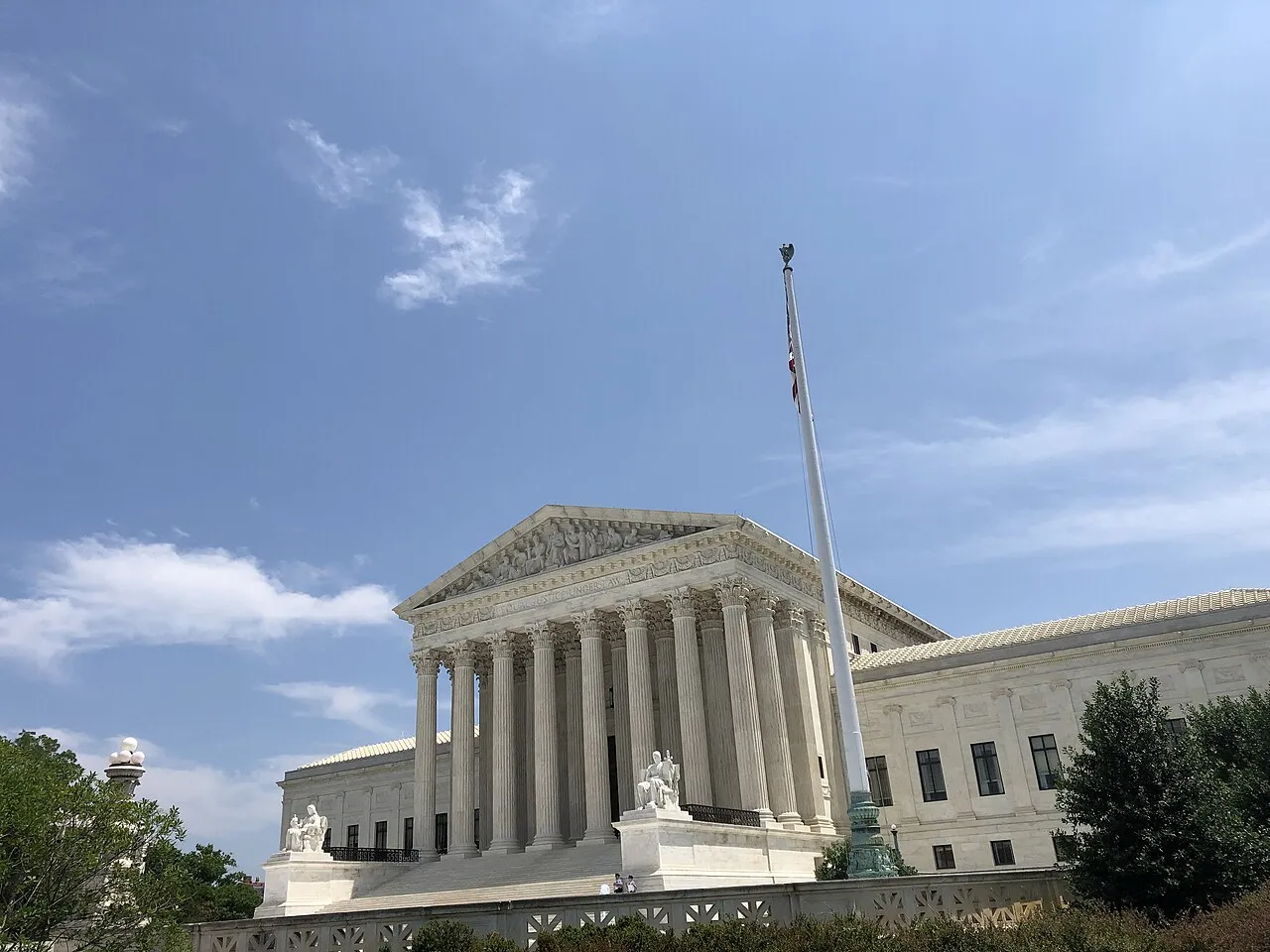
The Supreme Court formally opens its new term on Monday, with a docket filled with controversial cases ranging from religion and climate change to immigration and gun control.
According to NPR, this case is seen as an uphill battle for environmentalists.
Perhaps the biggest case of the term involves religious exemptions from generally applicable laws, a subject on which the court's conservative majority has shifted its legal doctrine.
The court's conservative bloc has previously ruled in favor of religious exemptions from such laws, but has never ruled that religious schools are entitled to full taxpayer funding.
The term also includes a case on immigration, Genalo v. Black, which the Trump administration had previously tried to bring to the Supreme Court.
In June, the court granted review in Genalo v. Black to address a question about periodic bond hearings for detained immigrants.
However, in a twist, the Trump administration recently notified the court that the case is now moot and should be dismissed from the oral argument docket.
Meanwhile, the court's handling of emergency applications has become a point of contention.
Lower court judges, both liberal and conservative, have complained that the court's quick decisions on emergency docket rulings lack adequate explanation.
The court has made some efforts to provide limited explanations for these rulings, but the issue remains unresolved.
In a separate development, eight high court chief justices were appointed in India, following a controversy over serious allegations against a chief justice in Rajasthan.
The Supreme Court Collegium had recommended these appointments days earlier.
Background
The Supreme Court, with no dissents, upheld a state court order requiring Missouri to use the 2022 election map, which favors Republicans in six of the eight districts but preserves a key seat for Democrats.
The Supreme Court's approval ratings are low, but experts say this reflects polarization rather than a broader crisis of legitimacy.
What's confirmed
- The Supreme Court formally opens its new term on Monday, with a docket filled with controversial cases ranging from religion and climate change to immigration and gun control.
- According to NPR, this case is seen as an uphill battle for environmentalists.
- Perhaps the biggest case of the term involves religious exemptions from generally applicable laws, a subject on which the court's conservative majority has shifted its legal doctrine.
- The court's conservative bloc has previously ruled in favor of religious exemptions from such laws, but has never ruled that religious schools are entitled to full taxpayer funding.
- The term also includes a case on immigration, Genalo v. Black, which the Trump administration had previously tried to bring to the Supreme Court.
- In June, the court granted review in Genalo v. Black to address a question about periodic bond hearings for detained immigrants.
- However, in a twist, the Trump administration recently notified the court that the case is now moot and should be dismissed from the oral argument docket.
- Meanwhile, the court's handling of emergency applications has become a point of contention.
- Lower court judges, both liberal and conservative, have complained that the court's quick decisions on emergency docket rulings lack adequate explanation.
- The court has made some efforts to provide limited explanations for these rulings, but the issue remains unresolved.
- In a separate development, eight high court chief justices were appointed in India, following a controversy over serious allegations against a chief justice in Rajasthan.
- The Supreme Court Collegium had recommended these appointments days earlier.
What's still developing
- But for all practical purposes, the formerly quiet summer months after the court finishes its opinions in all argued cases no longer exists.
- With that backdrop, here are the cases the court will be hearing in the coming weeks: The opening case, to be argued Monday, tests whether state and local governments can sue energy companies for allegedly deceiving the public about the damaging effects of fossil fuels.
- It used to be that the first Monday in October marked the beginning of a new Supreme Court term.
- "So now we have twice as many full court rulings on emergency applications as we have on the merits docket," Vladeck observes, adding, "That is a very new phenomenon." The difference is that decisions on the emergency docket are rendered quickly, with little briefing, no oral arguments, and ultimately little or no explanation of the ruling.
- And the Trump administration often takes what used to be the rare step of getting to the Supreme Court by leapfrogging over lower appellate courts that the administration views as hostile.
- John Sauer noted that the administration hoped the justices would still “resolve the questions presented” during the 2026-27 term, explaining that his team would work to “identify[] alternative vehicles” with which to return the issue to the court.
- In doing so, however, it skipped over the federal appeals court that would typically weigh in before the Supreme Court.
- The Supreme Court previously addressed Section 1226(c) in 2018’s Jennings v. Rodriguez, holding that the statute itself did not require periodic bond hearings.
- The new case, Genalo v. D.C., involves a man identified only as D.C. in court filings, who was born in the Dominican Republic in 1963 and “unlawfully entered the United States” “[a]t an unknown time and place,” according to the petition.
- “The Court has previously granted certiorari before judgment to allow a case to replace one that was dismissed,” Sauer wrote, urging the justices to “do the same here.” Like Genalo v.