
Home · Science · Oct 5 archive
Why are data centres such a big deal in Scotland?
Confirmed
In Short: Plans are in place to build at least 23 giant AI-powered data centers in Scotland.
The Scottish government is facing pressure over plans for massive data centers, as tech firms race to build hyperscale facilities to support the growing demand for artificial intelligence (AI) services.
According to the BBC, the proposed data center at Auchtertool would be the same size as the neighboring village and could generate significant noise from thousands of servers and cooling systems.
Environmental groups and the Scottish Greens have called for a moratorium on large data centers, citing concerns about climate targets and the strain on renewable energy supplies.
In August, the government announced that it would require notification for proposed data centers over 50MW in capacity, and promised new guidance by Christmas.
The government also stated that it is 'highly unlikely' any large data centers would be approved before Christmas.
The explosion in AI over the past few years has seen tech firms scrambling to build new 'hyperscale' data centers, including some that would rank among the biggest in the world.
While the tech industry says it is developing more efficient cooling systems, industry sources told the BBC last year that the UK government's plan to make the UK a 'world leader' in AI could put already stretched supplies of drinking water under strain.
From the outside, data centers look like a factory or a warehouse, but they are crucial for processing the vast amounts of data generated by online activities.
The Scottish government's decision to consider these massive data centers has sparked controversy, with concerns about noise, environmental impact, and resource strain.
King Charles III warned tech giants of the 'existential dangers' posed by AI during a conference in Scotland, highlighting the broader concerns surrounding the technology's rapid development.
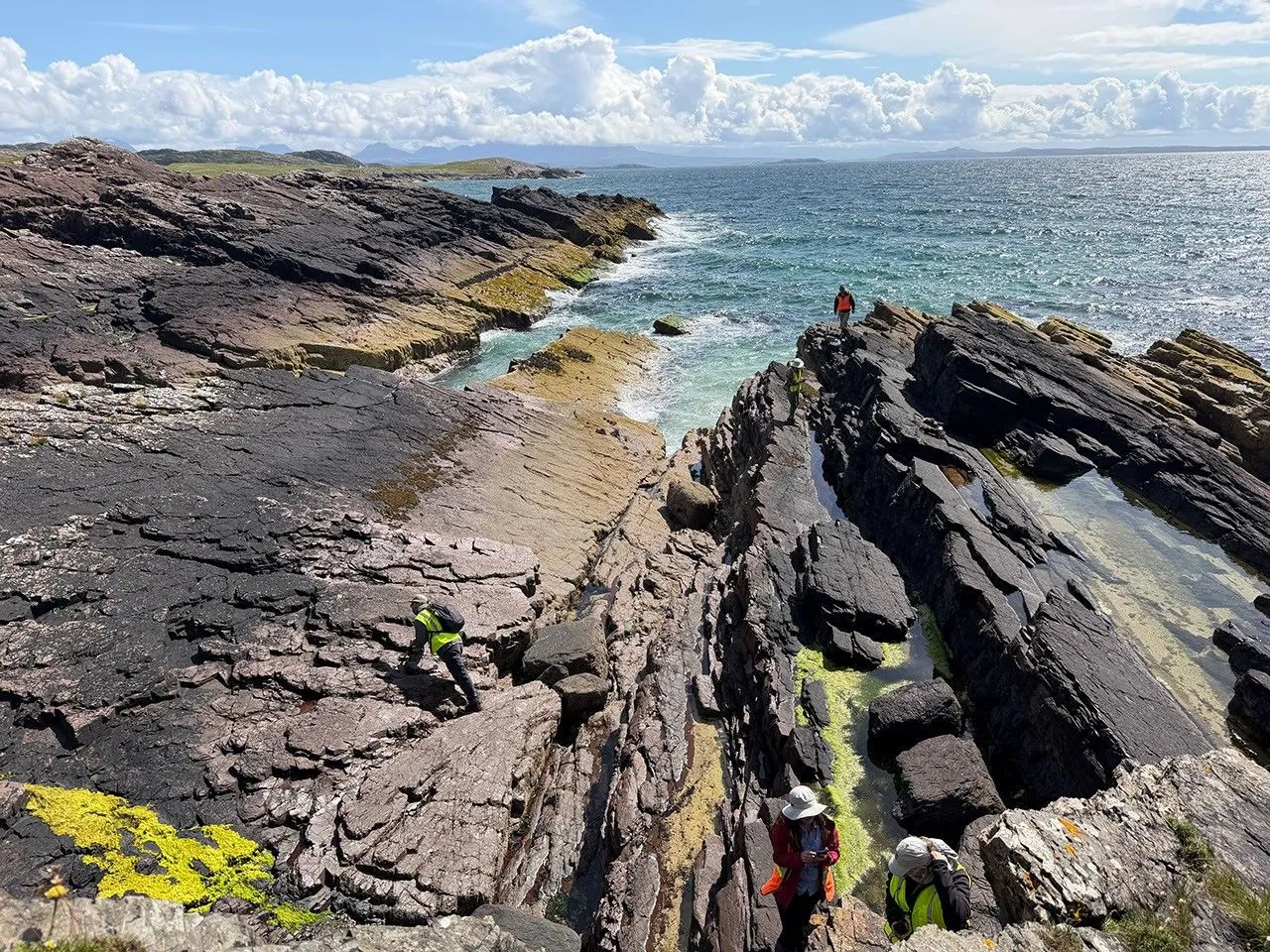
The remote cliffs of Scotland’s Clachtoll region provide scientists with a natural laboratory for studying conditions that resemble parts of ancient Mars, as NASA scientists travel to Scotland to examine ancient rocks.
These rocks and cliffs offer a combination difficult to find on Earth, forming in environments comparable to ancient Martian lakes and rivers, and holding evidence of microbial life from 1.2 billion years ago.
What this adds
The Scottish government's decision to consider these massive data centers has sparked controversy, with concerns about noise, environmental impact, and resource strain.
The remote cliffs of Scotland’s Clachtoll region provide scientists with a natural laboratory for studying conditions that resemble parts of ancient Mars, as NASA scientists travel to Scotland to examine ancient rocks.
What's confirmed
- Their new AI-supported method of analyzing the data revealed more than 6 million individual trees across the 569 km² survey area, as well as the exact height of every tree.
- Now, a decade since the RSPB Scotland, Forestry and Land Scotland, NatureScot, and WildLand Ltd came together to form the Cairngorms Connect partnership, this study shows that over 5,235 hectares of previously open land supports young woodland - defined as land with over 100 trees per hectare.
- Thursday, September 24, 2026 · 3:03 AM ET In Short: A University of Cambridge-led team has used aerial surveys across a vast swath of the Cairngorms National Park in Scotland to create detailed 3D maps that show the beginnings of large-scale recovery of native woodlands.
What's still developing
- A Google Data Centre in Cheshunt in Hertfordshire Every time you ask ChatGPT a question, read a Google summary or make an online bank payment, a data centre is working behind the scenes.
- Data centres have many fans cooling down the servers inside and people in the US who live near them have reported hearing a constant noise, with concerns it has also driven away wildlife.
- Plans are in place to build at least 23 giant AI-powered data centres.
- So what exactly are data centres, and why have they become one of Scotland's most controversial planning battles?
- Scotland's centres are currently quite small, but some of proposals for the hyperscale versions are immense.
- This overlap is ideal for scientists working to interpret NASA’s rover data from the Red Planet.
- Adrian Broz of Purdue University (left) and Field Lead Mike Thorpe of NASA’s Goddard Space Flight Center (cliff’s far edge) look for reduction spots as Amy McAdam (wearing brimmed hat) and Fuen Cañadas Blasco (right), also of NASA Goddard, prepare to collect samples at the Bay of Stoer in Scotland.
- “The ability to map regenerating trees so precisely, at such a huge scale, is a breakthrough for monitoring nature restoration at a landscape scale. It means we can effectively map young trees, assess whether restoration targets are being met, and inform future restoration work,” said Dr Aland Chan in the University of Cambridge’s Centre for Landscape Regeneration, who co-led the work.
- From a light aircraft flown 600m above the ground, a laser scanning technology known as LiDAR collected the data used by the Cambridge team.
- Flights in Scotland, Northern Ireland and northern England have been affected by air traffic control issues – the second major disruption at UK airports in a few weeks.
- Separation from the UK was thrust into the fore again this week after Andy Burnham said in the House of Commons another vote would be allowed if the majority of people in Scotland wanted it.
- In a letter to the First Minister this week, the Prime Minister said he had been “highlighting that there is no consensus for an independence referendum in Scotland”.