
Home · World · Oct 4 archive
How russias new jet drones are changing the threat to kyiv
Confirmed
In Short: French President Emmanuel Macron warns of increased Russian hybrid threats as Kyiv faces intensified drone strikes.
French President Emmanuel Macron has warned of an intensifying Russian hybrid threat against Europe, citing recent attacks on Kyiv as evidence of Moscow's evolving aggression.
Macron said after meeting with other French political parties, 'the Russian hybrid threat, facing Europeans and France, has intensified,' and that the nature of Russian aggression is changing.
Kyiv Mayor Vitali Klitschko reported two people were injured in the latest Russian attack, which included 135 drones, 52 of which were jet-powered.
Ukrainian President Volodymyr Zelensky said Russian drones had also attacked a warehouse in the north-eastern region of Sumy, killing one person.
Zelensky warned that Russia's war effort in Ukraine is struggling, and as a result, Moscow is increasing pressure on Kyiv's European allies.
German Chancellor Friedrich Merz made a surprise visit to Kyiv to show support, emphasizing Germany's interest in the outcome of the war.
Draganfly CEO Cameron Chell told Fox News that Russia may be using signal repeaters to help its drones evade air defenses and strike with greater precision.
Chell explained that mesh networks allow drones and strategically placed ground-based repeaters to relay encrypted signals, making it harder for Ukraine to disrupt and bring down Russian drones.
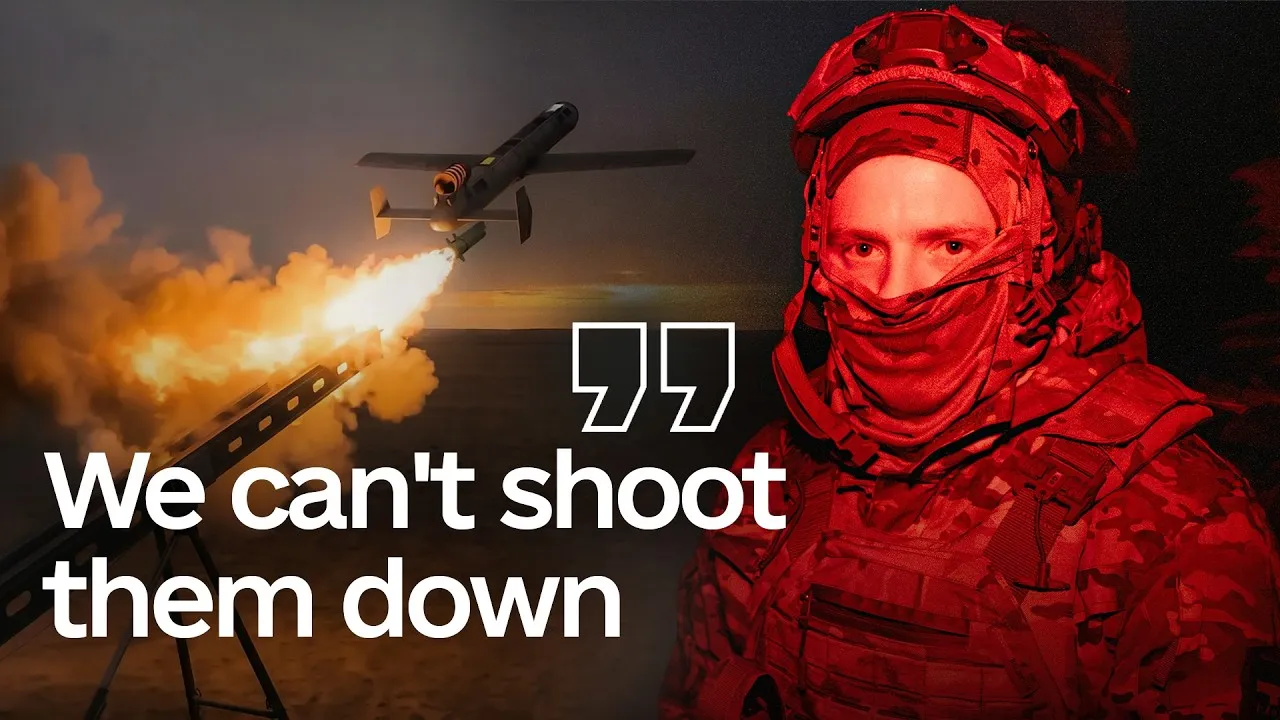
Ukrainian President Zelenskyy said Ukraine intercepts about 70% of conventional Russian drones during mass attacks, but interception rates fall to 57% against newer, faster jet-powered UAVs.
Zelenskyy warned that Russia is not preparing to stop the war and plans to spend US$12 billion next year on producing jet-powered drones and loitering munitions.
The EU Delegation in Ukraine responded to Russian threats, stating that threatening them will not stop Europe's support for Ukraine.
Major bridges in Kyiv have been hit by Russian drone strikes for four consecutive days, as Moscow ramps up attacks on critical infrastructure in Ukraine's capital.
What this adds
Macron's warning and the recent drone strikes on Kyiv highlight the evolving nature of Russia's aggression, with a focus on hybrid warfare tactics.
The use of jet-powered drones and mesh networks to evade air defenses represents a significant shift in Russia's military strategy, making it harder for Ukraine to defend against these attacks.
The EU Delegation's response underscores the determination of European nations to continue supporting Ukraine despite Russian threats.
Background
Macron cited the September 13 strike on a Kyiv-Warsaw passenger train, which occurred less than two miles from Poland’s border, as an example of the escalating threat.
What's confirmed
- French President Emmanuel Macron has warned of an intensifying Russian hybrid threat against Europe, citing recent attacks on Kyiv as evidence of Moscow's evolving aggression.
- Macron said after meeting with other French political parties, 'the Russian hybrid threat, facing Europeans and France, has intensified,' and that the nature of Russian aggression is changing.
- Kyiv Mayor Vitali Klitschko reported two people were injured in the latest Russian attack, which included 135 drones, 52 of which were jet-powered.
- Ukrainian President Volodymyr Zelensky said Russian drones had also attacked a warehouse in the north-eastern region of Sumy, killing one person.
- Zelensky warned that Russia's war effort in Ukraine is struggling, and as a result, Moscow is increasing pressure on Kyiv's European allies.
- German Chancellor Friedrich Merz made a surprise visit to Kyiv to show support, emphasizing Germany's interest in the outcome of the war.
- Draganfly CEO Cameron Chell told Fox News that Russia may be using signal repeaters to help its drones evade air defenses and strike with greater precision.
- Chell explained that mesh networks allow drones and strategically placed ground-based repeaters to relay encrypted signals, making it harder for Ukraine to disrupt and bring down Russian drones.
- Ukrainian President Zelenskyy said Ukraine intercepts about 70% of conventional Russian drones during mass attacks, but interception rates fall to 57% against newer, faster jet-powered UAVs.
- Zelenskyy warned that Russia is not preparing to stop the war and plans to spend US$12 billion next year on producing jet-powered drones and loitering munitions.
- The EU Delegation in Ukraine responded to Russian threats, stating that threatening them will not stop Europe's support for Ukraine.
- Major bridges in Kyiv have been hit by Russian drone strikes for four consecutive days, as Moscow ramps up attacks on critical infrastructure in Ukraine's capital.
What's still developing
- “As Russia’s war effort in Ukraine struggles, it has a clear imperative to increase pressure on Kyiv’s European allies,” said Matthew Arnold, program director of the London School of Economics think tank LSE IDEAS’ Democratic Resilience in a New Age of War Program.
- “Its second intended motive is to sow panic in the European public opinion about the risks of continuing support to Ukraine and getting drawn into a conflict with Russia,” Vlas said.
- As an example of the threat Russia poses, Macron referred to the strike on a Kyiv-Warsaw passenger train on September 13 which took place less than two miles from Poland’s border.
- "If Europe attacks Russia, it will be a completely different war, and it will be very short."
- "To get from the left bank to the right one and back - it's just hell," Kyiv resident Roman told the BBC on Sunday.
- "Germany's security also depends on the outcome of this war. That is why we are helping out of our own self-interest as well."
- "These are weapons that will help [us] right now, as well as support for our energy sector ahead of winter," he said.
- He said the country "needs all our support in the coming weeks", adding: "If Russia is not stopped, its war machine will sooner or later turn against us."
- Responding to the warning, EU ambassador Katarína Mathernová wrote on X on Sunday: "The EU Delegation is staying. Threatening us will not stop Europe's support for Ukraine. It only reminds us why that support matters!"
- The Kyiv Post first reported the possible use of the small ground devices, or repeaters, which Draganfly CEO and co-founder Cameron Chell said form part of an expanding "mesh" network that allows Russian drones to relay encrypted signals across multiple connections, making drones and drone swarms far harder for Ukraine to disrupt and bring down through standard electronic jamming. Chell’s warning also came amid escalating diplomatic notices for the region, with Moscow urging foreign nationals and embassy staff to leave the capital Kyiv immediately on Oct. 3, highlighting "mortal danger" as Russian forces threatened further "massive retaliatory strikes."
- "Russia has come to the realization that innovation is going to have to win this war, to the point now where they are becoming the innovative leader in this war—not just in terms of tactics, strategy, and technology, but the entire mindset is shifting," Chell said.
- "The enemy is using high-quality materials in its UAVs and increasing camera resolution, allowing the enemy to view the situation on the ground in detail and use these UAVs for various targets. And the use of mesh networks is indeed present. Of course, this is quite dangerous," Ihnat said, according to Ukrainska Pravda.