
Home · Politics · Oct 3 archive
Richard Nixon
Confirmed
In Short: Esquire delves into the conservative revisionism surrounding Richard Nixon's presidency, noting that some use Nixon's crimes as an alibi for the current president.
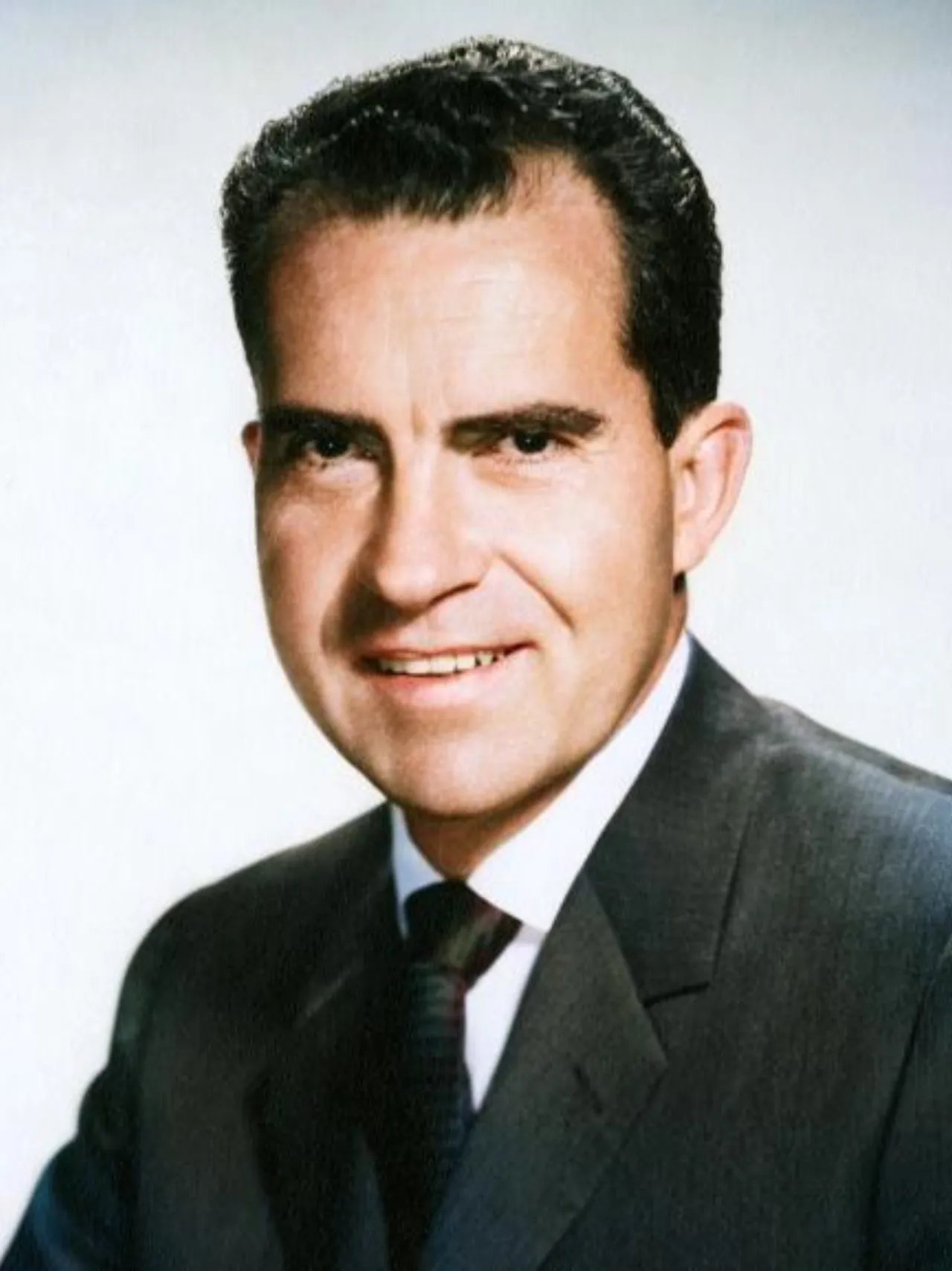
Time magazine highlights Nixon's complex relationship with the press, noting that while he distrusted journalists personally, he also received admiring coverage during détente with the Soviet Union and his trip to China.
William Safire, a former Nixon speechwriter, recalled Nixon's view that 'the press is the enemy... to be hated and beaten,' an attitude Safire called 'neither justifiable nor defensible.'
Nixon's plan to wiretap journalists who reported critically on his administration, starting with the 1969 bombing of North Vietnamese sanctuaries in Cambodia, underscores his efforts to intimidate and punish the press.
The Daily Wire reports that Nixon's popularity has increased among conservatives, with some arguing he was a victim of the 'deep state' that pursued President Donald Trump.
Vice President JD Vance compared Nixon's treatment by the deep state to Trump's, saying, 'If you look at the story of how the deep state took down Richard Nixon, it’s not all that different from what the same groups of people tried to do to Donald Trump.'
The Justice Department is reviewing the treatment of Nixon during the Watergate scandal, including a presentation by former Nixon staffer Geoff Shepard.
The Nixon Foundation has launched a campaign to rehabilitate Nixon's image, using social media to celebrate his presidency and highlight his foreign policy achievements.
Salon.com notes that Nixon's new popularity among young conservatives is part of a well-designed PR campaign by the Nixon Foundation, featuring viral videos and clips from 'Mad Men.'
Nixon's legacy is being reimagined to justify current political actions, with some conservatives praising his foreign policy while ignoring his domestic controversies.
What this adds
The review by the Justice Department's Office of Professional Responsibility (OPR) includes a presentation by Geoff Shepard, who argues Nixon did not receive due process and that prosecutors engaged in misconduct.
The Nixon Foundation's campaign has successfully rebranded Nixon among younger conservatives, with merch and social media posts celebrating his presidency.
The renewed interest in Nixon among conservatives is part of a broader effort to roll back post-Watergate reforms and justify current political actions.
Background
Esquire delves into the conservative revisionism surrounding Richard Nixon's presidency, noting that some use Nixon's crimes to justify current presidential actions.
What's confirmed
- Late on the afternoon of April 19, 1971, Richard Nixon picked up the White House telephone and told his deputy attorney general, Richard Kleindienst, to kill a federal antitrust case against the International Telephone and Telegraph Corporation (ITT).
- In the film, a gang of surfers robbed banks wearing masks of Ronald Reagan, Richard Nixon, Jimmy Carter and Lyndon B.
- The tradition between the two countries was started by Chairman Mao Zedong in 1972, shortly after Richard Nixon became the first US president to visit China following the Communist Party’s rise to power in 1949.
- President Richard Nixon stared out intensely from behind the Resolute Desk on August 7, 1974.
- The personalities and plots defining this election carry their own curious similarities to the life and times of Richard Milhous Nixon.
- The Richard Nixon Presidential Library, with its annex built to resemble the West Wing of the White House, Nixon’s small childhood home, and (my favorite as a kid) Marine One stationed outside, is the epicenter of my hometown, Yorba Linda, California.
What's still developing
- There has been a school of conservative Watergate revisionism almost from the moment Nixon got on the helicopter on the South Lawn.
- But using Nixon’s crimes as an alibi and camouflage for the current president opens a whole new universe of pretzeled history.
- Journalists took it for granted that Nixon, with his long history of resenting the press, had nefarious designs on neutering the Fourth Estate.
- One of the earliest of these was Nixon’s plan, hatched with National Security Adviser Henry Kissinger, to stop leaks by wiretapping the homes and phones of journalists who reported critically on the Administration’s actions, starting with the 1969 bombing of North Vietnamese sanctuaries in Cambodia, which the White House had hoped to keep secret.
- Well before Trump railed against fake news, Richard Nixon waged a sustained campaign to intimidate and punish those who covered him.
- “I think you’ve done something that’s never been done in the game,” he said.
- Girls subject to "mass grooming" when told to suppress their "correct instincts to cater to the desires of boys." Republicans prior to President Reagan's party reset frequently paired social liberalism on racial and sexual issues with business-friendly policies, despite Richard Nixon's Southern strategy to win the presidency by siphoning off Democrats wary of the civil rights movement.
- The review focuses on the conduct of the special prosecutor’s office established to investigate Nixon and the Watergate scandal, The Wall Street Journal reported.
- Shepard argues that Nixon did not receive due process and that the prosecutors engaged in misconduct while pursuing the case.
- On today’s Ruminant Jonah makes his old man proud by holding forth on the new right’s attempted rehabilitation of Richard Nixon.
- Our 37th president reminds us that Republicans not only have the power to win elections, but to beat the left decisively, as long as we understand what made Richard Nixon so popular in the first place.
- A generation that was previously taught that there is nothing more to Nixon than Vietnam and Watergate is taking a second look.