
Home · Business · Sep 30 archive
Fed's Inflation Gauge Shows Persistent Pressures
Confirmed
In Short: In India, the Reserve Bank of India's Monetary Policy Committee (MPC) is under pressure to increase interest rates as inflation ticked up and the economy showed robust growth.
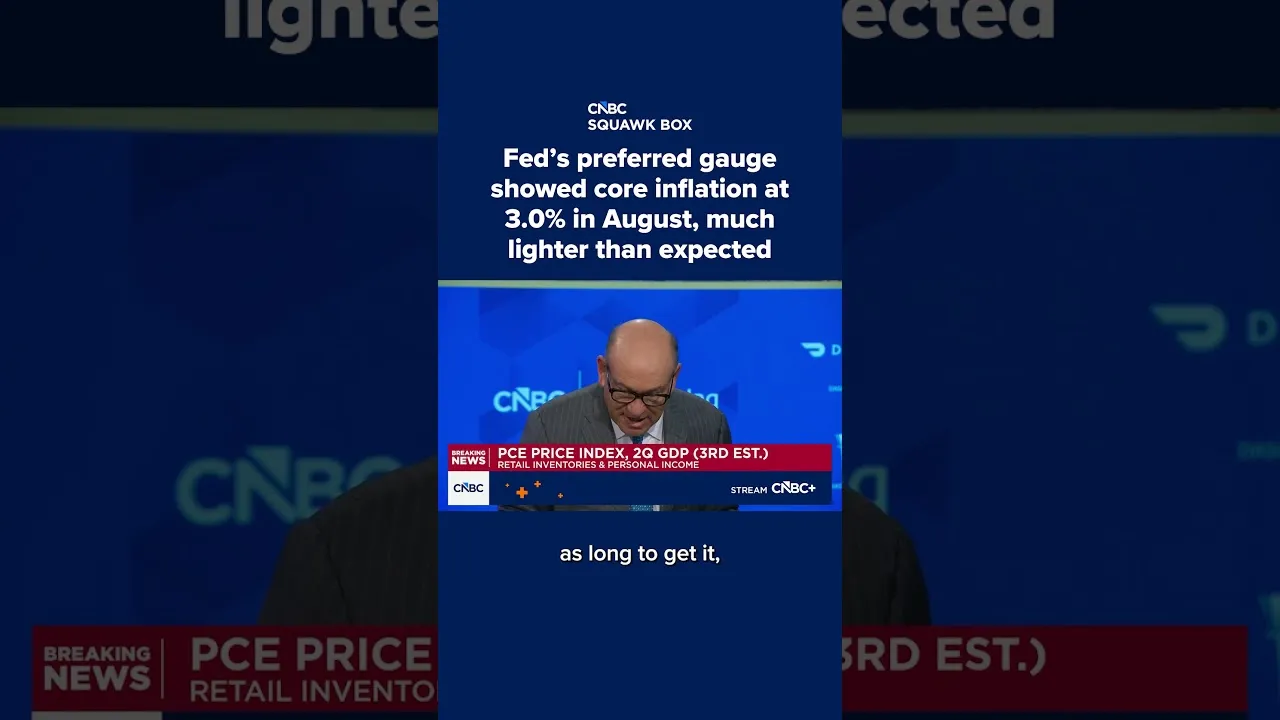
The Federal Reserve's preferred inflation gauge, the Personal Consumption Expenditures (PCE) index, cooled more than expected but remained elevated well above the 2% target in August, as consumers continued to face price pressures.
The Fed policymakers are focused on the PCE headline figure as they try to bring inflation back to their long-run target of 2%, though they view core data as a better indicator of inflation.
The BEA's annual benchmark revisions to PCE inflation data lowered July's readings for headline PCE from 3.7% to 3.4% and core PCE from 3.3% to 3%.
The Bank of Japan also raised interest rates to a more than 30-year high on Friday, signaling further tightening as inflation pressures mount.
Markets are expecting the US central bank to hike the federal funds rate target range by 25 basis points to 3.75–4% after inflation data released on Friday showed American consumer prices rose 0.4% month-on-month in August as against a 0.1% increase in July, with the year-on-year headline inflation rate steady at 3.4%.
What this adds
The report adds that the Fed's focus on the PCE headline figure reflects its efforts to bring inflation back to the 2% target, despite the cooling trend.
The cheap yen is driving up the cost of imported goods, which in turn is putting upward pressure on inflation in Japan.
The Indian Express reports that the MPC must soon increase interest rates due to sustained upticks in inflation and robust economic growth.
The latest CPI inflation print comes three weeks before the next meeting of the MPC, adding urgency to the rate hike discussions.
Background
The Fed’s preferred inflation gauge cooled more than expected but remained elevated well above target in August, as consumers continued to face price pressures.
What's confirmed
- The Federal Reserve's preferred inflation gauge, the Personal Consumption Expenditures (PCE) index, cooled more than expected but remained elevated well above the 2% target in August, as consumers continued to face price pressures.
- The Fed policymakers are focused on the PCE headline figure as they try to bring inflation back to their long-run target of 2%, though they view core data as a better indicator of inflation.
- The BEA's annual benchmark revisions to PCE inflation data lowered July's readings for headline PCE from 3.7% to 3.4% and core PCE from 3.3% to 3%.
- The Bank of Japan also raised interest rates to a more than 30-year high on Friday, signaling further tightening as inflation pressures mount.
- Markets are expecting the US central bank to hike the federal funds rate target range by 25 basis points to 3.75–4% after inflation data released on Friday showed American consumer prices rose 0.4% month-on-month in August as against a 0.1% increase in July, with the year-on-year headline inflation rate steady at 3.4%.
What's still developing
- "Inflation is a little closer to target than in the prior release, but that is because of how inflation is measured, not how it's trending. You don't need your glasses on to tell the difference between 3% core PCE inflation and a 2% target," Adams said.
- The Big Money Show panel discusses market sentiment as rising oil prices send the 10-year Treasury yield soaring.
- Pressure has increased on officials to further tighten monetary policy as a spike in oil prices caused by the Middle East crisis -- which shows little sign of ending anytime soon -- is expected to keep putting upward pressure on inflation.
- "Given that underlying CPI inflation has been approaching two percent and financial conditions have been accommodative, the bank will continue to raise the policy interest rate," the BoJ said on its website.
- The cheap yen is driving up the cost of imported goods, which in turn is putting upward pressure on inflation.
- Still, figures on Friday showed inflation slowed slightly last month.
- Government support for gasoline and electricity fees contributed to the slower pace of inflation, the data showed.
- "Inflation was little changed in August but there are mounting signs that higher energy costs are feeding through and we expect it to rise above the BoJ's two percent target before long," said Marcel Thieliant of Capital Economics.
- The government is trying to mitigate the impact of inflation on household purchasing power, notably with a massive stimulus package adopted at the end of 2025, extensive tax breaks on energy, and measures adopted in the spring to support consumption.
- Core inflation fell to 1.7 percent in August from 1.8 percent but remains close to the BoJ's two percent target.
- The overall inflation rate was unchanged from July, according to the Bureau of Labor Statistics (BLS).
- The BLS said gasoline prices rose 3.9% last month alone, accounting for more than a third of inflation overall.