
Home · Science · Sep 24 archive
Study Shows Rapid Salmon Recovery After Klamath Dam Removal
Confirmed
In Short: A new study confirms that Chinook salmon have quickly reoccupied much of their historical range in the Klamath River following the removal of four dams.
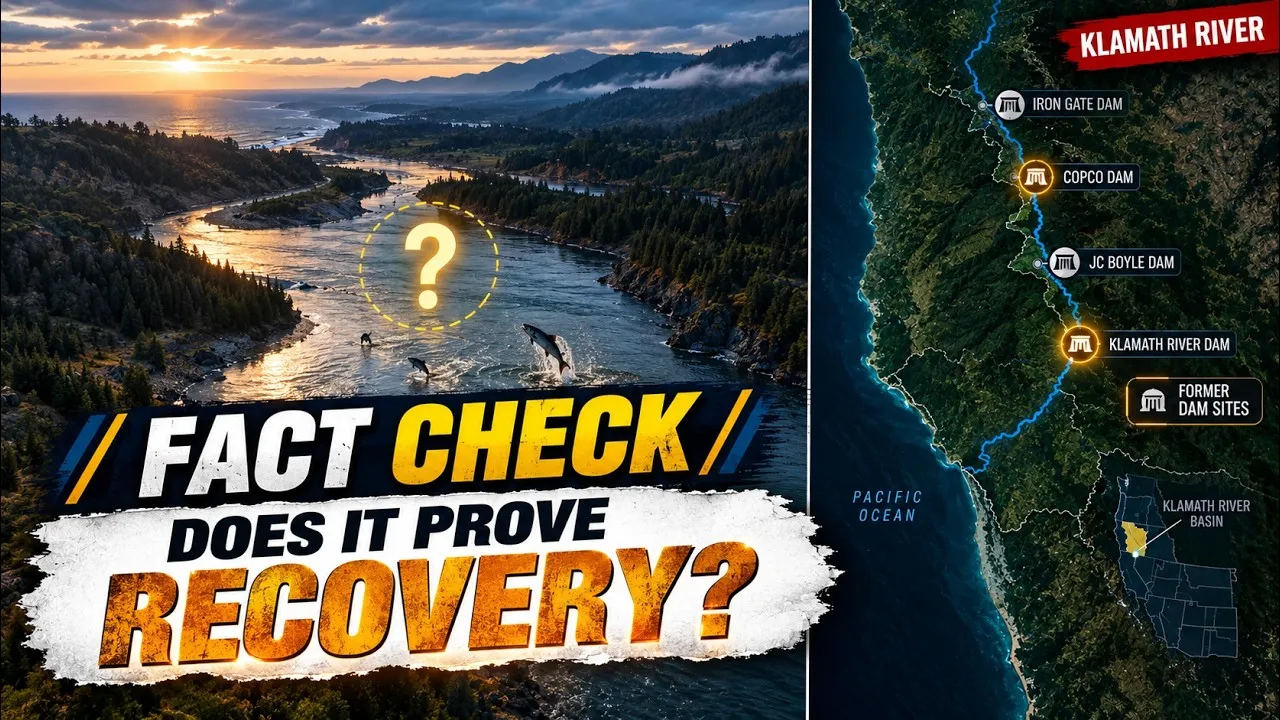
A study published in Scientific Reports reveals that Chinook salmon have rapidly recolonized the Klamath River after the removal of four dams. The research, led by CalTrout’s Shasta Cascade Regional Director Damon Goodman and partners from multiple tribes and government agencies, shows that salmon have reoccupied 88% of their historical range within just two migratory seasons.
The study, which used high-resolution imaging sonar near the former Iron Gate Dam site, found that in the first migration season after dam removal, an estimated 7,742 Chinook salmon passed the site, representing about 18% of all the Chinook that returned to the Klamath Basin that year.
In the second migration season, a new motion-sensor camera captured 2,497 fish swimming through the dam, with just 210 salmon passing through the Link River dam into Upper Klamath Lake.
Damon Goodman, lead author of the study, said, “The biological response has been much faster than I, and most of us, expected.” He noted that within two years, thousands of Chinook salmon have moved into the upper basin and spawned across a significant portion of their historic range.
However, experts caution that while the removal of the dams has been beneficial, challenges remain. George Pess, COO and science director at the Portland-based nonprofit Conservation Angler, stated, “It’s not a magic bullet. There are still plenty of issues with the Klamath.”
Mark Bransom, CEO of the Klamath River Renewal Corp., added, “I think a lot of people think that the removal of those dams created an entirely dam-free, free-flowing river condition. And that’s true for a large part of the river, but it’s not the complete story.”
The salmon runs on the Klamath River continue to hold ceremonial, spiritual, and nutritional significance for indigenous tribes in the region. Historically, these runs were among the most productive in the western United States.
The removal of the dams, which had blocked fish from cold, spring-fed habitat for over a century, has allowed salmon to access crucial spawning grounds. This is particularly important as the world continues to warm.
The study highlights the importance of removing barriers to fish migration and the rapid response of salmon to such changes in their environment.
For more information, visit CalTrout’s Adopt-a-Salmon program to follow the journey of salmon to the ocean.
What this adds
The study adds to the understanding of how quickly salmon can recover when barriers are removed, providing hope for similar efforts in other river systems.
While the study confirms the rapid recovery of salmon, it also highlights ongoing challenges, such as the need for salmon to pass through remaining dams.
The research does not address the long-term impacts of dam removal on the river's ecosystem or the broader implications for climate change resilience.
Background
El Niño's influence extends beyond the Pacific, with the phenomenon causing surface temperatures to rise in the central and eastern equatorial Pacific Ocean, releasing heat stored in the oceans into the atmosphere more gradually, contributing to higher global temperatures in the following year.
A new study from the Center for American Progress highlights the widespread impact of violence on health and economic conditions in the United States, underscoring the need for comprehensive policy solutions.
What's confirmed
- A study published in Scientific Reports reveals that Chinook salmon have rapidly recolonized the Klamath River after the removal of four dams. The research, led by CalTrout’s Shasta Cascade Regional Director Damon Goodman and partners from multiple tribes and government agencies, shows that salmon have reoccupied 88% of their historical range within just two migratory seasons.
- The study, which used high-resolution imaging sonar near the former Iron Gate Dam site, found that in the first migration season after dam removal, an estimated 7,742 Chinook salmon passed the site, representing about 18% of all the Chinook that returned to the Klamath Basin that year.
- In the second migration season, a new motion-sensor camera captured 2,497 fish swimming through the dam, with just 210 salmon passing through the Link River dam into Upper Klamath Lake.
- Damon Goodman, lead author of the study, said, “The biological response has been much faster than I, and most of us, expected.” He noted that within two years, thousands of Chinook salmon have moved into the upper basin and spawned across a significant portion of their historic range.
- The salmon runs on the Klamath River continue to hold ceremonial, spiritual, and nutritional significance for indigenous tribes in the region. Historically, these runs were among the most productive in the western United States.
- The removal of the dams, which had blocked fish from cold, spring-fed habitat for over a century, has allowed salmon to access crucial spawning grounds. This is particularly important as the world continues to warm.
- The study highlights the importance of removing barriers to fish migration and the rapid response of salmon to such changes in their environment.
- For more information, visit CalTrout’s Adopt-a-Salmon program to follow the journey of salmon to the ocean.
What's still developing
- The four dams, constructed by PacifiCorp in the early and mid-20th century to generate electricity, blocked passage for migrating salmon and altered the river’s natural hydrology, increasing water temperatures and flooding naturally cold springs.
- In August 2024, excavation crews breached the last of four dams on the Klamath River in far northern California, marking the first time in over a century that salmon could swim above the dam sites.
- In 2002, over 30,000 fish, predominantly salmon, died on the Klamath, marking the largest salmon kill in history.