
Home · Science · Sep 24 archive
Harvest Moon to Illuminate UK Skies This Weekend
Confirmed
In Short: The Harvest Moon, visible in UK skies this weekend, will reach its fullest point on Saturday, September 26, 2026, at 17:49 BST. This full moon, known for its proximity to the autumn equinox, is traditionally associated with the harvest season.
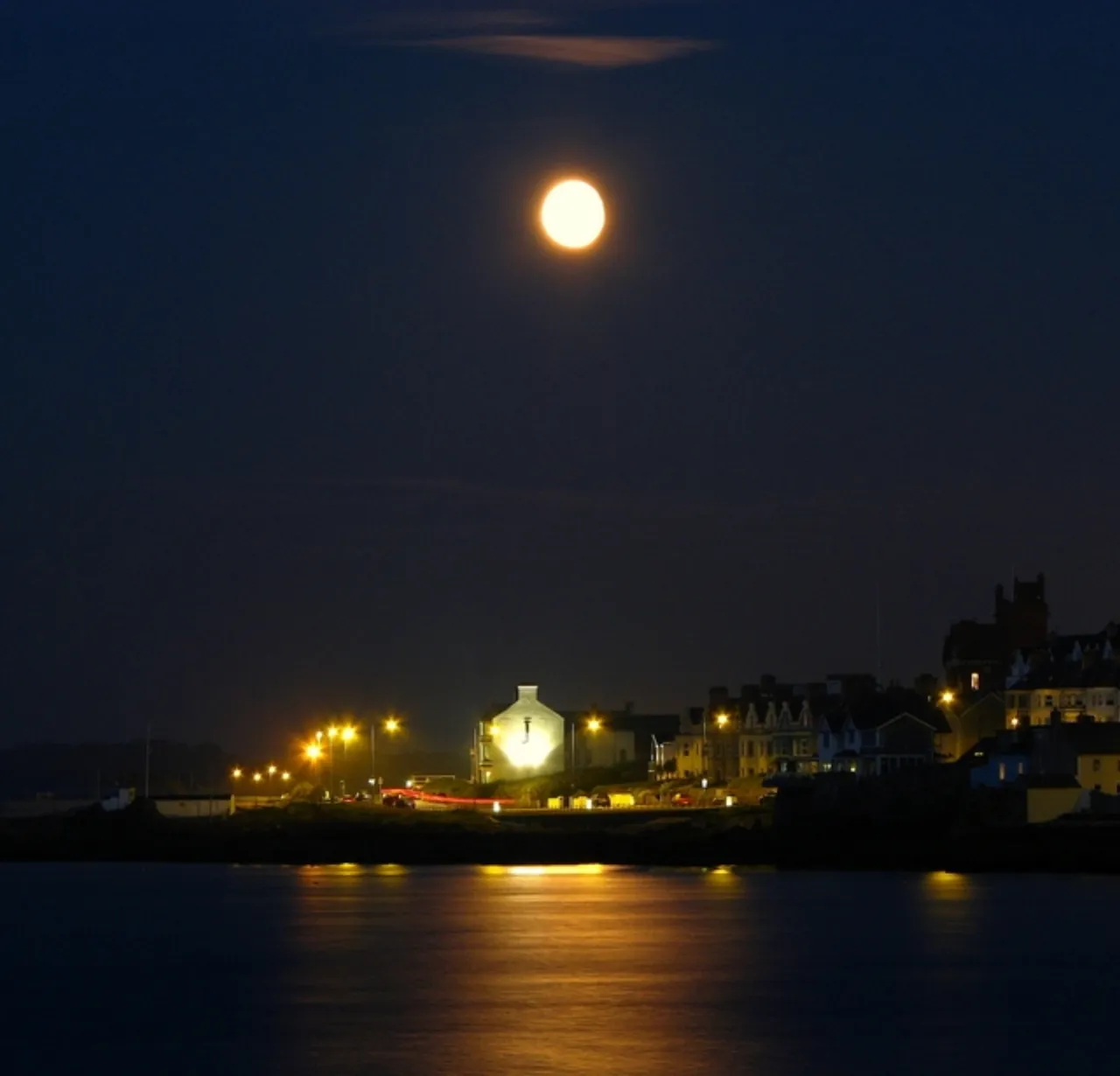
The Harvest Moon, visible in UK skies this weekend, will reach its fullest point on Saturday, September 26, 2026, at 17:49 BST. This full moon, known for its proximity to the autumn equinox, is traditionally associated with the harvest season.
According to the Royal Observatory Greenwich, the Harvest Moon is also referred to as the Corn Moon, reflecting the crops typically harvested around this time of year. Historically, the additional moonlight after sunset was useful to farmers gathering crops.
Many parts of the UK will have favourable conditions for viewing the Harvest Moon, with the longest clear spells expected in the south and east. The current forecast suggests Saturday could bring some drier and brighter weather, particularly across parts of England.
The Harvest Moon rises around sunset and sets around sunrise, creating the illusion of a longer period of moonlight. This phenomenon, known as the Harvest Moon effect, occurs because the angle of the Moon's orbit around Earth causes it to rise at nearly the same time each night for several nights in a row.
When the Moon rises in the east Saturday evening, it will appear beautifully full and should make for one of the most striking moonrises of the year. Find a location with an unobstructed view toward the east and watch for the Moon to climb above the horizon.
The Harvest Moon will be accompanied by Saturn and Neptune in the eastern evening sky, forming a broad grouping. This celestial alignment could heighten emotions and bring unexpected developments, according to astrologer Thomas.
The Moon Phase will be Full on Saturday, September 26, with the full moon occurring at 12:49 P.M. BST. The Moon itself would be worth stepping outside for, as it may appear yellow, orange, or even reddish when it rises.
Unlike Earth, the Moon has almost no atmosphere, so space debris does not slow down or burn up before hitting its surface. Studying newly formed craters helps scientists understand the Moon's geology, which could help prepare future crewed missions to the Moon planned by both the United States and China.
What this adds
The Harvest Moon will be visible in UK skies this weekend, reaching its fullest point on Saturday, September 26, 2026, at 17:49 BST. This aligns with prior WarpBeat reports.
Background
The Harvest Moon, visible in UK skies this weekend, will reach its fullest point on Saturday, September 26, 2026, at 17:49 BST.
The Harvest Moon will be visible in UK skies this weekend, reaching its fullest point on Saturday, September 26, 2026.
What's confirmed
- Moon Phase: Full Saturday, September 26 Full Moon occurs at 12:49 P.M.
What's still developing
- Five night sky events to look out for this autumn Your pictures as equinox marks the start of astronomical autumn The 2025 Harvest Moon, seen here rising over the City of London, was on 7 October If you catch the Moon as it rises it may appear yellow, orange or even reddish.
- At least seven months of relentless rain needed to end drought, research shows New hurricane season record as 'historic' El Niño leaves Atlantic eerily quiet When and how to see the Harvest Moon in 2026 Your pictures as equinox marks the start of astronomical autumn Weather for the week ahead.
- However, it does not always fall in September and if October's full Moon is closer to the autumn equinox, it takes the title instead.
- This is not a special feature of the Harvest Moon, but simply that when it lies low in the sky and is close to the horizon, its light has to travel through more of the Earth's atmosphere before reaching our eyes.
- Chang’e-6 samples suggest the Moon’s two very different sides may have formed when uneven heating drove magma from one hemisphere to the other.
- The Moon presents two dramatically different faces.
- New analyses of material returned by Chang’e-6 (CE6) suggest that this contrast may trace back to enormous flows within the Moon’s early magma ocean after it became tidally locked to Earth.
- Their results point to lateral thermal convection within the lunar magma ocean (LMO) as a possible origin of the Moon’s nearside-farside dichotomy.
- It is thought to have formed in spring 2024 when a comet or asteroid, which researchers said was about the size of a three- to six-story building, struck the Moon.
- "Scientists estimate that an impact of this magnitude happens on the Moon about once in a century or even longer," NASA said.
- Although the crater had existed for about two years, it was only spotted when Robert Wagner, a researcher on NASA's Lunar Reconnaissance Orbiter (LRO) mission, noticed it in a new scan of the lunar surface.
- The LRO probe, which has been studying the Moon since 2009, showed the crater as a "large bright spot circled by a dark halo." A study published on Wednesday in the journal Science Advances concluded that it was the largest new crater ever discovered in the solar system.