
Home · Science · Sep 24 archive
Elephants Use Over 35 Plants for Medicinal Purposes
Confirmed
In Short: The researchers identified 25 plants that local experts said elephants use for medicinal purposes, with eight plants specifically used by sick or weak elephants to address different health problems.
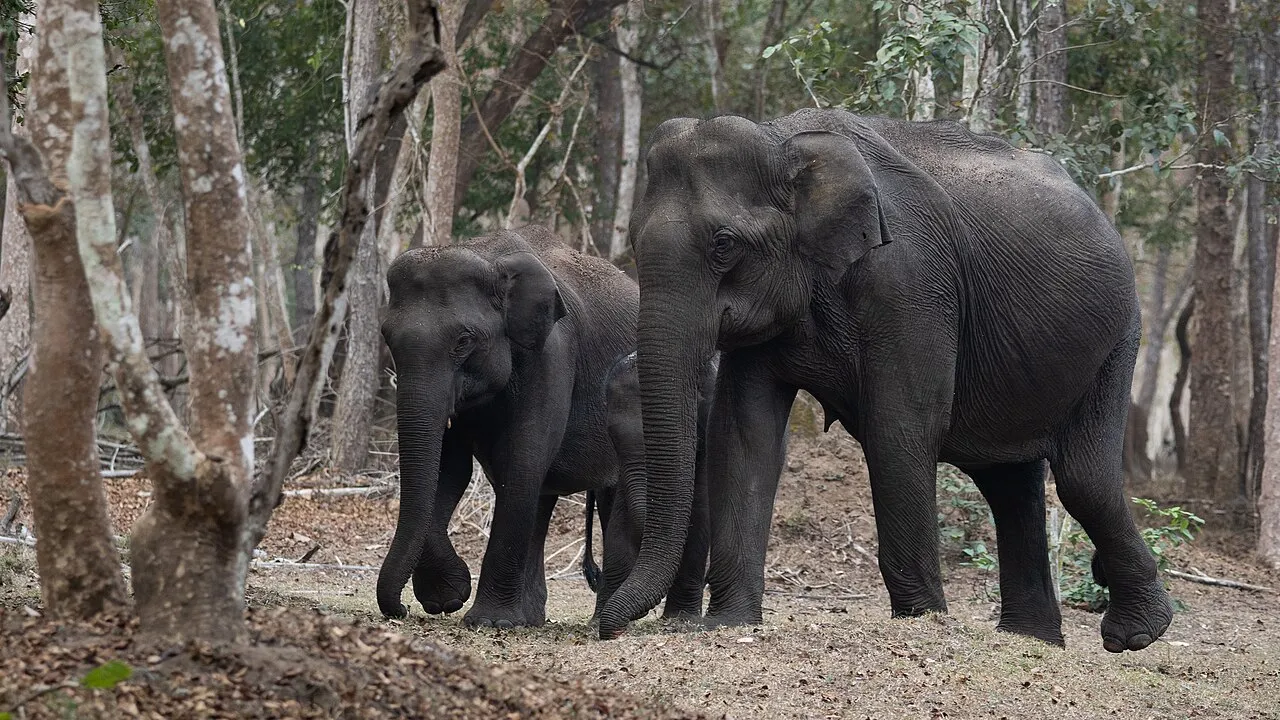
The study, which interviewed local experts in the Mount Elgon region of Kenya, found that elephants deliberately seek out specific plants when they are sick or unwell.
Local experts reported seeing elephants travel to particular plants, sometimes passing other vegetation before stopping to eat them.
The researchers identified 25 plants that local experts said elephants use for medicinal purposes, with eight plants specifically used by sick or weak elephants to address different health problems.
One of the lead researchers, Dr. Elodie Freymann from Brown University, said the study raises questions about whether habitat destruction deprives animals and humans of the medicines they need to thrive.
The findings suggest that elephants may intentionally seek out medicinal plants, indicating a targeted rather than random foraging behavior.
The team plans to analyze some of the plants to determine what compounds they contain and whether they have biological properties that could explain why elephants seek them out when they are unwell.
The study also highlights concerns over habitat loss in Mount Elgon, warning that continued forest destruction could limit elephants' access to plants they may rely on when they are sick.
In a related study, researchers at the National Elephant Institute in Thailand found that Asian elephants possess the trait of inhibitory control, allowing them to resist impulsive behavior and solve problems more effectively.
The detour paradigm experiment, where elephants were presented with a box containing food but had to find an alternative opening to reach it, demonstrated their ability to resist their impulses.
These findings suggest that elephants may possess advanced cognitive and problem-solving skills, which could be crucial for their survival and social interactions.
The research could help develop effective strategies to avoid human-elephant conflict and provide deeper insights into the cognitive, cultural, and social aspects of elephant behavior.
What this adds
This study adds to the understanding of elephant behavior and their use of medicinal plants, confirming previous WarpBeat reports that African elephants use over 35 plant species for medicinal purposes.
Background
A new study reveals that African elephants use over 35 plant species for medicinal purposes, treating themselves and their calves.
What's confirmed
- The study, which interviewed local experts in the Mount Elgon region of Kenya, found that elephants deliberately seek out specific plants when they are sick or unwell.
- Local experts reported seeing elephants travel to particular plants, sometimes passing other vegetation before stopping to eat them.
- The researchers identified 25 plants that local experts said elephants use for medicinal purposes, with eight plants specifically used by sick or weak elephants to address different health problems.
- One of the lead researchers, Dr. Elodie Freymann from Brown University, said the study raises questions about whether habitat destruction deprives animals and humans of the medicines they need to thrive.
- The findings suggest that elephants may intentionally seek out medicinal plants, indicating a targeted rather than random foraging behavior.
- The team plans to analyze some of the plants to determine what compounds they contain and whether they have biological properties that could explain why elephants seek them out when they are unwell.
- The study also highlights concerns over habitat loss in Mount Elgon, warning that continued forest destruction could limit elephants' access to plants they may rely on when they are sick.
- In a related study, researchers at the National Elephant Institute in Thailand found that Asian elephants possess the trait of inhibitory control, allowing them to resist impulsive behavior and solve problems more effectively.
- The detour paradigm experiment, where elephants were presented with a box containing food but had to find an alternative opening to reach it, demonstrated their ability to resist their impulses.
- These findings suggest that elephants may possess advanced cognitive and problem-solving skills, which could be crucial for their survival and social interactions.
- The research could help develop effective strategies to avoid human-elephant conflict and provide deeper insights into the cognitive, cultural, and social aspects of elephant behavior.
What's still developing
- Professor Michael Huffman, a primatologist based in Japan, currently at Nagasaki University, said this particular account was "tantalising", but more evidence would be needed to prove that elephants provided bespoke medical treatment for their calves.
- Centuries later, these scientists are delving into what we can learn from wildlife about the properties of plants in the forest habitats they evolved in.
- These particular animals have long intrigued scientists with their extraordinary behaviour - they are known as salt-mining elephants, because they go into caves and scrape the rock with their tusks to extract minerals for their diet.
- The researchers say the forests are 'natural pharmacies' for the elephants The scientists collaborated with the conservation charity the Mount Elgon Foundation, external.
- Accounts described elephants selecting particular plants when they seemed unwell, and mothers reportedly giving medicinal plant material to their calves.
- From this, the researchers concluded that the elephants use 35 different plant species, and that 25 of those are known locally to have medicinal uses.
- In one testimony, a wildlife scout described seeing elephants using a plant known as Angurweet "as medicine to give to babies".
- “When elephants were faced with a situation where they needed to suppress an impulsive behaviour, they were generally able to suppress the impulse,” researchers stated in a new study published in the journal PLOS One.
- The adjustment in behaviour was slower in older individuals, likely due to cognitive decline from age, researchers noted.
- When the box was rotated, the elephants at first succumbed to the impulse to reach for the previous position of the opening, but quickly changed this behaviour to find a new effective approach.
- They captured all attempts at this detour paradigm on camera, and interpreted them in detail: how long it took the elephant to touch the box, find the open side, grab the food, etc.
- "The evidence for strong inhibitory control in Asian elephants that we found in this study agrees with the general positive relationship between brain size and inhibitory control ability that is found across other taxa," the authors conclude.