
Home · Business · Sep 23 archive
US 10-Year Treasury Yields Top 5% Amid Inflation Worries
Confirmed
In Short: The 10-year US Treasury yield climbed to its highest level since 2007, topping 5%, as oil prices surged more than 3%, reviving inflation worries.
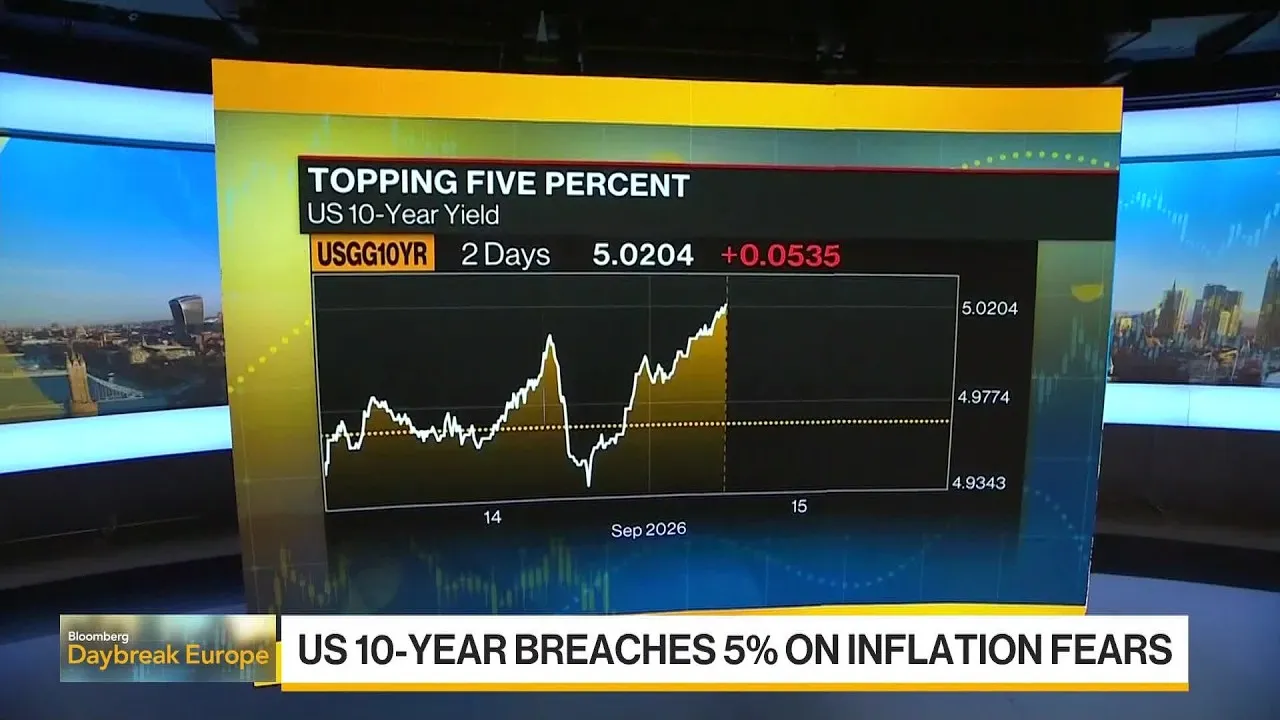
The US 10-year Treasury yield climbed to its highest level since 2007, surpassing 5%, amid strong job data and persistent inflation concerns. The latest consumer price index (CPI) report showed inflation remained elevated at 3.4% in August, reinforcing expectations for a Federal Reserve rate hike.
Rising energy costs have intensified inflation concerns, placing greater pressure on the Fed to tighten monetary policy. Money markets surged on Monday to reflect over a 92% chance of a rate hike, a sharp increase from roughly 60% just a week prior, based on data from the CME FedWatch tool.
The 10-year Treasury note closed at a high yield of 4.8%, a level not seen in nearly three years, while the 2-year Treasury yield is at a near 2-year high of 4.4%. The US Dollar strengthened, supported by rising US yields and rate-hike expectations, leading to a slide in growth-sensitive currencies like the New Zealand Dollar.
Jai Kedia, a research fellow at the Cato Institute, said a rate hike is likely given the positive labor market data and stubbornly high inflation. Chicago Fed President Austan Goolsbee rejected calls for interest-rate cuts, warning that such moves could fuel inflation and raise borrowing costs.
The 10-year US Treasury yield climbed to its highest level since 2007, topping 5%, as oil prices surged more than 3%, reviving inflation worries. Rising rates are likely due to a combination of factors including high national debt, inflation compounded by the conflict in Iran, and increased international tensions.
What this adds
The latest surge in Treasury yields and inflation concerns aligns with prior reports of rising oil prices and economic data, but the specific impact of the conflict in Iran on inflation is not yet fully established.
Background
The yield on the 10-year Treasury bond surged to its highest level since 2007, reaching 5.13%, as new economic data revealed rising inflation and oil prices climbed back above $102 per barrel.
US Treasury yields surged to their highest levels since 2007, topping 5%, amid growing concerns over inflation and expectations of a Federal Reserve rate hike.
What's confirmed
- The US 10-year Treasury yield climbed to its highest level since 2007, surpassing 5%, amid strong job data and persistent inflation concerns. The latest consumer price index (CPI) report showed inflation remained elevated at 3.4% in August, reinforcing expectations for a Federal Reserve rate hike.
- Rising energy costs have intensified inflation concerns, placing greater pressure on the Fed to tighten monetary policy. Money markets surged on Monday to reflect over a 92% chance of a rate hike, a sharp increase from roughly 60% just a week prior, based on data from the CME FedWatch tool.
- The 10-year Treasury note closed at a high yield of 4.8%, a level not seen in nearly three years, while the 2-year Treasury yield is at a near 2-year high of 4.4%. The US Dollar strengthened, supported by rising US yields and rate-hike expectations, leading to a slide in growth-sensitive currencies like the New Zealand Dollar.
- Jai Kedia, a research fellow at the Cato Institute, said a rate hike is likely given the positive labor market data and stubbornly high inflation. Chicago Fed President Austan Goolsbee rejected calls for interest-rate cuts, warning that such moves could fuel inflation and raise borrowing costs.
- The 10-year US Treasury yield climbed to its highest level since 2007, topping 5%, as oil prices surged more than 3%, reviving inflation worries. Rising rates are likely due to a combination of factors including high national debt, inflation compounded by the conflict in Iran, and increased international tensions.
What's still developing
- Compounding these rate hike expectations, Friday's economic data revealed that the US Consumer Price Index (CPI) rose in August, with core inflation recording its largest gain in four months.
- Although less popular than Gold, traders may turn to Silver to diversify their investment portfolio, for its intrinsic value or as a potential hedge during high-inflation periods.
- After the risk-on start to the week renewed gains for oil prices and yields have weighed on indices.