
Home · Science · Sep 23 archive
Roaming black holes may tell the hidden history of galaxies
Confirmed
In Short: These findings, published in The Astrophysical Journal Letters, suggest that massive clouds of cold gas coalesced at the center of early galaxies and collapsed to form black holes, known as the Direct-Collapse Black Hole (DCBH) scenario.
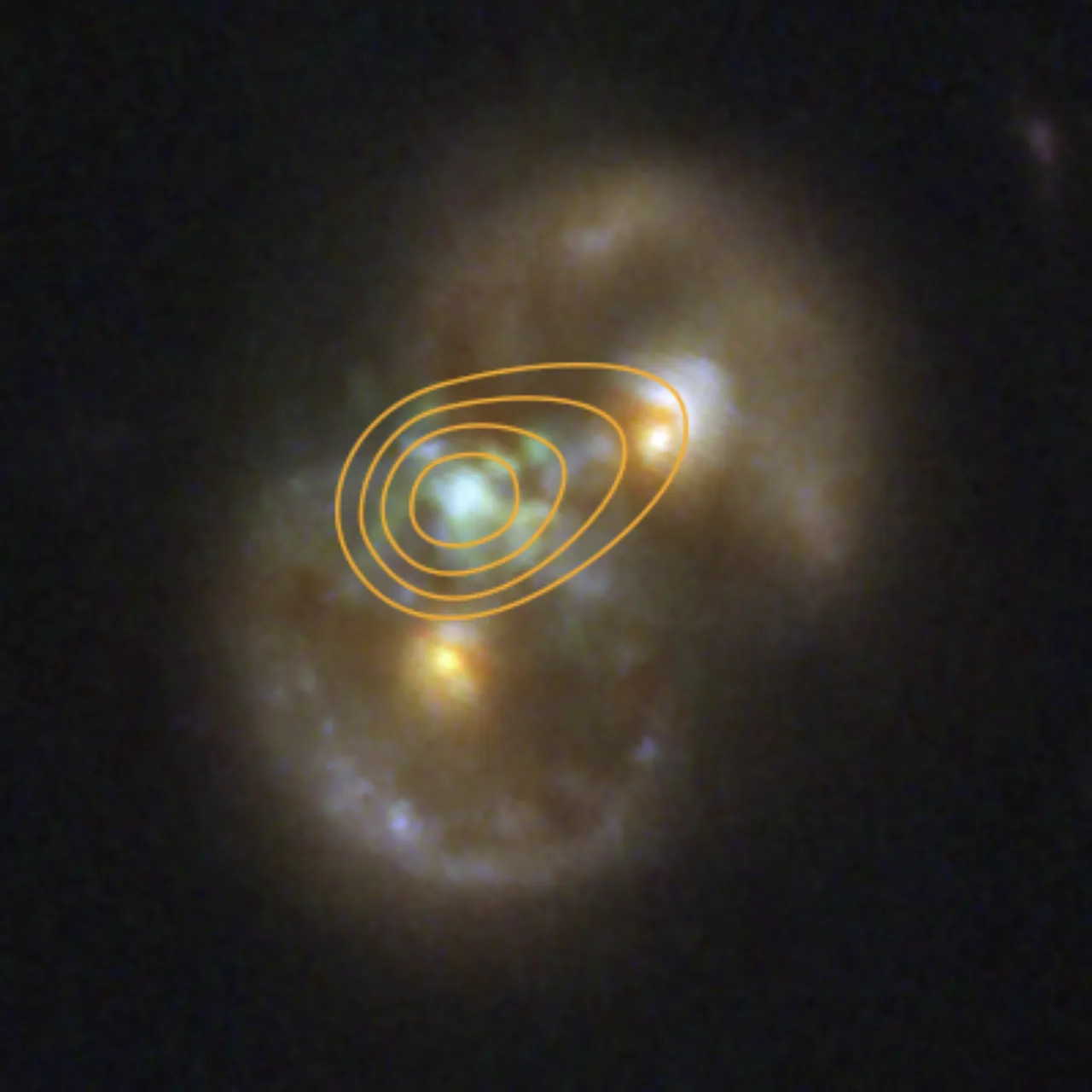
Astronomers using the Cosmic Archaeology Tool (CAT) have detected massive black hole seeds forming as early as 500 million years after the Big Bang, challenging existing models of black hole formation.
The CAT, a semi-analytic model used to interpret high-redshift sources, revealed that massive black hole seeds could form via direct collapse as early as 13.64 billion years ago.
This discovery is significant because it challenges the traditional model where stars collapse at the end of their lives to form black holes that gradually merge to create supermassive black holes (SMBHs).
In a separate study, astronomers used radio observations to detect hydrogen emissions from two periods in cosmic history, advancing a technique called hydrogen intensity mapping.
This technique, which uses the collective radio emissions of many galaxies to map large volumes of space, allowed MeerKAT to detect distant hydrogen emissions without the need for optical surveys.
The signal traveled for roughly four to five billion years before reaching Earth, offering a way to study the universe's structure during an earlier chapter of its history.
Dr. Zhaoting Chen, a study co-author, noted, “Neutral hydrogen is one of the key ingredients for understanding how galaxies form and evolve.”
The findings could help researchers investigate both the development of galaxies and the distribution of matter across the universe.
Astronomers also observed 'little red dots' using the James Webb Space Telescope, which they suspect could be giant stars with black holes hidden inside them.
These observations suggest that the dots are the visible part of a population of super-Eddington black holes, and that there are many more waiting to be found.
The wider the range of emissions, the faster the hydrogen clouds are flying, indicating the presence of a more massive black hole.
These findings add to the growing body of evidence that supermassive black holes form early in the universe's history, challenging previous theories.
What this adds
These findings build on previous WarpBeat reports suggesting that 'little red dots' observed by the JWST could be forming supermassive black holes.
Background
In the spring of 2025, astronomers announced the discovery of 'little red dots' that could be the early stages of supermassive black holes, challenging previous theories.
New research suggests the mysterious Little Red Dots observed by the JWST could be forming supermassive black holes.
What's confirmed
- Astronomers using the Cosmic Archaeology Tool (CAT) have detected massive black hole seeds forming as early as 500 million years after the Big Bang, challenging existing models of black hole formation.
- The CAT, a semi-analytic model used to interpret high-redshift sources, revealed that massive black hole seeds could form via direct collapse as early as 13.64 billion years ago.
- This discovery is significant because it challenges the traditional model where stars collapse at the end of their lives to form black holes that gradually merge to create supermassive black holes (SMBHs).
- In a separate study, astronomers used radio observations to detect hydrogen emissions from two periods in cosmic history, advancing a technique called hydrogen intensity mapping.
- This technique, which uses the collective radio emissions of many galaxies to map large volumes of space, allowed MeerKAT to detect distant hydrogen emissions without the need for optical surveys.
- The signal traveled for roughly four to five billion years before reaching Earth, offering a way to study the universe's structure during an earlier chapter of its history.
- The findings could help researchers investigate both the development of galaxies and the distribution of matter across the universe.
- Astronomers also observed 'little red dots' using the James Webb Space Telescope, which they suspect could be giant stars with black holes hidden inside them.
- These observations suggest that the dots are the visible part of a population of super-Eddington black holes, and that there are many more waiting to be found.
- The wider the range of emissions, the faster the hydrogen clouds are flying, indicating the presence of a more massive black hole.
- These findings add to the growing body of evidence that supermassive black holes form early in the universe's history, challenging previous theories.
What's still developing
- Reliable detections at these distances have typically required combining radio data with optical surveys of galaxies.
- Measuring that stretching lets astronomers distinguish emissions from different stages of cosmic history.
- Because intensity mapping collects emissions from galaxies that are not individually resolved, it offers an efficient way to survey enormous regions of the universe.
- The two teams of astronomers propose that they are looking at a new astronomical object: a topsy-turvy lump of hydrogen that shines with the light of billions of suns while hiding a black hole deep in its core.
- When all you can see is a speck, it’s hard to tell what you’re looking at.
- As black holes, the little red dots would appear red because dust — grainy stuff much more complicated than gas — was blocking their blue light.
- Astronomers built the James Webb Space Telescope to pick up faint light from the first billion years after the Big Bang, a chaotic era when vast swaths of hydrogen and helium gas gathered into the chains of galaxies we see today.
- Initially, researchers thought the dots looked kind of like galaxies.
- This and several other images of both visually and scientifically interesting galaxies were released by NASA’s Chandra X-ray Observatory and other telescopes.
- Chandra X-ray data (magenta) pinpoint powerful black hole activity and hot gas, while optical data (blue and white) from NASA’s Hubble Space Telescope and infrared data from NASA’s James Webb Space Telescope illuminate vast stellar nurseries hidden behind interstellar dust.
- But how exactly these black holes becane so massive isn't clear, even though astrophysicists know mergers have something to do with it.
- Most think that they're related to black holes, and could be the early stages of SMBH growth.
Sources
- Universe Todaylink
- Scitechdailylink
- Quanta Magazinelink
- NASAlink
- Universe Todaylink
- Scilink
- CBS Newslink
- Laserfocusworldlink
- Cfalink
- NASAlink
- Symmetrymagazinelink
- WarpBeat — background on New Observations Suggest Little Red Dots May Be Forming Supermassive Black Holes link
- WarpBeat — background on Little Red Dots May Be Early Stages of Supermassive Black Holes link
- Dr. Becky — video link