
Home · Technology · Sep 20 archive
iPhone 18 Pro Faces Value Challenge From Pixel 11 Pro
Confirmed
In Short: The iPhone 18 Pro, despite its internal improvements, faces a significant value challenge from the Google Pixel 11 Pro, according to Android Authority.
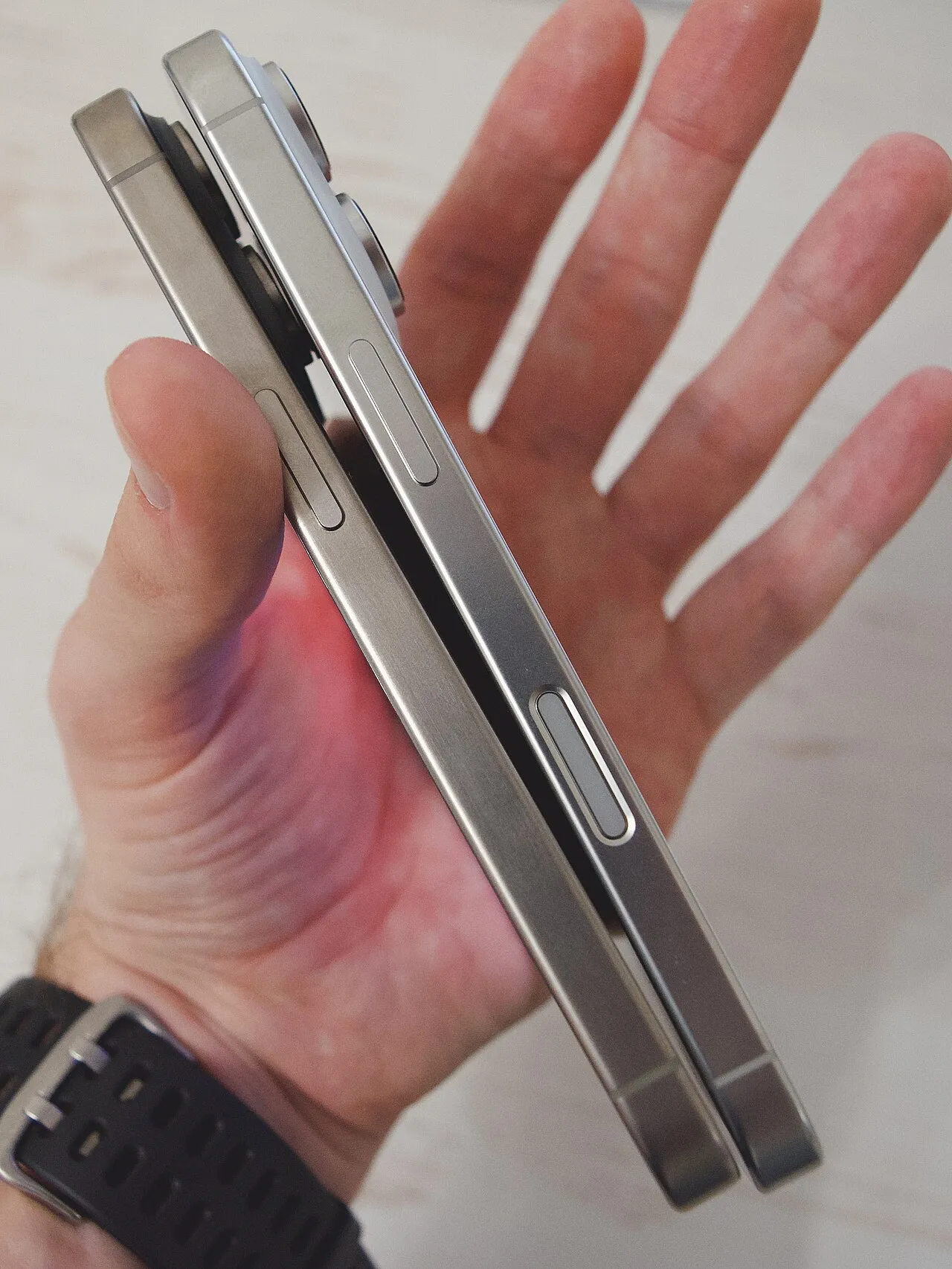
The iPhone 18 Pro, despite its internal improvements, faces a significant value challenge from the Google Pixel 11 Pro, according to Android Authority.
The new iPhone model starts at $1,200 for 256GB of storage, with prices reaching up to $2,400 for the 2TB variant, making it a pricey option.
In contrast, the Pixel 11 Pro starts at $1,099 for 256GB of storage, offering a more affordable alternative.
Android Authority notes that the Pixel 11 Pro provides a better overall purchase, especially for those stretching their budget over $1,000.
The Pixel 11 Pro also eliminates the base 128GB storage option, making the 256GB variant available for the same price as last year.
For users looking for a more budget-friendly option, the Pixel 11 Pro offers significant savings, with storage upgrades costing upwards of $200 less than the latest iPhone.
Apple's iPhone 18 Pro boasts internal changes, including better battery performance and a new physically adjustable camera aperture.
However, these features do not outweigh the Pixel 11 Pro's superior value proposition, according to Android Authority.
The Pixel 11 Pro also offers advanced computational photography capabilities, making everyday life challenges easier for users.
Apple has introduced a new feature called Apple Reference Image on the iPhone 18 Pro, which signs captured pixel data inside the sensor.
This feature creates a second, cryptographically signed copy of the photo, proving its authenticity and origin.
The feature does not reveal the photographer's identity, but it provides a unique ID embedded in the image's metadata.
What this adds
The iPhone 18 Pro's starting price of $1,200 for 256GB of storage is higher than previously reported, with the 2TB variant reaching $2,400.
The Pixel 11 Pro's starting price of $1,099 for 256GB of storage is consistent with last year's pricing, offering a more affordable alternative.
The Pixel 11 Pro's superior value proposition is further emphasized by its advanced computational photography capabilities and feature-rich Android experience.
Background
The iPhone 18 Pro, despite its internal improvements, faces a value challenge from the Pixel 11 Pro, according to Android Authority. The new iPhone model starts at $1,200 for 256GB of storage, with prices reaching up to $2,400 for the 2TB variant.
The iPhone 18 Pro and Pro Max start at $1,199 and $1,299, respectively, with significant improvements in battery life and performance.
What's confirmed
- The iPhone 18 Pro, despite its internal improvements, faces a significant value challenge from the Google Pixel 11 Pro, according to Android Authority.
- The new iPhone model starts at $1,200 for 256GB of storage, with prices reaching up to $2,400 for the 2TB variant, making it a pricey option.
- In contrast, the Pixel 11 Pro starts at $1,099 for 256GB of storage, offering a more affordable alternative.
- Android Authority notes that the Pixel 11 Pro provides a better overall purchase, especially for those stretching their budget over $1,000.
- The Pixel 11 Pro also eliminates the base 128GB storage option, making the 256GB variant available for the same price as last year.
- For users looking for a more budget-friendly option, the Pixel 11 Pro offers significant savings, with storage upgrades costing upwards of $200 less than the latest iPhone.
- Apple's iPhone 18 Pro boasts internal changes, including better battery performance and a new physically adjustable camera aperture.
- However, these features do not outweigh the Pixel 11 Pro's superior value proposition, according to Android Authority.
- The Pixel 11 Pro also offers advanced computational photography capabilities, making everyday life challenges easier for users.
- Apple has introduced a new feature called Apple Reference Image on the iPhone 18 Pro, which signs captured pixel data inside the sensor.
- This feature creates a second, cryptographically signed copy of the photo, proving its authenticity and origin.
- The feature does not reveal the photographer's identity, but it provides a unique ID embedded in the image's metadata.
What's still developing
- While the new iPhone Duo has received a lot of fanfare, the standard iPhone 18 Pro is going to be the one driving most of Apple’s sales.
- All those features do seem tempting at first glance, but I’d still go with the Pixel 11 Pro any day — just because it’s a much better overall purchase than its Apple counterpart.
- The iPhone 18 Pro now starts at $1,200 for the same 256GB of storage, and its subsequent storage upgrade tiers are significantly more expensive, going all the way up to an eye-watering $2,400 for the 2TB variant — add another $100 for the bigger Pro Max sibling.
- The gap widens further when you move up the storage tiers, saving you upwards of $200 compared to the latest iPhone.
- For someone already stretching their budget over $1,000 (which, by the way, is already pretty generous for a smartphone), the Pixel 11 Pro gets you a much better bang for the buck than the iPhone.
- Apple announced the feature on September 9 alongside the iPhone 18 Pro, and its security team published the full technical description on September 15 on the Apple Security Research blog.
- Apple's version proves a real iPhone sensor captured the scene inside a specific time window.
- We observed that users can set up Surfshark on their iPhones in less than 2 minutes.
- We’ve compiled and analyzed the 10 best VPNs for iPhone to ease your decision-making.
- Here, we’ve reviewed the top 10 iPhone VPNs to help you find an appropriate VPN to secure your online activities.
- NordVPN is a paid service, but it’s a great VPN for iPhone.
- Capture telemetry data (like hardware IDs and sensor signatures) is sent up to Apple’s Private Cloud Compute, which then creates a unique signature tying the reference image to that specific iPhone. (Apple promises it doesn’t see the actual photo, only data about it, and the process only runs on photos you choose to sign.) If you think of SynthID as a tag that follows an image around the web, Apple Reference Image is more like a receipt the photographer can show later as proof of origin. (Apple calls it a “digital negative.”) If AI-doctored versions of a photo start circulating online, a photojournalist could produce the reference image to conclusively prove what the camera sensor originally saw.