
Home · Science
Study Suggests Hidden Planet Beyond Pluto
· Confirmed
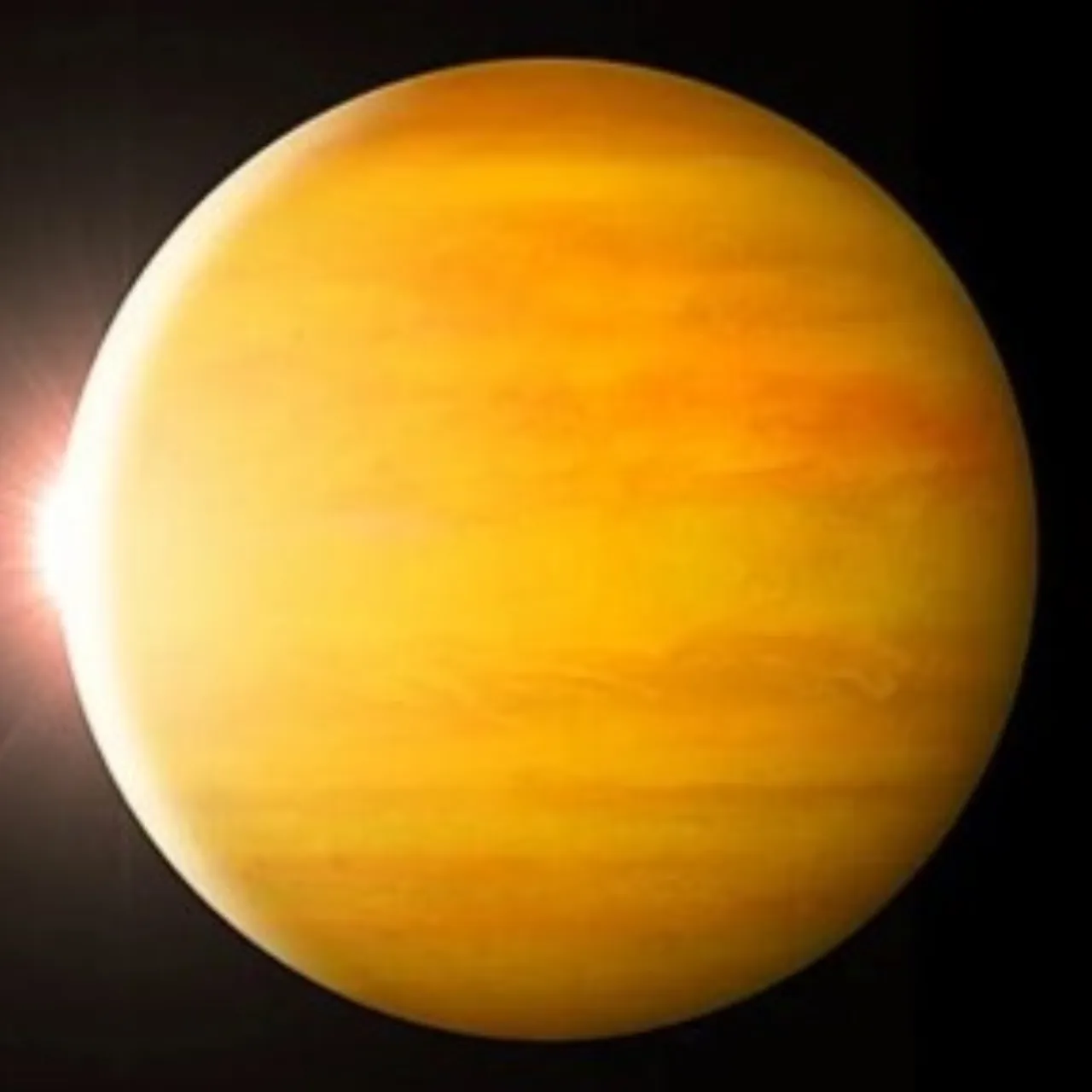
Profile of planet 51 Pegasi b (planet only).
In Short: A new study published in arXiv suggests a hidden planet could explain the strange orbits of some Kuiper Belt objects.
According to a study published in the science journal arXiv, a warping effect observed in the orbits of some Kuiper Belt objects may indicate the presence of an undiscovered planet.
Astrophysicist Amir Siraj from Princeton University, who led the research, believes the gravity of this hypothetical planet, called Planet Y, could be influencing nearby objects, tilting their orbits out of alignment.
The Kuiper Belt, a region of icy debris beyond Neptune, has long been a focus for astronomers searching for hidden planets. Neptune, the eighth and most distant known planet from the Sun, orbits at 30 AU, while Pluto orbits at 39.5 AU.
Among the most puzzling objects in the Kuiper Belt are detached objects, high-inclination objects, and extreme trans-Neptunian objects, whose orbits are difficult to explain through interactions with known planets alone.
The study suggests that Planet Y, which has a mass approximately two times greater than Earth’s, could be orbiting between 300 to 550 AU from the Sun.
Scientists believe that if the orbital patterns predicted by the simulations continue to appear in newly discovered objects, the case for a hidden planet could strengthen considerably.
The search for a far-off planet, commonly referred to as Planet Nine, began around the discovery of Pluto in 1930 and gained traction in the 1990s and 2000s with the discovery of several icy bodies in the Kuiper Belt.
While the search for Planet Nine has been ongoing, recent research has narrowed down its potential orbital position, providing new insights into the existence of a mysterious planet beyond Neptune.
Rubin Observatory which is about to embark on an ambitious 10-year project to map the night sky, could confirm Planet Y's existence.
Now, a new study suggests these strange objects may point to an undiscovered planet lurking hundreds of astronomical units from the Sun.
Despite the promising results, no such planet has yet been observed.
Giant planets then threw these embryos out into space, where they may have altered the paths of far-away ice-covered objects.
What this adds
This latest study adds to the growing body of evidence suggesting the existence of a hidden planet beyond Pluto, but no such planet has yet been observed.
The research is the latest in a series of suggestions of unidentified planets that lie beyond Neptune and Pluto.
The longstanding hypothesis that a hidden planet exists in the far reaches of the solar system has divided the scientific community.
Background
For decades, astronomers have been searching for a hidden planet in the far reaches of our solar system, beyond Neptune.
For decades, astronomers have been searching for a hidden planet in the far reaches of our solar system, beyond Neptune.
What's confirmed
- According to a study published in the science journal arXiv, a warping effect observed in the orbits of some Kuiper Belt objects may indicate the presence of an undiscovered planet.
- Astrophysicist Amir Siraj from Princeton University, who led the research, believes the gravity of this hypothetical planet, called Planet Y, could be influencing nearby objects, tilting their orbits out of alignment.
- The Kuiper Belt, a region of icy debris beyond Neptune, has long been a focus for astronomers searching for hidden planets. Neptune, the eighth and most distant known planet from the Sun, orbits at 30 AU, while Pluto orbits at 39.5 AU.
- Among the most puzzling objects in the Kuiper Belt are detached objects, high-inclination objects, and extreme trans-Neptunian objects, whose orbits are difficult to explain through interactions with known planets alone.
- The study suggests that Planet Y, which has a mass approximately two times greater than Earth’s, could be orbiting between 300 to 550 AU from the Sun.
- Scientists believe that if the orbital patterns predicted by the simulations continue to appear in newly discovered objects, the case for a hidden planet could strengthen considerably.
- The search for a far-off planet, commonly referred to as Planet Nine, began around the discovery of Pluto in 1930 and gained traction in the 1990s and 2000s with the discovery of several icy bodies in the Kuiper Belt.
- While the search for Planet Nine has been ongoing, recent research has narrowed down its potential orbital position, providing new insights into the existence of a mysterious planet beyond Neptune.
- Rubin Observatory which is about to embark on an ambitious 10-year project to map the night sky, could confirm Planet Y's existence.
- Now, a new study suggests these strange objects may point to an undiscovered planet lurking hundreds of astronomical units from the Sun.
- Despite the promising results, no such planet has yet been observed.
- Giant planets then threw these embryos out into space, where they may have altered the paths of far-away ice-covered objects.
What's still developing
- Rubin Observatory which is about to embark on an ambitious 10-year project to map the night sky, could confirm Planet Y's existence.
- Now, a new study suggests these strange objects may point to an undiscovered planet lurking hundreds of astronomical units from the Sun.
- Despite the promising results, no such planet has yet been observed.
- Giant planets then threw these embryos out into space, where they may have altered the paths of far-away ice-covered objects.
- The researchers found that Planet X2 is potentially 2 Earth masses while also orbiting between 300 to 550 AU.
- This is based on formation and evolution models of the solar system beyond 50 astronomical units (AU), which is considered the outer edge of the main Kuiper Belt, potentially revealing the existing of a large planetary object.
- The longstanding hypothesis that “Planet Nine” exists in the far reaches of the solar system beyond the orbit of Neptune has torn apart the scientific community.
- And researchers now claim they have a way to put the idea to the test.
- However, they struggle to account for several populations of distant objects.