
Home · Science
BepiColombo Enters Mercury Orbit After Eight-Year Journey
· Confirmed
In Short: BepiColombo, a joint ESA and JAXA mission, successfully entered orbit around Mercury on November 21 after an eight-year journey.
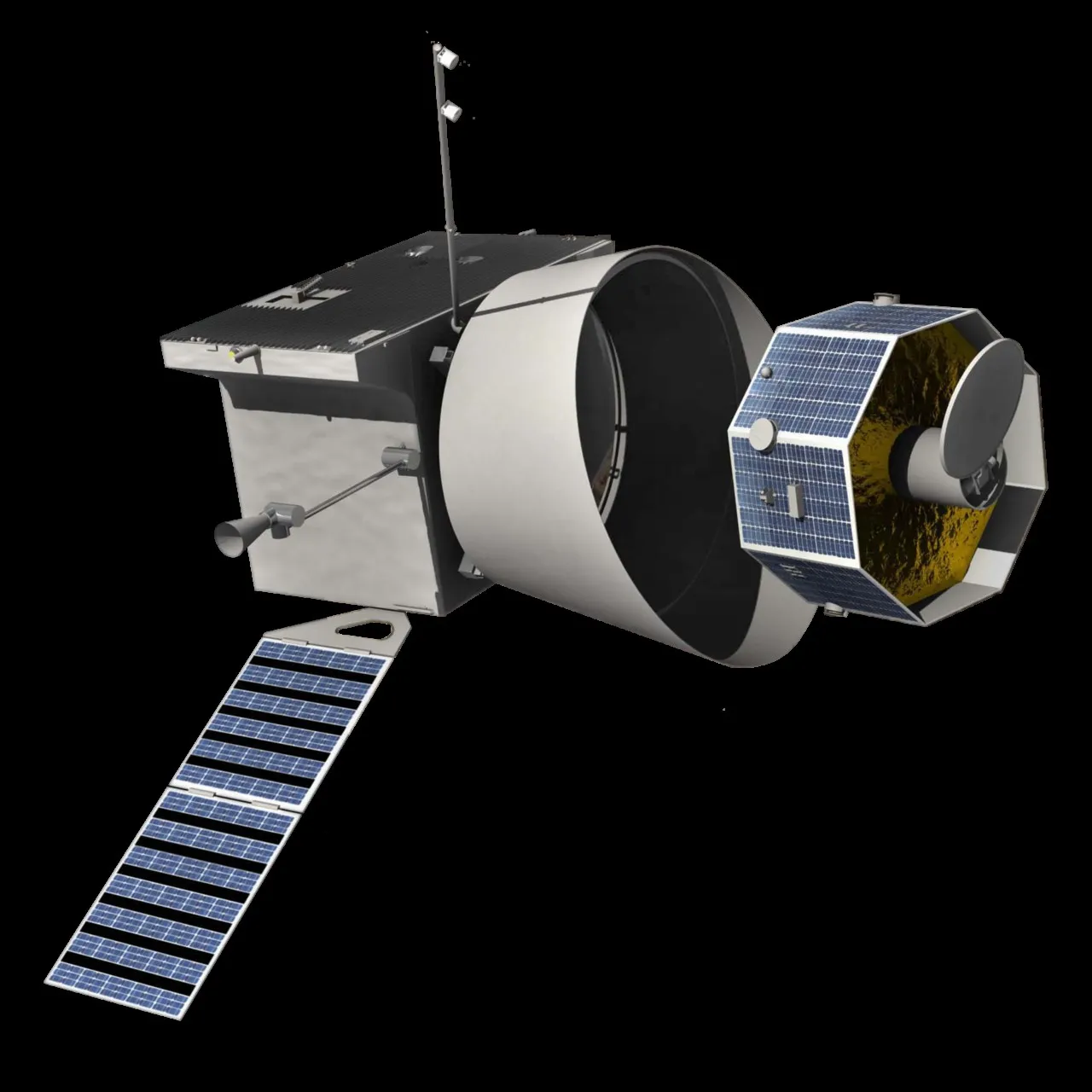
BepiColombo Enters Mercury Orbit After an Eight-Year Journey. Science News
CNN and Theregister reported that BepiColombo, a joint mission between the European Space Agency (ESA) and the Japan Aerospace Exploration Agency (JAXA), successfully entered orbit around Mercury on November 21 after an eight-year journey. Both outlets noted that the spacecraft had been traveling through the inner Solar System, using gravity assists from Earth, Venus, and Mercury itself.
Aerotime and Arabnews confirmed that BepiColombo's journey included one flyby of Earth, two of Venus, and six of Mercury, with the spacecraft covering approximately 10 billion kilometers. Arabnews added that the mission's success was announced via social media by the ESA.
The spacecraft's orbit insertion burn ended prematurely after just 28 minutes, leaving engineers concerned. CNN quoted ESA's Tanco as saying that the spacecraft achieved only 77% of the planned change in speed required to achieve orbit, resulting in an orbit that is 75 hours long instead of the planned 58 hours.
BepiColombo initially entered an elliptical polar orbit measuring approximately 590 by 11,640 kilometers. Aerotime added that the spacecraft's journey covered 9.9 billion kilometers, with the spacecraft traveling at its highest point about 10,000 kilometers higher than expected over Mercury.
The spacecraft's journey included a series of gravity assists to slow it down sufficiently to be captured by Mercury's gravity. Theregister noted that the spacecraft's journey was designed to slow it down while also keeping up with Mercury's rapid orbit.
The European portion of the spacecraft will study Mercury's surface, skimming just 480 kilometers above the planet, while the Japanese portion will follow an elliptical orbit to study Mercury's magnetic field.
Despite the premature burn and the resulting orbit, all outlets agreed that BepiColombo successfully entered orbit around Mercury on November 21, marking a significant milestone in the mission's eight-year journey.
BepiColombo, a joint effort between the European Space Agency and the Japan Aerospace Exploration Agency, was hurtling toward its destination on November 21 after an eight-year journey, ready for the delicate task of securing a lasting orbit around Mercury.
The orbiters are scheduled to separate on December 9–10, 2026.
NASA's MESSENGER entered Mercury orbit on March 18, 2011, after a braking burn of about 0.9 kilometers per second (0.56 miles per second) that lasted roughly 15 minutes.
Background
BepiColombo, a joint mission between the European Space Agency (ESA) and the Japan Aerospace Exploration Agency (JAXA), successfully entered orbit around Mercury on November 21 after an eight-year journey through the inner Solar System.
The European-Japanese BepiColombo spacecraft has successfully entered orbit around Mercury after an eight-year journey through the inner Solar System, clearing a major hurdle in a mission to investigate the planet’s surface, interior and magnetic field.
What's confirmed
- BepiColombo, a joint effort between the European Space Agency and the Japan Aerospace Exploration Agency, was hurtling toward its destination on November 21 after an eight-year journey, ready for the delicate task of securing a lasting orbit around Mercury.
- The European Space Agency announced BepiColombo’s arrival via social media.
- (AP) — A pair of spacecraft slipped into orbit around Mercury on Saturday after an eight-year cruise through the inner solar system to unravel our littlest planet's mountain of mysteries.
- Now, the lauded joint mission between the European Space Agency (ESA) and the Japan Aerospace Exploration Agency (JAXA) called BepiColombo might have just become the second mission to orbit Mercury.
- The orbiters are scheduled to separate on December 9–10, 2026.
What's still developing
- At its highest point, BepiColombo will be about 10,000 kilometers (6,200 miles) higher than expected over Mercury, which Tanco calls “inconvenient, but not terrible.” In a news conference Friday in London, the ESA acknowledged that the new orbit leaves less margin for further problems, although the spacecraft will be operating as expected.
- A $2 billion spacecraft’s nail-biting arrival at Mercury last week sent engineers anxiously scrambling for answers — and its troubles may not be over.
- After eight years in space and a journey covering 10 billion kilometers, a pioneering X-ray telescope traveling to Mercury has captured its first observations of a distant cosmic object.
- NASA's MESSENGER entered Mercury orbit on March 18, 2011, after a braking burn of about 0.9 kilometers per second (0.56 miles per second) that lasted roughly 15 minutes.
- The monitoring cameras provide black-and-white snapshots in 1024 x 1024 pixel resolution, and are positioned on the Mercury Transfer Module such that they also capture the spacecraft’s structural elements, including its antennas and the magnetometer boom.
- Hayabusa2 launched in 2014, so is rather older than BepiColombo.
- Launched in 2018, BepiColombo took a slower, more roundabout route to get to Mercury, flying once past Earth, twice past Venus and six times past Mercury for gravity-guiding assists.
- If the capture goes as planned, two spacecraft will arrive still joined together, and the spacecraft that will do the work is the Mercury Planetary Orbiter (MPO), using its own chemical propulsion.
- MPO then maneuvers to its final science orbit by March 10, 2027, and ESA lists April 6, 2027 as the start of the main science phase after commissioning.
- It has travelled approximately 10 billion kilometres, using a combination of electric propulsion and planetary flybys to reach a world that is particularly difficult for spacecraft to enter orbit around.
Sources
- Aerospace Global Newslink
- Aerotimelink
- Keeptracklink
- Nature World Newslink
- Starlust.orglink
- Technology Orglink
- Techtimeslink
- Universe Todaylink
- Arabnewslink
- Sciencedailylink
- Esalink
- PBSlink
- Theregisterlink
- Upilink
- Abcnewslink
- AFPlink
- Science News — video link
- Orbinauts — video link
- Euronews Next — video link
- Rule of Five | History — video link
- Curious Minds Lab HQ — video link