
Home · Science · Nov 21 archive
Voyager 1 Reaches One Light-Day From Earth
Confirmed
In Short: NASA's Voyager 1 probe, launched in 1977, has reached a distance of one light-day from Earth, marking a significant milestone in its journey through interstellar space.
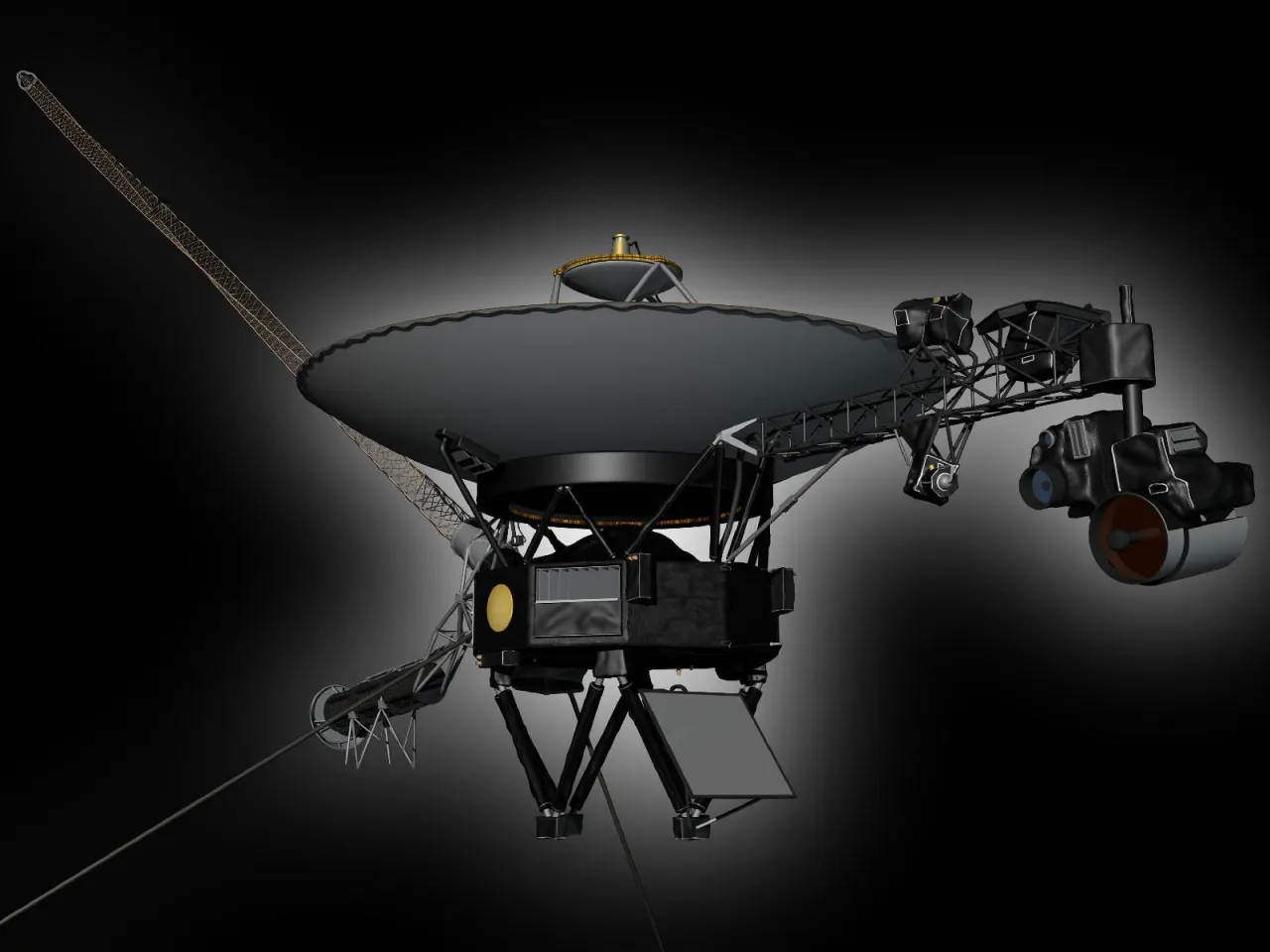
NASA's Voyager 1 makes history reaching one light-day from Earth. LiveNOW from FOX
The spacecraft hit the milestone on Wednesday, November 18, and is now about 26 billion kilometers away from Earth, according to NASA.
Voyager 1 is the farthest human-made object from Earth, surpassing Pioneer 10 in 1998.
Voyager 1 has been traveling at a speed of about 38,000 miles per hour since 1980, covering 16 billion miles since its launch.
Voyager 1 has visited Jupiter and Saturn before heading to the outer reaches of the solar system.
NASA expects Voyager 1 to take about 18,000 years to travel a full light-year.
Voyager 2, the twin spacecraft, is expected to reach one light-day in 2035.
Messages sent from Earth take a day to reach Voyager 1, and another day for teams on the ground to receive a reply.
Voyager 1's journey has been marked by significant scientific achievements, including capturing stunning images of Jupiter and Saturn and the iconic 'Pale Blue Dot' photograph of Earth.
The University of Iowa has been engaged with Voyager 1 since its launch, and the spacecraft continues to send back data that is helping scientists characterize the unknown territory beyond the solar system.
Voyager 1 carries recordings of music and sounds from Earth, making it a unique ambassador of human culture in the galaxy.
What this adds
Voyager 1 may not know space enthusiasts celebrated the milestone until the next day.
Keeping the historic probe alive is becoming increasingly difficult.
Voyager 1 is headed toward a star called AC +79 3888, also known as Gliese 445, according to NASA.
Background
NASA's Voyager 1 spacecraft, launched in 1977, has reached a distance of one light-day from Earth, marking a significant milestone in its journey through interstellar space.
NASA's Voyager 1 spacecraft, launched in 1977, has reached a distance of one light-day from Earth, marking a significant milestone in its journey through interstellar space.
What's confirmed
- NASA’s Voyager 1 probe, the most distant human-made object, has reached a distance of one light-day from Earth nearly 50 years after it was launched.
- Launched in 1977, Voyager 1 and its twin Voyager 2 are the only spacecraft to have reached interstellar space, the region beyond the Sun’s heliosphere.
- A light-day is the distance light can travel in 24 hours, which means messages sent from Earth take a day to reach Voyager 1, and another day for teams on the ground to receive a reply.
- Voyager 2 is expected to reach one light-day in 2035.
- Voyager 1 has been flying at about 38,000 mph since 1980.
- Launched in 1977, Voyager 1 has traveled farther than any other human-made object.
- NASA’s Voyager 1 probe, which has been traveling through space for nearly 50 years, yesterday hit a milestone distance of one light-day from Earth.
What's still developing
- That said, Voyager 1 may not know space enthusiasts celebrated the milestone until the next day.
- Launched Sept. 5, 1977, Voyager 1 is humanity’s farthest-flying spacecraft, traveling through interstellar space at about 38,000 mph.
- NASA's Voyager 1 has traveled farther than anything else that humans have launched into space.
- For Fran Bagenal, a planetary scientist at the University of Colorado, Boulder, who began working with Voyager 1 as a graduate student during its earliest years, the occasion is a momentous technological feat.
- But keeping the historic probe alive is becoming increasingly difficult.
- Voyager 1 is trekking across the cosmos and headed toward a star called AC +79 3888, also known as Gliese 445, according to NASA.
Sources
- Al Jazeeralink
- CNETlink
- CNNlink
- Discover Magazinelink
- Earthskylink
- Houston Public Medialink
- Iowa Nowlink
- My Modern Metlink
- NASAlink
- NPRlink
- Science Newslink
- Scientific Americanlink
- Scripps Newslink
- Space.comlink
- Spaceflight Nowlink
- The Conversationlink
- LiveNOW from FOX — video link
- CNN — video link
- NPR — video link
- Associated Press — video link
- Nooyumii — video link