
Home · World · Nov 19 archive
UN Court Convicts Myanmar of Genocide Against Rohingya
· Confirmed
In Short: The International Court of Justice ruled that Myanmar committed genocide against the Rohingya, a Muslim minority.
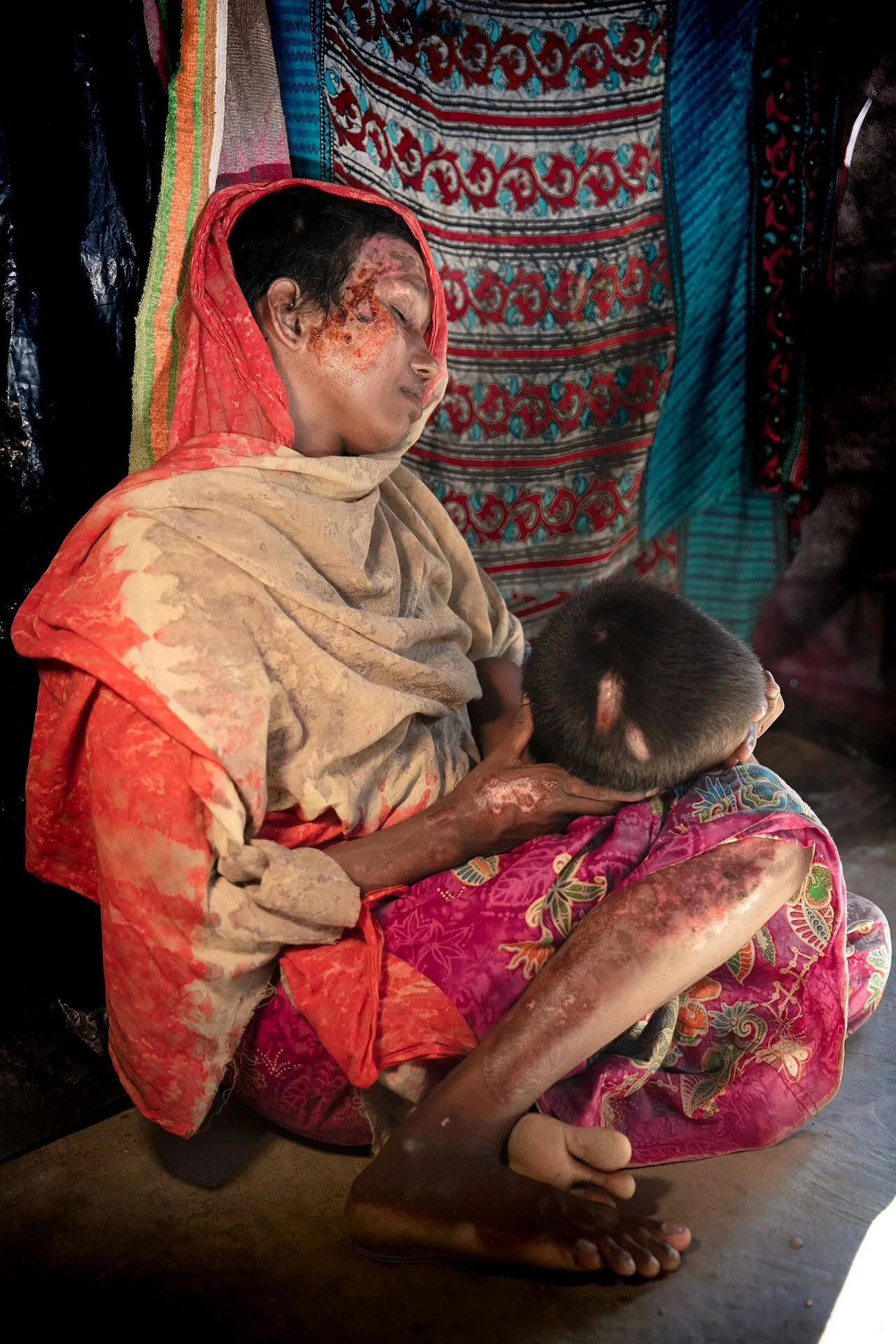
A Rohingya Woman named Mumtaz brutally injured by the Myanmar military.
ICJ rules Myanmar committed genocide against Rohingya. DVB English News
The International Court of Justice (ICJ) at The Hague ruled on Thursday that Myanmar committed genocide against the Rohingya, a Muslim minority group. The verdict, delivered by the UN’s top court, concluded that Myanmar’s military crackdown in 2017 was carried out with the intent to destroy a substantial part of the Rohingya population.
According to Al Jazeera, the ICJ found that Myanmar’s security forces had killed at least 10,000 people, committed widespread sexual violence, and destroyed entire villages in northern Rakhine state. The court also noted that Myanmar’s security forces had engaged in extensive destruction of evidence by burning bodies or disposing of them in other ways.
The case was brought by The Gambia in 2019, which accused Myanmar of violating the 1948 Genocide Convention. The ICJ ruled that Myanmar must cease any illegal activities targeting the Rohingya and ensure that those responsible for genocide are punished.
The ruling comes after years of persecution and displacement. More than 730,000 mainly Muslim Rohingya fled to neighboring Bangladesh following the 2017 military crackdown, joining over 1.3 million Rohingya who remain displaced across South and Southeast Asia.
Al Jazeera reported that the Rohingya have long been treated as second-class citizens in Myanmar, a status that predates the 2017 military operations. The ICJ’s ruling highlights the systematic nature of the persecution.
For the Rohingya, the judgment holds the promise of recognition and a step towards accountability. However, the ICJ’s ruling does not address the ongoing challenges faced by the Rohingya, with fewer than 600,000 estimated to remain in Buddhist-majority Myanmar, while more than 1 million live in the world’s largest refugee settlement in Bangladesh.
What's confirmed
- The International Court of Justice (ICJ) at The Hague delivered its judgement on Thursday over the military crackdown that drove more than 730,000 mainly Muslim Rohingya to flee to neighbouring Bangladesh.
- It asked the ICJ to rule that Myanmar has breached the 1948 Genocide Convention, order the nation to put an end to any illegal activities targeting the Rohingya and ensure those responsible for genocide are punished.
- More than 1.3 million Rohingya remain displaced across South and Southeast Asia, including 1.2 million in sprawling refugee camps in Cox’s Bazar in Bangladesh, according to the UN.
- The case was brought by the West African nation of The Gambia, which in 2019 accused Myanmar of seeking to destroy the Rohingya people.
- The ICJ said that the “only reasonable inference” from evidence of widespread atrocities by Myanmar security forces is that they had the intent to destroy a “substantial part” of the Rohingya minority.
What's still developing
- Myanmar is now obliged to provide reparations and restitution “as a result of Myanmar’s wrongful acts”, Iwasawa said.
- Even before 2016, the predominantly Muslim Rohingya had been subjected to decades of persecution by the Buddhist-majority country's government, with many forced into resettlement camps and most denied citizenship.
- In 2020, ahead of a final judgment, the ICJ issued emergency "provisional measures" ordering Myanmar to take all steps "within its power" to prevent acts of genocide against the Rohingya, an order rights groups say it has blatantly ignored.
- The court convicted the individuals on a range of charges, including causing the death of people, using and possessing weapons and ammunition "with the intent to carry out terrorist acts," conspiracy, and promoting the ideology of a terrorist group.
- UN investigations into both Myanmar's treatment of the Rohingya and Israel's conduct in Gaza said acts they described as genocidal had occurred.
- The verdict is “extremely important for the Rohingya”, our correspondent said.