
Home · Science · Nov 18 archive
Two stars in the Andromeda galaxy merged before astronomers’ eyes
· Confirmed
In Short: Astronomers observed a rare star merger in the Andromeda galaxy, providing insights into the galaxy's future collision with the Milky Way.
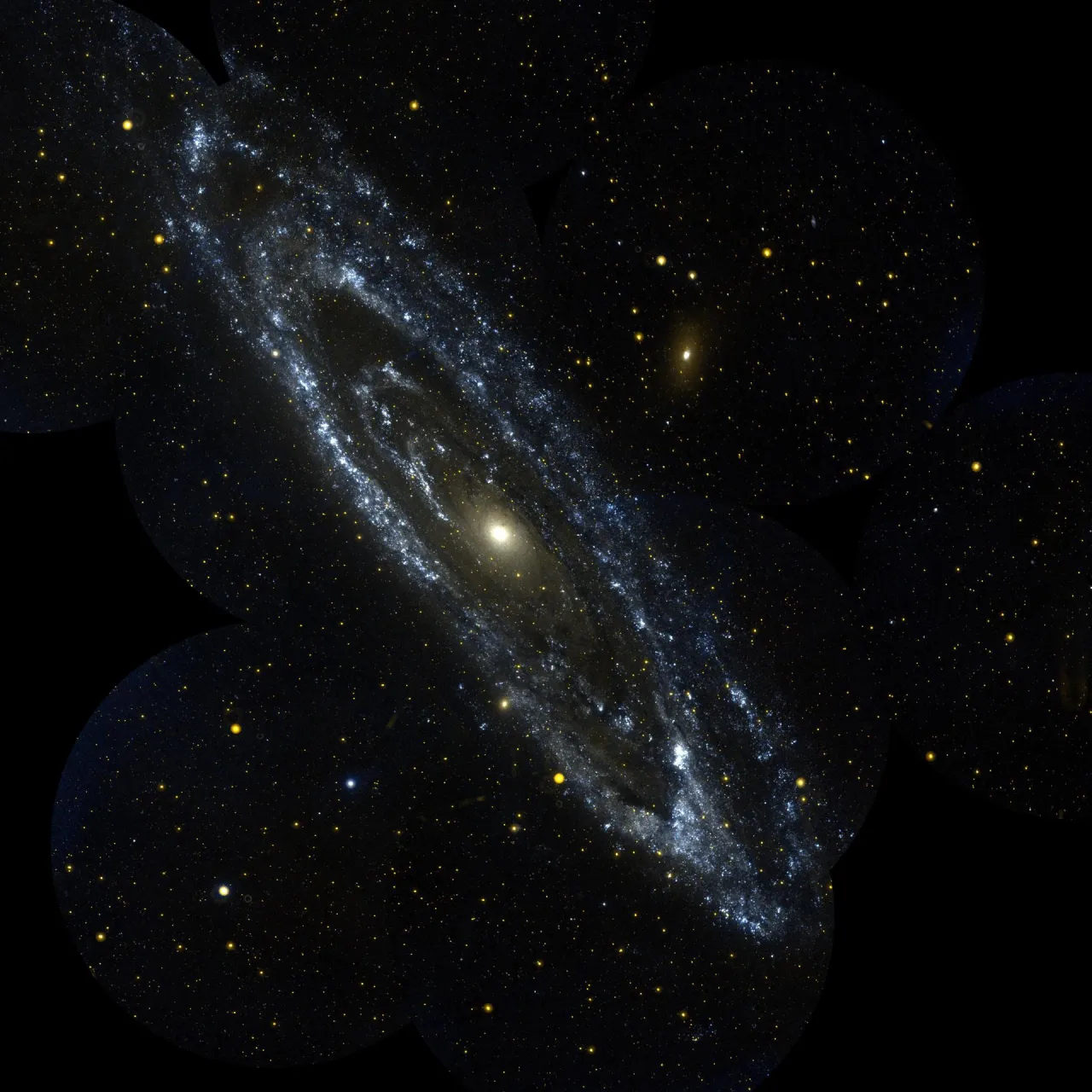
Astronomers have witnessed a rare event in the Andromeda galaxy: the merger of two stars, one of which was nicknamed 'Little Bao' and the other 'Big Bao.' This merger was captured by NASA’s Wide-field Infrared Survey Explorer (WISE) telescope.
They found that the giant star, Big Bao, began brightening in 2018, suggesting that Little Bao was orbiting inside its outer layers.
In October 2025, the system erupted, marking the final stage of the merger.
The merger of Little Bao and Big Bao took only seven years, a remarkably quick process compared to the thousands of orbits typically seen in binary star mergers.
The newly merged star, now simply called Bao, may experience a rejuvenation due to the collision.
This event provides a unique opportunity to study the processes that occur during stellar mergers, which are difficult to observe in real time.
Astronomers predict that the Milky Way and Andromeda galaxies will collide and merge between 3.9 billion and 5.6 billion years from now.
The collision will result in a galaxy with more than 1 trillion stars.
The Andromeda galaxy, the closest large galaxy to the Milky Way, is visible as a small, faint patch in the night sky.
In the southern hemisphere, Andromeda is highest in the sky around midnight during the spring.
What this adds
The merger of Little Bao and Big Bao provides insights into the future collision between the Milky Way and Andromeda galaxies.
What's confirmed
- Astronomers have witnessed a rare event in the Andromeda galaxy: the merger of two stars, one of which was nicknamed 'Little Bao' and the other 'Big Bao.' This merger was captured by NASA’s Wide-field Infrared Survey Explorer (WISE) telescope.
- They found that the giant star, Big Bao, began brightening in 2018, suggesting that Little Bao was orbiting inside its outer layers.
- In October 2025, the system erupted, marking the final stage of the merger.
- The merger of Little Bao and Big Bao took only seven years, a remarkably quick process compared to the thousands of orbits typically seen in binary star mergers.
- The newly merged star, now simply called Bao, may experience a rejuvenation due to the collision.
- This event provides a unique opportunity to study the processes that occur during stellar mergers, which are difficult to observe in real time.
- Astronomers predict that the Milky Way and Andromeda galaxies will collide and merge between 3.9 billion and 5.6 billion years from now.
- The collision will result in a galaxy with more than 1 trillion stars.
- The Andromeda galaxy, the closest large galaxy to the Milky Way, is visible as a small, faint patch in the night sky.
- In the southern hemisphere, Andromeda is highest in the sky around midnight during the spring.
What's still developing
- They’ve been fairly certain about this since 2012, when researchers precisely measured the motions of many stars within the Andromeda Galaxy and found that these stars were approaching the Milky Way.
- Presently, the two galaxies are moving toward each other at 250,000 mph (402,300 km/h), so that in the time required for you to read this sentence, the separation between Andromeda and the Milky Way will have diminished by nearly 800 miles (1,300 km).
- Astronomers also know that these two galaxies will not merely crash together.
- The slow brightening and sudden eruption tell a story of a smaller star orbiting inside of a massive star and what became of the pair, researchers report November 18 in Nature.
- In work published last year, after poring through nearly 30 years of telescope data, astronomers had found that the giant began brightening in 2018 and proposed that a smaller star was circling ever closer around a giant companion and had even slipped inside its outermost layers.
- One cause of the brightening could have been gas flowing away from the stars, giving off light as it slowed down.
- Astronomers call this elusive phase of a binary star’s life common-envelope evolution.
- Instead, the researchers determined that the binary hypothesis they had originally proposed fit better: As Little Bao orbited inside Big Bao’s gas outer layers, the gas pushed back against the little star.
- Explanation: Looking toward the north from Mullion, New South Wales, Australia, the Andromeda Galaxy never gets more than a few degrees above the horizon.
- Modeling suggests the primary star, Big Bao, was seven times the Sun’s mass, 350 times its radius and 18,000 times brighter.
- The newly single star, nicknamed Bao and formally known as AT 2025abao, may be ‘rejuvenated’ by the collision.
- The beginning of the merger came to light in 2023, thanks to NASA ’s NEOWISE mission, and follow-up observations revealed that the bigger of the two stars was getting brighter and spewing dust.