
Home · Science · Nov 17 archive
Walking Patterns and Sleep May Indicate Liver Health
· Confirmed
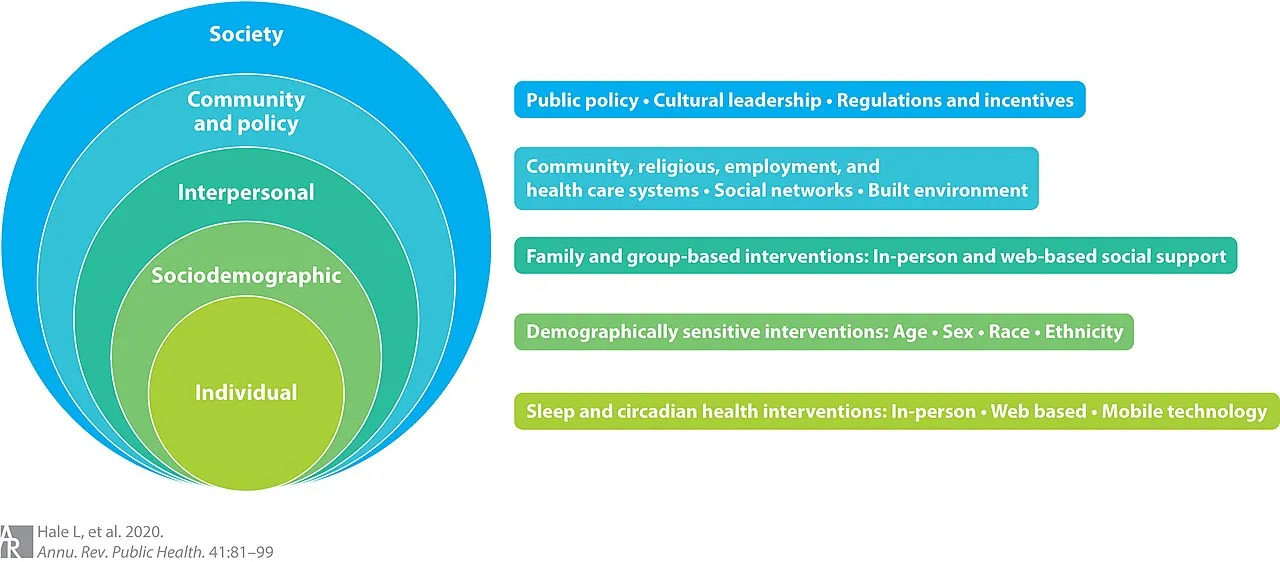
Socioecological model of sleep health, with possible interventions corresponding to different levels.
In Short: Researchers published a study in Life Cycle in 2024, finding that walking patterns and sleep quality can indicate liver health.
According to ScienceAlert, the study found that walking speed could predict liver stiffness as accurately as liver blood tests.
Gabet, one of the researchers, noted that conventional walking research has often focused on leg movements, leaving upper body movements relatively unexplored.
The study involved participants completing five movement tasks, including walking on a treadmill at different speeds and standing still to test balance.
Gabet highlighted the impact of sleep quality on the body, stating, 'A finding that stood out to me was how much sleep quality affects our body.'
Another study published in Clinical Gastroenterology and Hepatology indicates that late-night eating is linked to a higher risk of liver disease.
Simran Malhotra, M.D., explained that chronic late-night eating disrupts the liver’s circadian rhythm, contributing to higher blood sugar, fat buildup, and inflammation.
Dr. Robert Wilechansky, a hepatologist at Oregon Health & Science University, is leading a new study to better understand how eating and daily habits relate to liver health.
While many people may think alcohol is the main culprit, experts say chronic late-night eating may be one of the biggest contributors to liver dysfunction.
The study also found that low-carbohydrate diets can have significant benefits for liver function, though they are difficult to maintain long-term.
What this adds
The study adds to the understanding of how lifestyle factors, such as walking patterns and sleep quality, can predict liver health.
It also highlights the importance of meal timing and the impact of late-night eating on liver health.
What's confirmed
- According to ScienceAlert, the study found that walking speed could predict liver stiffness as accurately as liver blood tests.
- Gabet, one of the researchers, noted that conventional walking research has often focused on leg movements, leaving upper body movements relatively unexplored.
- The study involved participants completing five movement tasks, including walking on a treadmill at different speeds and standing still to test balance.
- Another study published in Clinical Gastroenterology and Hepatology indicates that late-night eating is linked to a higher risk of liver disease.
- Simran Malhotra, M.D., explained that chronic late-night eating disrupts the liver’s circadian rhythm, contributing to higher blood sugar, fat buildup, and inflammation.
- Dr. Robert Wilechansky, a hepatologist at Oregon Health & Science University, is leading a new study to better understand how eating and daily habits relate to liver health.
- While many people may think alcohol is the main culprit, experts say chronic late-night eating may be one of the biggest contributors to liver dysfunction.
- The study also found that low-carbohydrate diets can have significant benefits for liver function, though they are difficult to maintain long-term.
What's still developing
- Researchers have even described walking speed as a "sixth vital sign".
- Doctors have long watched for changes in walking speed, balance, and posture.
- Although most individuals with fatty liver disease do not advance to severe liver conditions, the findings underscore a broader concern about meal timing relative to liver health.
- This research builds on existing studies that have already connected late-night eating to issues like obesity and cardiovascular disease, but aims to explore its specific link to liver health.
- The results showed a consistent pattern: those who consumed food late at night had a significantly higher risk of liver disease.
- Fortunately, your daily lifestyle habits and food choices can play a powerful role in managing cholesterol — consistent balanced eating patterns make the biggest difference.
- But we know that low-carb diets are difficult to maintain in the long term, and many people might want to return to less-restrictive eating patterns if they achieve weight or other health goals.