
Home · Science · Nov 16 archive
Far from home. Voyager 1 is now farther than anything man has sent into space
· Confirmed
In Short: Voyager 1 is the farthest human-made object from Earth, traveling at a speed of 34,000 miles per hour, faster than a rifle bullet or anything else humanity has ever built.
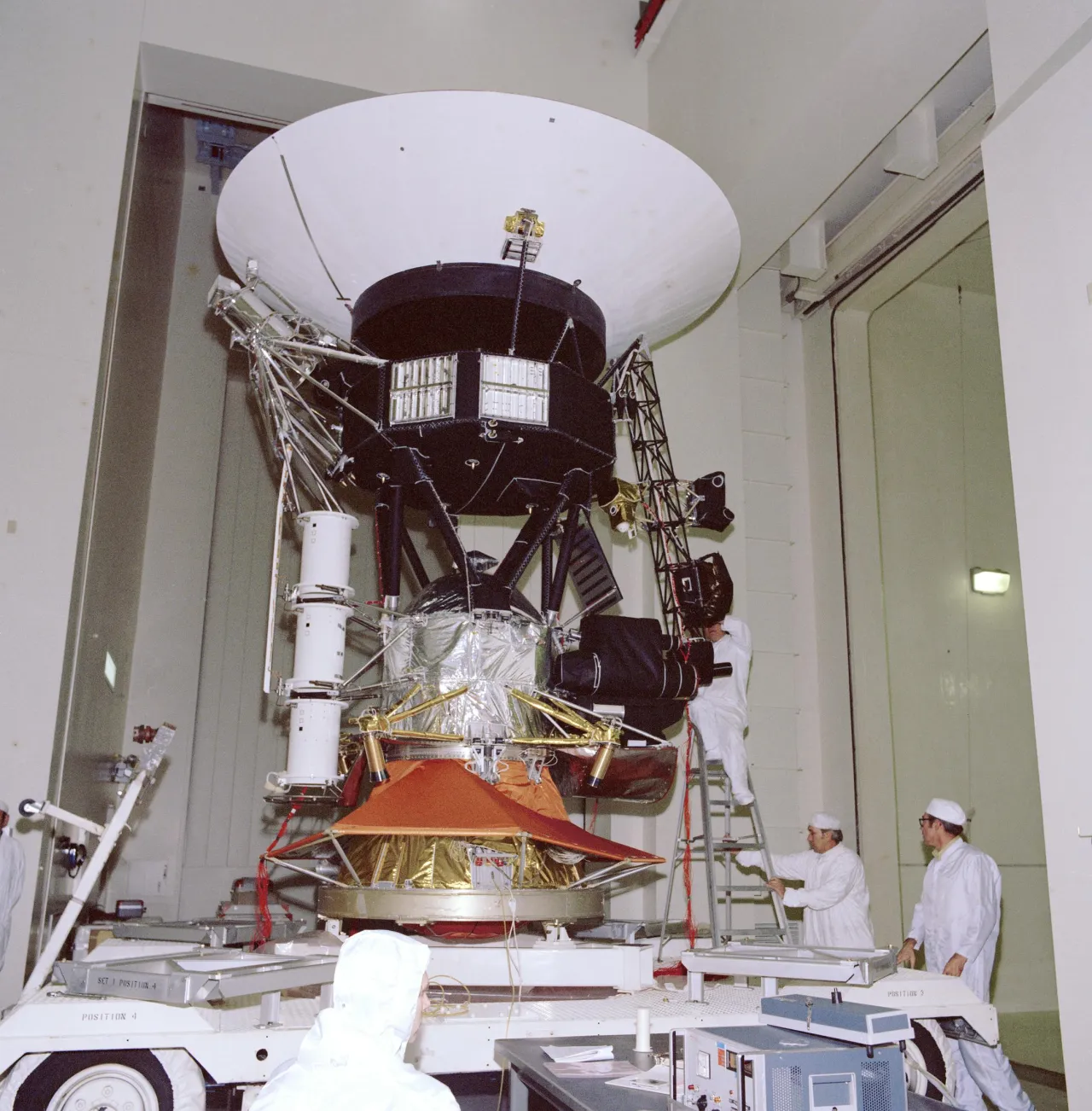
NASA's Voyager 1 probe, launched in 1977, has reached a new milestone, traveling 16 billion miles from Earth, a distance equal to one light-day.
On Wednesday, Voyager 1 will hit the milestone of traveling at least 16 billion miles since its launch, a distance equal to how far light can travel in 24 hours.
The probe continues to relay space-related data back to a team of NASA scientists daily, despite a brief communication loss in October that has not yet been resolved.
Voyager 1's original mission was to fly past Jupiter and Saturn, which it completed in 1979 and 1980, respectively. Since then, it has continued to operate, conducting flybys of Jupiter and Saturn and taking detailed photos of Saturn's rings and moons.
In 2012, Voyager 1 reached the interstellar boundary, becoming the first spacecraft to operate outside the heliosphere, the protective bubble of particles and magnetic fields generated by the Sun.
Voyager 1 carries the Golden Record, an interstellar 'time capsule' designed to communicate Earth's story to extraterrestrials.
Voyager 1's project manager, Suzanne Dodd, described the probe as 'a national treasure' and compared its activities to those of weather satellites.
NASA officials have not offered recent estimates for how long the two Voyager spacecraft will last, but in 2022, Suzanne Dodd said they may keep operating into the 2030s.
Voyager 1's journey has defied all expectations, and NASA officials are celebrating this milestone as a huge achievement.
What this adds
Voyager 1's journey has been marked by unexpected longevity and resilience, with the spacecraft continuing to operate beyond its original mission parameters.
What's confirmed
- Voyager 2 is expected to hit one light-day from Earth in 2035.
What's still developing
- The famous “Pale Blue Dot” photo of Earth was taken by Voyager 1 in 1990.
- NASA's Voyager 1 has traveled farther than anything else that humans have launched into space.
- This NASA spacecraft has traveled for nearly 50 years, launching Sept.
- It and its twin, Voyager 2, are the only spacecraft to have operated outside of the heliosphere, which acts like a protective shield of the solar system.
- Use a flashlight, phone light or anything that can blink a sequence.
- 18, when the spacecraft is 49 years, two months and 11 days old.
- "It's a balance, right. Because some instruments are more power hungry than others," Hayes said of the ongoing work on keeping the Voyagers going.
- Hayes said the original design team likely did not foresee a 50-year lifespan for the mission, even though the Voyagers had many redundancies in them.
- Breaking space news, the latest updates on rocket launches, skywatching events and more!
- Or to be precise, on 18 November 2026 at 10:16 UTC (2:16 AM PST), Voyager 1 will reach a distance of 25.9 billion kilometers from its home planet.
- That's the same distance that light travels in a single day… and for Voyager 1, it will have taken the spacecraft more than 49 years.
- We'll be spelling out "V G R" to show support for the lonely little probe.