
Home · World · Nov 13 archive
Eisenkot Criticizes Netanyahu's Campaign Against Arab Israelis
Confirmed
In Short: Former Israeli military chief Gadi Eisenkot accused Prime Minister Benjamin Netanyahu of fueling a 'racist' campaign against Arab citizens.
Eisenkot quickly targets Netanyahu's legacy in new Israeli parliament • FRANCE 24 English. FRANCE 24 English
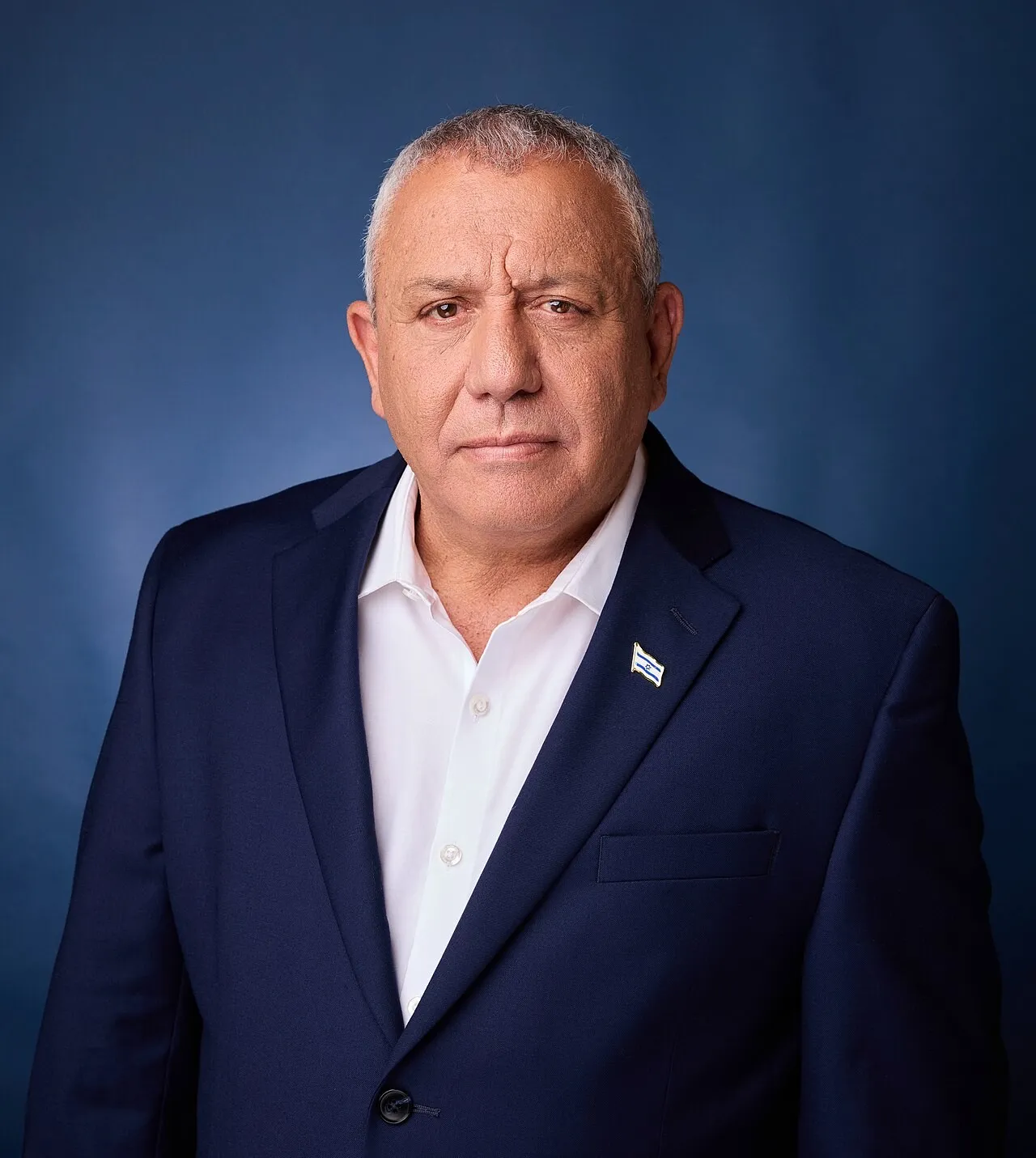
Former Israeli military chief Gadi Eisenkot accused Prime Minister Benjamin Netanyahu of fueling a 'racist' campaign against Arab citizens of Israel, in a statement on X. Eisenkot, who is now tasked with forming a government following the October 27 elections, said the campaign was aimed at delegitimizing Arab citizens for political reasons.
In the October 27 elections, Netanyahu's right-wing and religious bloc won 53 seats, while Eisenkot's four-party alliance secured 48 seats. Neither side achieved the 61 seats needed for a parliamentary majority, leaving both short of forming a government on their own.
Eisenkot has ruled out forming a government with Arab-led parties, despite their record 19 seats in the 120-seat parliament. Arab parties, representing Palestinian citizens of Israel, won nearly a sixth of the seats, potentially emerging as key players in the formation of a new government.
Eisenkot, who led Israel’s military from 2015 to 2019, emphasized that Arab citizens are part of the Israeli story and that attempts to marginalize or smear them as a group are anti-state acts. He stated, “One can disagree with the representatives of the Arab parties, and one can even feel deep revulsion toward some of them, but one cannot, should not, and I will not allow an entire sector to be slandered.”
Eisenkot’s statement was a rare instance of a prominent Jewish political leader taking a strong stand in defense of Arab Israelis, who make up more than 20% of the population. This stance could have significant implications for the formation of a new government, as it could alienate potential allies.
President Isaac Herzog has tasked Eisenkot with forming a government, a process that is expected to involve weeks of protracted negotiations. Eisenkot has expressed confidence in Yashar MK Elyasaf Peretz, despite Peretz’s mother, former presidential candidate Miriam Peretz, threatening to resign if Eisenkot forms a government with an Arab party.
Eisenkot highlighted his security credentials on the campaign trail, citing his “Dahiyeh doctrine” of responding to attacks with disproportionate force. This doctrine was deployed during Israel’s 2006 war with Hezbollah in Lebanon.
Eisenkot’s potential pathways to power include trying to form a minority government with Arab support from the outside, forming a coalition with ultra-Orthodox parties, or forging a unity government with Netanyahu. However, his rejection of Arab participation in governing coalitions complicates these options.
Despite the challenges, Eisenkot remains committed to forming a government. He wrote on X, “Now is the time to form a national emergency government. I will do everything to ensure we are worthy.”
What this adds
Eisenkot’s strong stance on defending Arab Israelis is a significant departure from previous political rhetoric and could influence the dynamics of coalition negotiations.
What's confirmed
- “Arab citizens of Israel make up 21 percent of the total population. Since the start of the election campaign, they have faced a racist and violent campaign of delegitimisation fuelled by the outgoing prime minister and his circle for political reasons,” Eisenkot wrote on X.
- Gadi Eisenkot, the former military chief who is trying to form the next Israeli government, accused Prime Minister Benjamin Netanyahu on Friday of fueling a “racist” campaign against the country’s Arab citizens, in some of the strongest public criticism of his rival’s attacks on the community.
- Netanyahu, Israel’s longest-serving leader, is fighting to stay in office after his religious-nationalist coalition lost its majority in an October 27 election but still emerged as the largest bloc in parliament.
- Eisenkot highlighted his security credentials on the campaign trail, citing his “Dahiyeh doctrine” of responding to attacks with disproportionate force, which he deployed as a commander during Israel’s 2006 war with Iran-backed Hezbollah in Lebanon.
- Eisenkot, a former military chief, has declined to join forces with Arab parties, with whose support he would have a majority of seats in parliament.
- Weeks of protracted negotiations are expected to follow Eisenkot's nomination.
What's still developing
- Eisenkot led Israel’s military from 2015 to 2019 and sat as an observer in Netanyahu’s war cabinet for the first eight months of Israel’s genocidal war on Gaza, which began in October 2023.
- All leaders of Arab parties have condemned the attack, in which Arab Israelis – descendants of Palestinians who remained in what became Israel in 1948 – were also among those killed.
- Channel 12 said that in the worst-case scenario, Eisenkot’s circle believes that Peretz would resign and give his spot to the next representative on the Yashar list, rather than bolt to the Netanyahu coalition.
- Miriam Peretz’s eldest son, Uriel, was killed fighting in Lebanon as a Golani officer in 1998, when Eisenkot commanded the infantry brigade.
- But Arab leaders, incensed by what they view as the racist policies of Mr Netanyahu and his ultranationalist allies, still nominated Mr Eisenkot to try to form a government first - giving him the most endorsements.