
Home · Technology · Nov 11 archive
Serve Robotics Expands Platform to Other Robots
Confirmed
In Short: Serve Robotics, a maker of self-driving sidewalk delivery robots, is expanding its platform to become a technology supplier to other companies building robots.
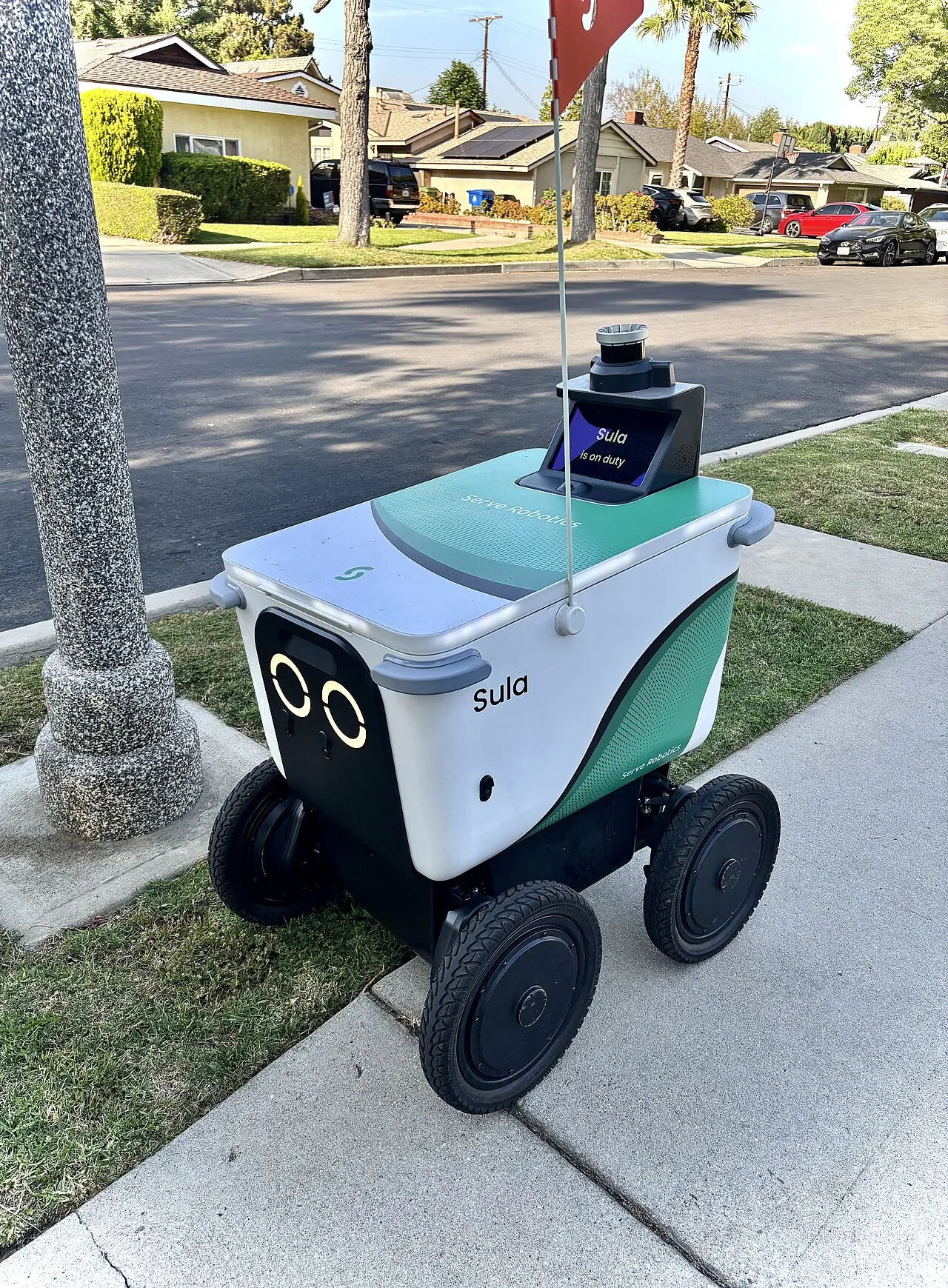
Serve Robotics Food Delivery Robot.
Serve Robotics Q3 2026 Earnings Call | Autonomous Delivery Fleet Rollouts & Daily Active Robots Grow. i101
According to TechCrunch, Serve Robotics will offer customers its connectivity and data tools, enabling them to manage unreliable networks and connect robots to offline intelligence.
Serve Robotics already operates two kinds of robots: a cute googly-eyed sidewalk delivery robot and one designed for hospitals, which it acquired through its purchase of Diligent Robotics.
The company is launching a new AV Delivery Developer Portal, enabling third-party software engineers, independent businesses, and even autonomous AI agents to access its fleet of 2,000 sidewalk robots.
Serve Robotics is opening up its platform to make its autonomous last-mile delivery robots available to anyone who wants to use them, according to The Verge. Now, anyone in one of the 150 neighborhoods where the company currently operates can employ a sidewalk robot for deliveries.
The company operates around 2,000 deployed robots across 44 cities, with CEO Ali Kashani framing the business as a “multi-domain autonomy platform” spanning sidewalks and hospital corridors.
Serve Robotics is rising in anticipation of its Q2 2026 earnings, which the company has confirmed for Thursday, August 6, after the market close, with a 5 p.m. ET deadline.
The company’s stock is up 13% to $5.39 as investors reposition into the delivery robot name ahead of the earnings report.
Bedrock Robotics, a startup developing self-driving systems for construction equipment, is a customer, according to Serve Robotics.
The company’s move reflects a broad risk-on robotics rally tied to easing Middle East tension after President Trump called off strikes on Iran, lifting names that had sold off sharply into July.
What this adds
Serve Robotics aims to democratize the use of autonomous robots by providing its technology to other companies, potentially expanding its market reach.
The company's platform is designed to help researchers and businesses integrate advanced robotics technology without relying on proprietary systems.
Serve Robotics is positioning itself as a technology supplier, offering its connectivity and data tools to other companies building robots for various applications.
What's confirmed
- According to TechCrunch, Serve Robotics will offer customers its connectivity and data tools, enabling them to manage unreliable networks and connect robots to offline intelligence.
- Serve Robotics already operates two kinds of robots: a cute googly-eyed sidewalk delivery robot and one designed for hospitals, which it acquired through its purchase of Diligent Robotics.
- The company is launching a new AV Delivery Developer Portal, enabling third-party software engineers, independent businesses, and even autonomous AI agents to access its fleet of 2,000 sidewalk robots.
- Serve Robotics is opening up its platform to make its autonomous last-mile delivery robots available to anyone who wants to use them, according to The Verge. Now, anyone in one of the 150 neighborhoods where the company currently operates can employ a sidewalk robot for deliveries.
- The company operates around 2,000 deployed robots across 44 cities, with CEO Ali Kashani framing the business as a “multi-domain autonomy platform” spanning sidewalks and hospital corridors.
- Serve Robotics is rising in anticipation of its Q2 2026 earnings, which the company has confirmed for Thursday, August 6, after the market close, with a 5 p.m. ET deadline.
- The company’s stock is up 13% to $5.39 as investors reposition into the delivery robot name ahead of the earnings report.
- Bedrock Robotics, a startup developing self-driving systems for construction equipment, is a customer, according to Serve Robotics.
- The company’s move reflects a broad risk-on robotics rally tied to easing Middle East tension after President Trump called off strikes on Iran, lifting names that had sold off sharply into July.
What's still developing
- Serve Robotics, a maker of self-driving sidewalk delivery robots, is expanding beyond its autonomous delivery operations in a bid to become a technology supplier to other companies building robots.
- Instead, he said there is opportunity to sell the technology it developed for its own robots to other companies developing robots for farms, warehouses, and other uncontrolled environments.
- Serve, which was spun out of the app-based delivery company Postmates in 2021, has been making Uber Eats deliveries in Los Angeles, Miami, Dallas, and dozens of other cities for several years now, using robots that look like autonomous shopping carts.
- Home » U.S. Special Operations Forces Tap Sea Machines for Vessel Autonomy Kits Sea Machines Robotics announced that it has secured a 5 year Indefinite Delivery Indefinite Quantity (IDIQ) contract to supply its commercial, non-developmental, TRL-9, rapidly deployable autonomy kits to US Special Operations Forces.
- The theme fund is also participating: the ROBO Global Robotics and Automation ETF ( NYSE:ROBO ) is up 2% to $80.89, and the NASDAQ 100 is up 1.24% for broader index context.
- Serve Robotics stock is down 48% year to date (YTD) and had already slid 27% over the past month heading into today.
- Robotics stocks are running higher Monday morning as a broad risk-on tape lifts the group and traders position ahead of a key earnings print later this week.
- The company said the platform is designed to help democratize humanoid robotics research by combining advanced hardware, onboard AI computing, and an open software stack without requiring researchers to rely on proprietary systems.
- Several research institutions are expected to adopt the platform, including Ai2, ETH Zurich, Stanford Robotics Center, and UC San Diego Advanced Robotics and Controls Laboratory.
- NVIDIA said the platform is intended to streamline humanoid robotics workflows, spanning hardware integration, data collection, simulation, training, evaluation, and deployment.
- Researchers can use the complete stack or integrate individual components into existing robotics development workflows.
- The company added that the Isaac GR00T developer platform will support the Unitree G1 humanoid robot, extending the ecosystem to another platform commonly used by robotics researchers and developers.