
Home · Science · Nov 11 archive
Fossil Fuel Emissions Down 0.4 Percent in 2026
Confirmed
In Short: The U.S. Energy Information Administration (EIA) has published reports on energy-related CO2 emissions since 2010, and this year's data shows a rare dip in carbon emissions from fossil fuels.
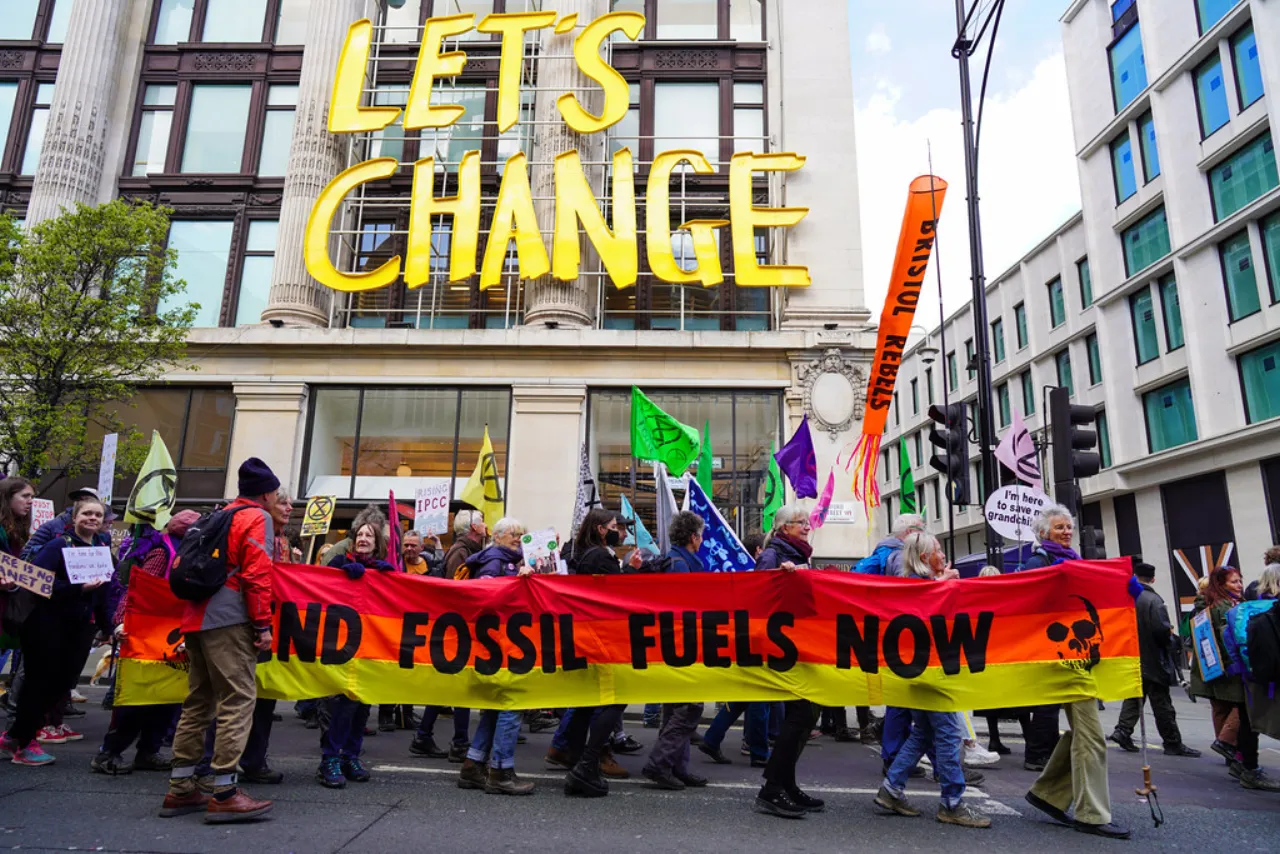
Fossil Fuel Emissions Set for Slight Fall in 2026, Researchers Say. World News Checked
According to a new analysis led by Corinne Le Quéré at the University of East Anglia, fossil fuel emissions have fallen by about 0.4 percent from last year.
The decline in emissions is attributed to a 1.9 percent drop in oil emissions, a smaller 0.3 percent drop in emissions from natural gas use, and a 0.6 percent increase in coal emissions.
Electric vehicles can account for only about 20 percent of the decline in oil emissions, meaning the bulk of the reduction is due to high fuel prices.
The war in Iran has significantly raised fossil fuel prices, leading to a decrease in oil demand and putting the world on track for a dip in annual fossil-fuel carbon emissions.
Between 2019 and 2025, 59 countries cut their emissions despite economic growth, even as global emissions increased by 0.8 percent per year.
The Global Carbon Project, which compiles stats on fossil fuel use and deforestation to track carbon emissions globally and by country, reports that total global CO2 emissions are expected to reach 43.3 billion metric tons in 2026, compared with 42.8 billion metric tons in 2025.
Emissions from changing land-use, such as permanent deforestation, are forecast to be lower than last year.
However, the decline in CO2 emissions from fossil fuels is encouraging but not sustainable, as it is driven in part by unforeseen geopolitical events.
The United Nations Secretary-General Antonio Guterres urged countries to produce clear timelines for the transition away from fossil fuels, stating that it is long past time to stop treating the transition as taboo or intractable.
Nicolas Fulghum, senior data analyst at Ember, noted that whatever happens in the power sector has an outsized influence on worldwide emissions.
Pierre Friedlingstein, chair in mathematical modelling of climate systems at the University of Exeter, emphasized that as long as we emit CO2, the warming will continue and to stop further warming, we have to bring net emissions to zero.
What this adds
This report adds that the decline in fossil fuel emissions is largely due to high oil prices rather than the growth of electric vehicles and renewable energy.
The analysis also highlights that the decline is not a long-term reversal in emissions trends but rather a short-term dip influenced by geopolitical events.
The Global Carbon Project's data shows that emissions have grown more slowly over the past decade compared to the previous decade, with a 0.3% per year growth rate compared to 1.9% per year.
Background
Fossil fuel emissions are down 0.4 percent, largely due to high oil prices.
Fossil fuel emissions are down 0.4 percent, largely due to high oil prices, according to a new analysis.
What's confirmed
- The growth of electric vehicles and renewable energy is offsetting most of the growth of emissions, but not all of it.
- The U.S. Energy Information Administration (EIA) has published this report on an annual basis since 2010, and has published monthly historical data and forecasts on energy-related CO 2 emissions since August 2009.
- Emissions from fossil fuels and cement are forecast to increase yet again to 38.1bn tonnes of CO2, according to the Global Carbon Budget team, which comprises more than 130 scientists from 21 countries.
What's still developing
- Bucking recent trends, fossil fuel emissions look to be down 0.4 percent.
- Annual greenhouse gas emissions are much less variable, having increased fairly steadily, but many complicating factors can still muddy the picture.
- This describes the scale reported in those titles, not a long-term reversal in emissions.
- The Trump administration is gutting regulations on climate-warming emissions from coal and gas-fired power plants, the Environmental Protection Agency announced Monday.
- Global carbon dioxide emissions from fossil fuels are expected to decline slightly in 2026, offering a promising sign that the world's transition to cleaner energy is beginning to make a measurable difference.
- However, those who contributed least to climate change face the greatest danger, Mr. Guterres said, urging action on three fronts: cutting emissions, protecting communities and closing legal gaps.
- Environment Protection Agency Administrator Lee Zeldin said earlier this month that the agency was readying the policy and said some oil and gas producers said the Biden-era rules on emissions were too expensive and unworkable.
- EPA said repeal of the rule would save industry more than $300 billion Wisconsin is among a coalition of 25 states, cities and counties suing the Trump administration for rolling back rules that limit heat-trapping greenhouse gas emissions from coal and gas-fired power plants.
- Evaluating the annual global temperatures each year requires context.
- It means that, altogether, total emissions from all human activities are expected to reach 42.2bn tonnes CO2 in 2025 - down from the 42.4bn in 2024, albeit marginally.
- What is clearer, the team say, is that emissions have grown more slowly over the past decade - 0.3% per year - compared to the previous decade's 1.9% per year.
- Emissions have been growing much less rapidly than before "because of that extraordinary growth in renewable energy in China and elsewhere", she added.
Sources
- BBClink
- BusinessGreenlink
- Euronews.comlink
- Science Newslink
- Scientific Americanlink
- U.S. Energy Information Administration (EIA) (.gov)link
- Sciencedailylink
- Insideclimatenewslink
- Trtworldlink
- Oilpricelink
- Mundoamericalink
- Abcnewslink
- Ourworldindatalink
- Arabnewslink
- Cyprus-Maillink
- Healthpolicy-Watchlink
- World News Checked — video link
- Most Viral Today — video link