
Home · Politics · Nov 10 archive
Supreme Court grapples with arguments over federal agencies’ power to impose fines
Confirmed
In Short: The Supreme Court heard arguments on a range of issues including climate change, affirmative action, and religious freedom.
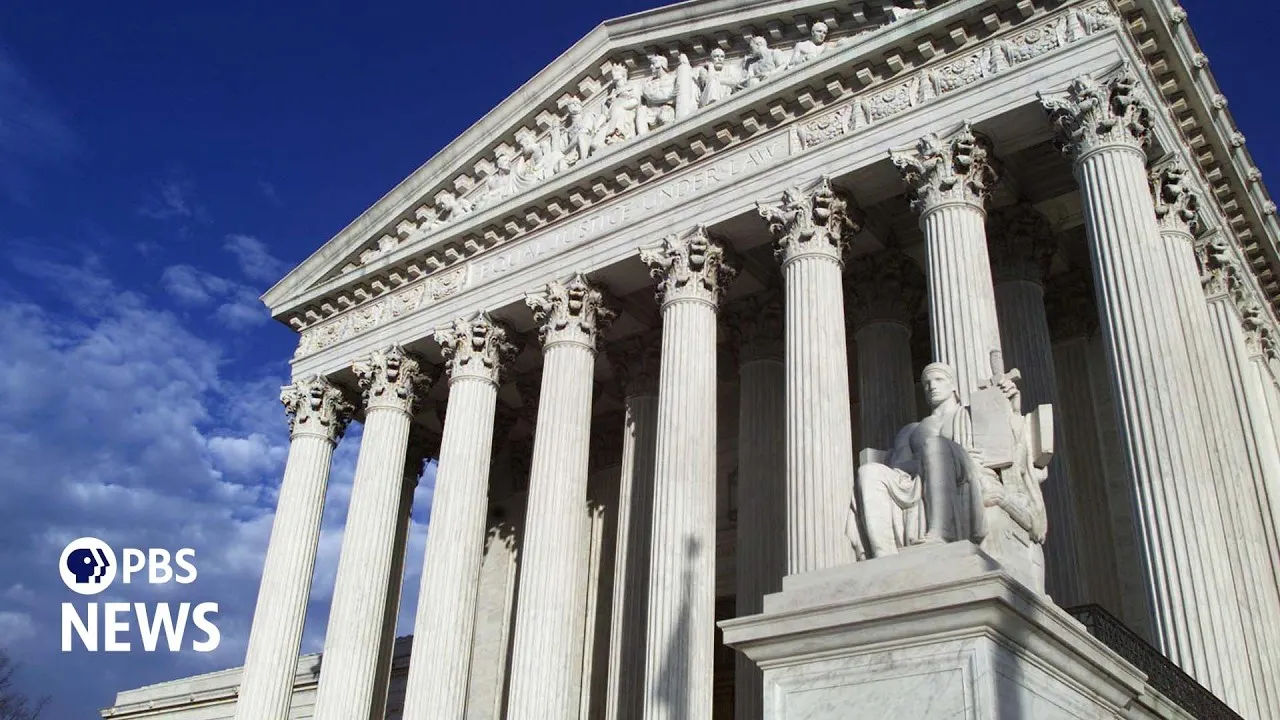
Supreme Court of the United States (Wikidata P18).
JUST IN: Supreme Court Hears Challenge To Labor Department's Power To Impose Financial Penalties. Forbes Breaking News
The Supreme Court grappled with a series of high-stakes cases this week, addressing issues ranging from climate change to affirmative action and religious freedom.
In a climate case, Suncor Energy v. Boulder County, the Court heard arguments that could impact federal agencies' ability to impose fines for environmental violations.
The Court also considered a case involving affirmative action programs in college admissions, which could determine the future of race-based admissions policies.
During oral arguments, the Court heard a dispute between state antidiscrimination laws and religious freedom claims, specifically regarding religious preschools.
In another case, the Court addressed the rights of Catholic schools to receive government funding for preschool programs without guaranteeing admission to children of same-sex couples.
The Court also heard arguments in a case involving migrant workers' living and working conditions at a New Jersey farm.
Additionally, the Court ruled to allow Tennessee to proceed with the execution of Christa Gail Pike.
Justice Samuel Alito recused himself from the climate case, Suncor v. Boulder County, on Monday, September 28, 2026.
The Court also considered a case involving federal agencies' power to impose fines, with Monsanto arguing that federal law preempts state labeling requirements.
The Court heard arguments in a case involving a former employee of a Catholic school in Minnesota who claimed their employment contract was not renewed after they stated their intention to undergo a gender transition.
Background
The Supreme Court has ruled that federal inmates seeking equitable relief must adhere to traditional equitable principles, which do not require a showing of harm.
What's confirmed
- He was referring to a 1971 decision in which the Supreme Court for the first time authorized such a constitutional claim for money damages against federal agent.
- However, the 9th Circuit Court of Appeals revived his claim and pointed to a 1980 ruling that allowed a similar suit brought by a mother whose son died of an asthma attack in a federal prison.
What's still developing
- This framing positions the case as a direct descendant of PLIVA, Inc. v. Mensing and Mutual Pharmaceutical Co. v. Bartlett, where the Court found preemption when federal law constrained a manufacturer’s ability independently to alter warnings.
- This rights versus remedies dispute has divided the Supreme Court for nearly 50 years.
- That “could be viewed as a cautious, incremental approach to such a fundamental question,” Roberts told the lawyer who wanted the court to go further.
- An attorney representing the Republican district attorney of Sheboygan County sought to convince the liberal-leaning Wisconsin Supreme Court to reactivate a 175-year-old law that has been construed as an abortion ban after a Dane County judge ruled it was a prohibition on feticide.
- Before the justices took the bench on Monday for the first oral arguments of the 2026-27 term, the Supreme Court issued a list of orders from the justices’ private conference on Sept. 28, where they considered petitions for review that built up during the summer recess.
- The Roberts Court, with its 6-3 majority of Republican appointees, continued to issue partisan opinions that pleased the wealthy interests that fund the conservative legal movement while abetting the new Trump administration on its lawless rampage against immigrants, federal agencies, Congress, the courts, and natural born citizens.
- Matt Grossmann: The Supreme Court is enabling Trump’s executive power, this week on the Science Of politics for the Niskanen Center, I’m Matt Grossman.
- A federal judge dismissed his suit, citing the Supreme Court's decades of skepticism over such lawsuits.
Sources
- Bergeson & Campbelllink
- Los Angeles Timeslink
- PBS Wisconsinlink
- ReligiousLiberty.TVlink
- The Conversationlink
- The Equation - Union of Concerned Scientistslink
- Washingtonexaminerlink
- Wsmvlink
- Warpbeatlink
- Ewtnnewslink
- Scotusbloglink
- OSV Newslink
- Motherjoneslink
- Niskanencenterlink
- Fox Newslink
- Officerlink
- Forbes Breaking News — video link
- PBS NewsHour — video link
- PBS NewsHour — video link