
Home · Health · Nov 10 archive
FDA Warns GLP-1 Drugs May Cause Rare Eye Condition
· Confirmed
In Short: The FDA has required drugmakers to add warnings about a potential increased risk of NAION, a rare eye condition, to the labels of all GLP-1 drugs.
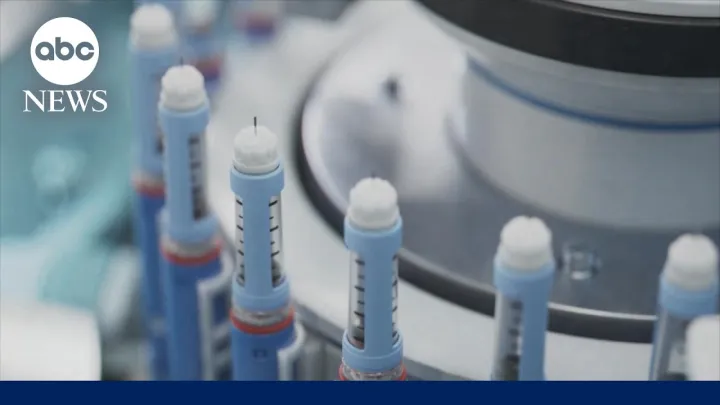
FDA orders new warning on Ozempic, Wegovy, other GLP-1 drugs over rare eye condition.
FDA orders new warning on Ozempic, Wegovy, other GLP-1 drugs over rare eye condition. ABC News
The Food and Drug Administration (FDA) has issued a warning that GLP-1 drugs, including Novo Nordisk’s Ozempic and Wegovy and Eli Lilly’s Mounjaro and Zepbound, may carry a potential increased risk of nonarteritic anterior ischemic optic neuropathy (NAION), a rare but serious eye condition that can cause permanent vision loss. The warning comes after an intensive review of studies and clinical trials.
In a drug safety communication on Monday, the FDA said it will now require makers of GLP-1 receptor agonist drugs to add a warning about the risk of NAION on their drug labels. The warning will be added to the Warnings and Precautions section of the drug labels for all GLP-1 drugs, including Ozempic, Wegovy, Mounjaro, and Zepbound.
The FDA's decision was based on a meta-analysis of 126 clinical trials, including a total of 134,253 participants, of whom 78,217 received a GLP-1 medication. A total of 15 probable NAION events were identified, with 10 in patients taking a GLP-1 drug, five in patients receiving a placebo, and none in patients on non-GLP-1 drugs. Across randomized clinical trials, the risk was estimated to be approximately 6.4 NAION cases per 100,000 person-years with GLP-1s, compared to 3.8 per 100,000 person-years for those treated with placebo or other glucose-lowering medications.
The condition, NAION, is caused by restricted blood flow to the optic nerve, leading to swelling and cell death and ultimately damaging the nerve, causing abrupt vision loss that can often be permanent. Symptoms include sudden, painless vision loss in one eye, blurred or missing portions of vision, distortion of colors, and blurry or hazy spots.
The FDA began looking into a possible link after the publication of a 2024 study in JAMA Ophthalmology that found diabetes patients prescribed semaglutide were four times as likely to develop NAION as those not prescribed the drug. However, the FDA found no increased risk of NAION in patients taking a GLP-1 compared to those taking an SGLT-2, but there was an increased risk compared to those taking DPP-4.
In May, two groups published a joint consensus statement recommending “shared decision-making between the patient and their care team” on whether to start, continue, or discontinue taking a GLP-1 drug if NAION develops or if a patient is at higher risk. Roughly half of patients on GLP-1s stop taking the drugs within the first year, partly due to gastrointestinal side effects, according to a 2025 study of 125,000 patients.
Background
The FDA has required drugmakers to add warnings about a potential increased risk of NAION, a rare eye condition, to the labels of all GLP-1 drugs.
The FDA has mandated that all GLP-1 drugs include a warning about a potential increased risk of nonarteritic anterior ischemic optic neuropathy (NAION), a rare eye condition.
What's confirmed
- The makers of blockbuster weight-loss drugs such as Ozempic and Zepbound will be required to include warnings about a rare eye condition that can cause permanent vision loss.
- The FDA announced on Monday — after an intensive review of studies and clinical trials — that GLP-1 use is associated with an “potential increased risk” of a condition called Nonarteritic Anterior Ischemic Optic Neuropathy (NAION).
- The eye condition, called nonarteritic anterior ischemic optic neuropathy, or NAION, leads to sudden and often permanent vision loss.
- According to the Food and Drug Administration, NAION cases have been reported for all currently marketed GLP-1 receptor agonist products, including Ozempic, Wegovy, Mounjaro, Zepbound and other pill-based and injectable drugs.
- In making its decision, the FDA carried out a meta-analysis of GLP-1 development programs and found a higher rate of NAION in patients treated with GLP-1 RAs.
- FDA scientists began looking into the problem after the publication of a 2024 medical paper tying the condition to certain patients taking semaglutide, the active drug in Eli Lilly's Ozempic (Photo: AdobeStock) Popular weight loss drugs including Ozempic and Wegovy will carry a new warning about a possible rare side effect that can sometimes lead to permanent vision loss, US health regulators announced Monday.
What's still developing
- Celine Dion’s absence from the stage began in 2021, when she postponed her Las Vegas residency, later revealing she had been diagnosed with Stiff Person Syndrome, a rare condition that affects the muscles and can have a serious impact on movement and vocal ability.
- The study also found that older age, female sex, multiple underlying health conditions, and multiple COVID infections were associated with greater odds of persistent symptoms.
- While no research has yet to conclude that GLP-1s cause eye stroke, a leading theory about the link is that the drugs may lead to a reduction in blood flow and glucose delivery to the optic nerve, making the eyes more vulnerable to injury, according to Sun Kim, MD, an endocrinologist at Stanford Health Care who specializes in the treatment of type 2 diabetes.
Sources
- Ars Technicalink
- BBClink
- Business Standardlink
- Everyday Healthlink
- KCCIlink
- PhillyVoicelink
- STATlink
- Toronto Starlink
- WBAL-TVlink
- WCVBlink
- WMTWlink
- Rescanalink
- Fox Businesslink
- Kivitvlink
- Bhaskarenglishlink
- Smoothradiolink
- ABC News — video link
- CNN — video link
- NBC News — video link
- FOX 5 New York — video link
- WBIR Channel 10 — video link
- FOX 9 Minneapolis-St. Paul — video link