
Home · Health · Nov 10 archive
FDA Warns GLP-1 Drug Makers About Vision Loss Risk
· Confirmed
In Short: People reported that the Food and Drug Administration (FDA) issued a warning letter to Novo Nordisk, the maker of GLP-1 medications like Ozempic and Wegovy, for not reporting adverse side effects and deaths in a timely manner.
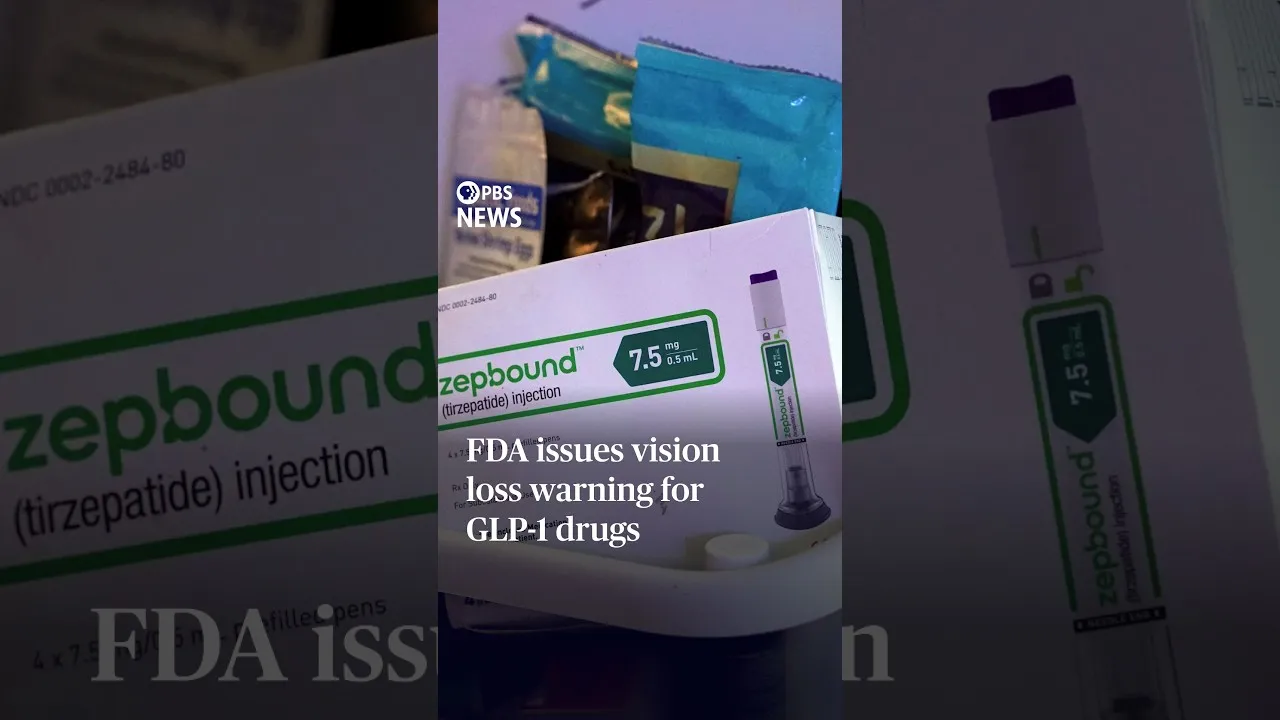
FDA issues vision loss warning for GLP-1 drugs. PBS NewsHour
People reported that the Food and Drug Administration (FDA) issued a warning letter to Novo Nordisk, the maker of GLP-1 medications like Ozempic and Wegovy, for not reporting adverse side effects and deaths in a timely manner.
STAT noted that the FDA required pharma companies to inform patients and doctors about the potential risk of Nonarteritic Anterior Ischemic Optic Neuropathy (NAION) associated with GLP-1 drugs.
The Independent and The Independent both reported that the FDA mandated warnings about NAION for blockbuster weight-loss drugs such as Ozempic and Zepbound.
The FDA concluded that there is a potential increased risk of rare NAION events in patients taking GLP-1 receptor agonists (GLP-1 RAs), according to reports received through the FDA’s Adverse Event Monitoring System and studies involving more than 134,000 patients.
The FDA advised discontinuing the GLP-1 RA in patients who develop NAION, unless the benefits of treatment clearly outweigh the risk.
Symptoms of NAION include sudden, painless vision loss in one eye, blurred or missing portions of vision, distortion of colors, and blurry or hazy spots.
The condition is caused by restricted blood flow to the optic nerve, leading to swelling and cell death, ultimately damaging the nerve and causing permanent vision loss.
Eli Lilly, maker of Mounjaro and Zepbound, stated that the FDA’s drug safety communication applies to all medicines with GLP-1 RA activity and does not reference any findings specific to Lilly medicines.
The FDA found no increased risk of NAION in patients taking a GLP-1 compared to those taking an SGLT-2, but there was an increased risk compared to those taking DPP-4.
The FDA’s decision highlights the importance of ongoing monitoring and reporting of side effects for drugs that are widely used, even if they were not observed in clinical trials.
What this adds
The FDA’s warning letter to Novo Nordisk and the subsequent requirement for drug makers to include warnings about NAION on their labels is a significant development in the regulation of GLP-1 drugs.
The FDA’s comprehensive review and the identification of NAION cases in patients taking GLP-1 drugs indicate the importance of continued vigilance in drug safety monitoring.
What's confirmed
- The makers of blockbuster weight-loss drugs such as Ozempic and Zepbound will be required to include warnings about a rare eye condition that can cause permanent vision loss.
- The FDA announced on Monday — after an intensive review of studies and clinical trials — that GLP-1 use is associated with an “potential increased risk” of a condition called Nonarteritic Anterior Ischemic Optic Neuropathy (NAION).
- The eye condition, called nonarteritic anterior ischemic optic neuropathy, or NAION, leads to sudden and often permanent vision loss.
- According to the Food and Drug Administration, NAION cases have been reported for all currently marketed GLP-1 receptor agonist products, including Ozempic, Wegovy, Mounjaro, Zepbound and other pill-based and injectable drugs.
- “FDA concluded that there is a potential increased risk of rare NAION events in patients taking GLP-1 RAs.” The decision follows a comprehensive review of NAION in patients who were taking the drugs, incorporating reports received through the FDA’s Adverse Event Monitoring System and studies involving more than 134,000 patients.
What's still developing
- Read below for all the game highlights, news, analysis and postgame press conferences from Mercedes-Benz Stadium in downtown Atlanta: The 49ers ended their loss to the Falcons in perhaps the most fitting way.
- In May, the two groups published a joint consensus statement that recommended “shared decision-making between the patient and their care team” on whether to start, continue, or discontinue taking a GLP-1 drug if NAION develops or if a patient is at higher risk.
Sources
- Ars Technicalink
- Independentlink
- Peoplelink
- STATlink
- WBAL-TVlink
- WMTWlink
- Jpostlink
- Bhaskarenglishlink
- Fxstreetlink
- Atozsportslink
- Naharnetlink
- Nbcsportsbayarealink
- NBC Newslink
- Huffpostlink
- Al Jazeeralink
- Fox Newslink
- PBS NewsHour — video link
- FOX 5 New York — video link
- FOX 9 Minneapolis-St. Paul — video link
- TODAY — video link
- WTHR — video link