
Home · Health · Nov 10 archive
FDA Requires GLP-1 Drugs to Carry Warning About Rare Eye Condition
· Confirmed
In Short: The FDA has required drugmakers to add warnings about a potential increased risk of NAION, a rare eye condition, to the labels of all GLP-1 drugs.
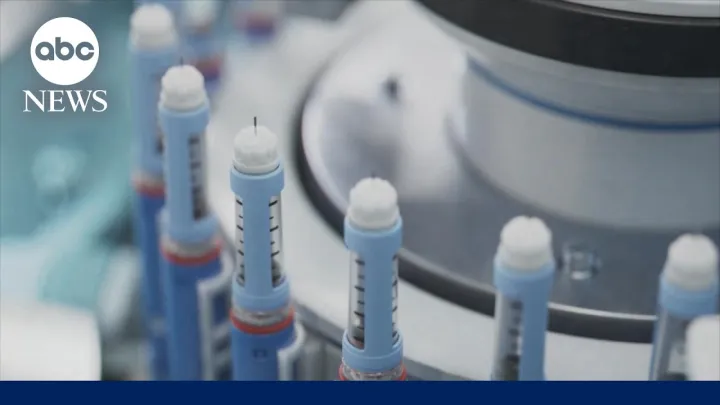
FDA orders new warning on Ozempic, Wegovy, other GLP-1 drugs over rare eye condition.
FDA orders new warning on Ozempic, Wegovy, other GLP-1 drugs over rare eye condition. ABC News
The Food and Drug Administration (FDA) has required drugmakers to add warnings about a potential increased risk of nonarteritic anterior ischemic optic neuropathy (NAION), a rare eye condition, to the labels of all GLP-1 drugs, including Novo Nordisk’s Ozempic and Wegovy and Eli Lilly’s Mounjaro and Zepbound.
In NAION, the optic nerve suddenly loses its blood supply, leading to vision loss, sometimes described as a 'stroke of the eye.' The condition is rare, but it appears to be increased in people using all currently marketed GLP-1-based medications.
The FDA's decision follows a 2024 JAMA Ophthalmology study that found patients on semaglutide, the active drug in Ozempic, were about four times more likely to develop NAION.
The agency conducted a meta-analysis of 126 clinical trials, including a total of 134,253 participants, of whom 78,217 received a GLP-1 medication. A total of 15 probable NAION events were identified, with 10 in GLP-1-treated individuals, five in those receiving placebo, and none in those receiving other glucose-lowering drugs.
The FDA estimates the risk to be approximately 6.4 NAION cases per 100,000 person-years with GLP-1s, compared to 3.8 per 100,000 person-years for those treated with placebo or other glucose-lowering medications.
The condition is rare overall, occurring in somewhere between two and 10 people in 100,000 in the general population, according to the American Academy of Ophthalmology.
The FDA advises that if patients think they may have experienced NAION, they should talk with their doctor about whether to continue taking their GLP-1 RA medication or to stop it.
The FDA's requirement applies to all GLP-1 drugs, including Ozempic, Wegovy, Mounjaro, Zepbound, and several older GLP-1 diabetes medications.
The FDA notes that the underlying cause of NAION is not understood, and it has not identified a mechanism for how GLP-1s may increase the potential risk of NAION.
What this adds
The FDA's decision to require warning labels on GLP-1 drugs is based on new research and a meta-analysis of clinical trials, which identified a higher rate of NAION in patients treated with GLP-1 receptor agonists.
The condition has been reported for all currently marketed GLP-1 receptor agonist products, including Ozempic, Wegovy, Mounjaro, Zepbound, and other pill-based and injectable drugs.
The FDA's requirement applies to all GLP-1 drugs, including those used to treat obesity, diabetes, and several other medical conditions.
Background
The FDA has required drugmakers to add warnings about a potential increased risk of NAION, a rare eye condition, to the labels of all GLP-1 drugs.
The FDA has required drugmakers to add warnings about a potential increased risk of NAION, a rare eye condition, to the labels of all GLP-1 drugs.
What's confirmed
- The Food and Drug Administration said Monday that GLP-1 drugmakers must add a warning label about a rare eye condition that can cause sudden blindness.
- The FDA said “there is a potential increased risk of rare NAION” in people taking GLP-1 drugs.
- The Food and Drug Administration said the risk will be added to the labeling of all GLP-1 drugs, the blockbuster medications used to treat obesity, diabetes and several other medical conditions.
- The eye condition, called nonarteritic anterior ischemic optic neuropathy, or NAION, leads to sudden and often permanent vision loss.
- According to the Food and Drug Administration, NAION cases have been reported for all currently marketed GLP-1 receptor agonist products, including Ozempic, Wegovy, Mounjaro, Zepbound and other pill-based and injectable drugs.
- The problem, which has been reported with all GLP-1 drugs, is caused by decreased blood flow to the optic nerve, although the underlying cause isn’t understood, the FDA said.
- "FDA's drug safety communication applies to all medicines with GLP-1 RA activity and does not reference any findings specific to Lilly medicines." An FDA analysis of more than 125 clinical trials found that the problem occurred in roughly 6 of every 100,000 patients who took a GLP-1 for at least one year.
- The U.S. Food and Drug Administration said it is requiring GLP-1 drugs such as Eli Lilly’s Mounjaro and Zepbound, and Novo Nordisk’s Ozempic and Wegovy to add information to the “warnings and precautions” section of labeling about the potential increased risk of non-arteritic anterior ischemic optic neuropathy.
- FDA scientists began looking into the problem after the publication of a 2024 medical paper tying the condition to certain patients taking semaglutide, the active drug in Novo Nordisk’s Ozempic.
What's still developing
- Test your knowledge with our new weekday mini crossword The Food and Drug Administration on Monday warned that GLP-1 drugs carry a potential risk for a rare but serious eye condition and required pharma companies to inform patients and doctors of the risk.
- Celine Dion’s absence from the stage began in 2021, when she postponed her Las Vegas residency, later revealing she had been diagnosed with Stiff Person Syndrome, a rare condition that affects the muscles and can have a serious impact on movement and vocal ability.
- The study also found that older age, female sex, multiple underlying health conditions, and multiple COVID infections were associated with greater odds of persistent symptoms.
- Faced with lawsuits, they've pointed out in court that people with diabetes, which GLP-1s target, are at higher risk of blindness and other conditions named in GLP-1 lawsuits to begin with.
- "It's a miracle that I'm still here," says Danny Ellis What seemed like a simple case of toothache led to a rare heart condition, sepsis and doctors believing Danny Ellis had just a 1% chance of survival.
- "It wasn't his fault at all, my case and how it developed was something so rare," he said.
- "My brother told me after that the operation was unsuccessful," he said.
- "I couldn't walk at first, I didn't have the strength to do anything," he said.
- In a drug safety communication Monday, the FDA said it will now require makers of GLP-1 receptor agonist drugs to add a warning about that risk on their drug labels.
Sources
- Ars Technicalink
- BBClink
- CBS Newslink
- Fox Businesslink
- Honolulu Star-Advertiserlink
- Medscapelink
- NBC Newslink
- PhillyVoicelink
- Toronto Starlink
- Smoothradiolink
- Medscapelink
- STATlink
- Cidraplink
- Emjreviewslink
- Thetravelerlink
- Arabnewslink
- ABC News — video link
- FOX 5 New York — video link
- NBC News — video link
- ABC News — video link
- CBS Chicago — video link
- WBIR Channel 10 — video link