
Home · Science · Nov 10 archive
Astronomers Spot Dwarf Planet Candidate and Vanishing Planet
· Confirmed
In Short: Astronomers have spotted a new dwarf planet candidate, 2026 ED138, which could become the solar system's sixth officially recognized dwarf planet.
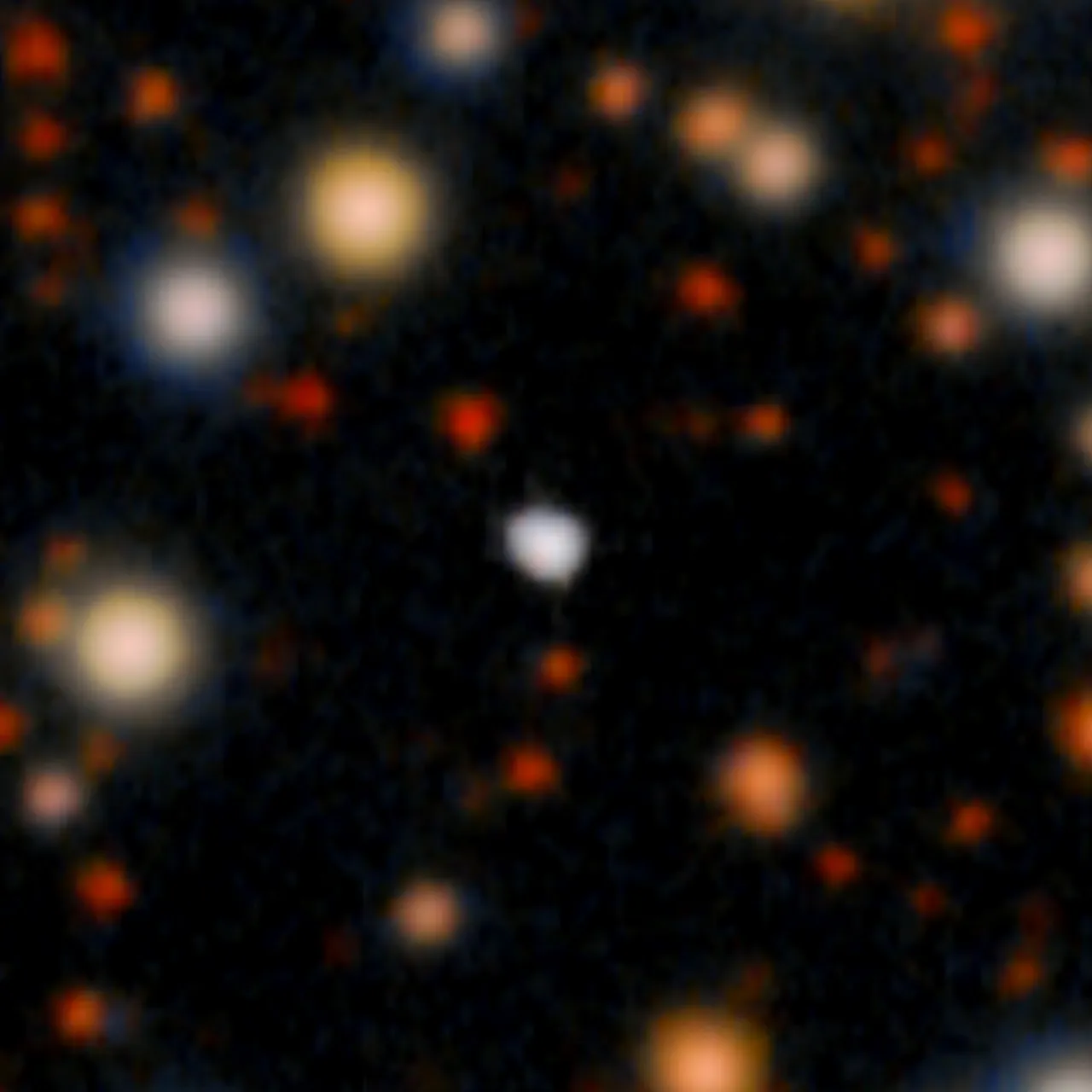
Astronomers have spotted a new dwarf planet candidate, 2026 ED138, which could become the solar system's sixth officially recognized dwarf planet. The object has a trail stretching back more than a decade in telescope images, giving researchers a head start in understanding its orbit.
The discovery of 2026 ED138 adds to the ongoing debate about the existence of Planet Nine, a hypothetical ninth planet in the outer solar system. This hypothetical body's existence has been debated for years, with some astronomers suggesting its gravitational effects could explain the peculiar clustering of orbits for a group of extreme trans-Neptunian objects (ETNOs).
Meanwhile, astronomers have observed a planet that appears to have vanished. The distant world, known as TOI-2535 b, was initially identified as a 'hot Jupiter' where a year takes only 8.25 days. However, recent observations suggest it may have disappeared.
The vanishing planet, TOI-2535 b, was followed by astronomers for years, allowing them to establish its initial characteristics. Its disappearance has left scientists puzzled and has sparked renewed interest in the search for undiscovered planets.
In a separate development, MIT astronomers have discovered a planet, designated BD+05 4868 Ab, located approximately 140 light-years away. This planet is undergoing a process of disintegration, losing a massive amount of material as it orbits its star in just 30.5 hours, forming a long, comet-like debris tail.
Researchers have also found a possible planet in the habitable zone of HD 156295, a hot A-type star about 2,000 K (2,000 °C, 3,600 °F) hotter than the Sun. This discovery is significant as it expands the search for habitable planets to hotter stars, which are less commonly studied.
Based on this candidate, the study estimates that about 10 percent of A-type stars host planets of 5 to 10 Jupiter masses with orbital periods of 1,900 to 2,600 days, with a 68 percent range of 2 to 31 percent.
Lead author Terry Long Phan, an astronomer at National Tsing Hua University in Taiwan, expressed excitement about the potential discovery of Planet Nine. 'It would be really cool if there was some kind of pattern there,' Phan told Science.
However, not all astronomers are convinced. Gary Bernstein, an astronomer at the University of Pennsylvania, noted, 'But I am not convinced, with current data, that you can’t just go with the simplest explanation.'
The outer solar system is getting crowded with theoretical planets, and the search for undiscovered bodies continues.
These findings add to the ongoing exploration of the solar system's outer reaches and the search for new planets.
The observations of 2026 ED138 were taken as part of Hubble’s Outer Planet Atmospheres Legacy (OPAL) program, which has photographed the outer planets annually for more than a decade.
What this adds
The discovery of 2026 ED138 adds to the ongoing debate about the existence of Planet Nine, a hypothetical ninth planet in the outer solar system.
The vanishing planet, TOI-2535 b, was followed by astronomers for years, allowing them to establish its initial characteristics.
The outer solar system is getting crowded with theoretical planets, and the search for undiscovered bodies continues.
These findings add to the ongoing exploration of the solar system's outer reaches and the search for new planets.
Background
Astronomers may have discovered a new dwarf planet candidate and observed a planet that appears to have vanished.
Planet Nine is a hypothetical ninth planet in the outer region of the Solar System. Its gravitational effects could explain the peculiar clustering of orbits for a group of extreme trans-Neptunian objects (ETNOs)—bodies beyond Neptune that orbit the Sun at distances averaging more than 250 astronomical units (AU).
What's confirmed
- The distant world, known as TOI-2535 b, has been followed by astronomers for years, allowing them to establish that it was a “hot Jupiter” where a year takes only 8.25 days.
- Astronomers have found a possible new dwarf planet beyond Pluto.
What's still developing
- Archived observations appear to show a moving object in the far-distant outer solar system, but its reality is unclear An artist’s concept shows an ice giant planet adrift in the outer reaches of the solar system.
- Scientists have found what they believe to be the first ever disappearing planet.
- Gamma-ray bursts (GRBs) are among the most energetic cosmic events since the Big Bang, releasing the most energetic type of radiation, gamma rays – the stuff that turned unassuming Bruce Banner into the rampaging Hulk, but on an astronomical, potentially planet-sterilizing level.
- This angle, often called Psi, varies from approximately 3 to 7 degrees depending on the planet.
- In this ideal scenario, the planets formed in the disc will then rotate in the same direction as their star's rotation and in the same plane as the stellar equator, perpendicular to the axis of rotation.
- Kalas first started searching for a dusty disk around Fomalhaut in 1993, hoping to see for the first time the debris left over after planet formation.
- Thanks to NASA’s Hubble Space Telescope (HST), he eventually found such a disk around the star and, in 2008, reported finding a bright spot near the disk that was likely a planet, the first to be imaged directly at visible wavelengths.
- Researchers calculated the strength of the magnetic field of the planet to be at least 1.25 kilogauss (kG) based on the highest frequency detected.
- Therefore, by studying the magnetic field around β Pictoris b, astronomers are giving themselves a much better understanding of both its physical properties and its potential development over time. β Pictoris b is a huge, hot planet similar to Jupiter that orbits around a bright star called β Pictoris, which is located approximately 63 light-years from Earth.
- Astronomers had long wondered whether the ringed planet’s southern hemisphere might hide a mirror-image structure.
- Subject to tidal locking and extreme stellar irradiation, the dayside surfaces of such planets are hot enough to melt and develop thin atmospheres of evaporated rocky material.
- Their findings, reported in a study accepted for publication in the Publications of the Astronomical Society of Australia, suggest that the elusive planet could be up to five to ten times the mass of Earth, and is so far out in the Solar System that it takes 10,000 years to orbit the Sun.