
Home · Science · Nov 8 archive
NASA Seeks New Astronauts for Moon Missions
· Confirmed
In Short: The Artemis program, which began in 2022 with the uncrewed Artemis 1 mission, plans to return astronauts to the lunar surface in 2028.
NASA seeks new astronauts for permanent lunar base. FOX43 News
NASA is seeking new astronauts to join its Artemis program, which aims to return humans to the Moon after more than half a century.
The space agency is currently accepting applications for a new astronaut class, with the final selection expected by late 2027 and training set to begin in early 2028.
With only 32 active astronauts, NASA needs more recruits to expand humanity’s presence beyond low-Earth orbit.
The Artemis program, which began in 2022 with the uncrewed Artemis 1 mission, plans to return astronauts to the lunar surface in 2028.
The Artemis II mission, scheduled for 2024, will see astronauts Reid Wiseman, Victor Glover, Christina Koch, and Jeremy Hansen travel more than 230,000 miles from Earth and 4,600 miles beyond the far side of the Moon during a 10-day trip.
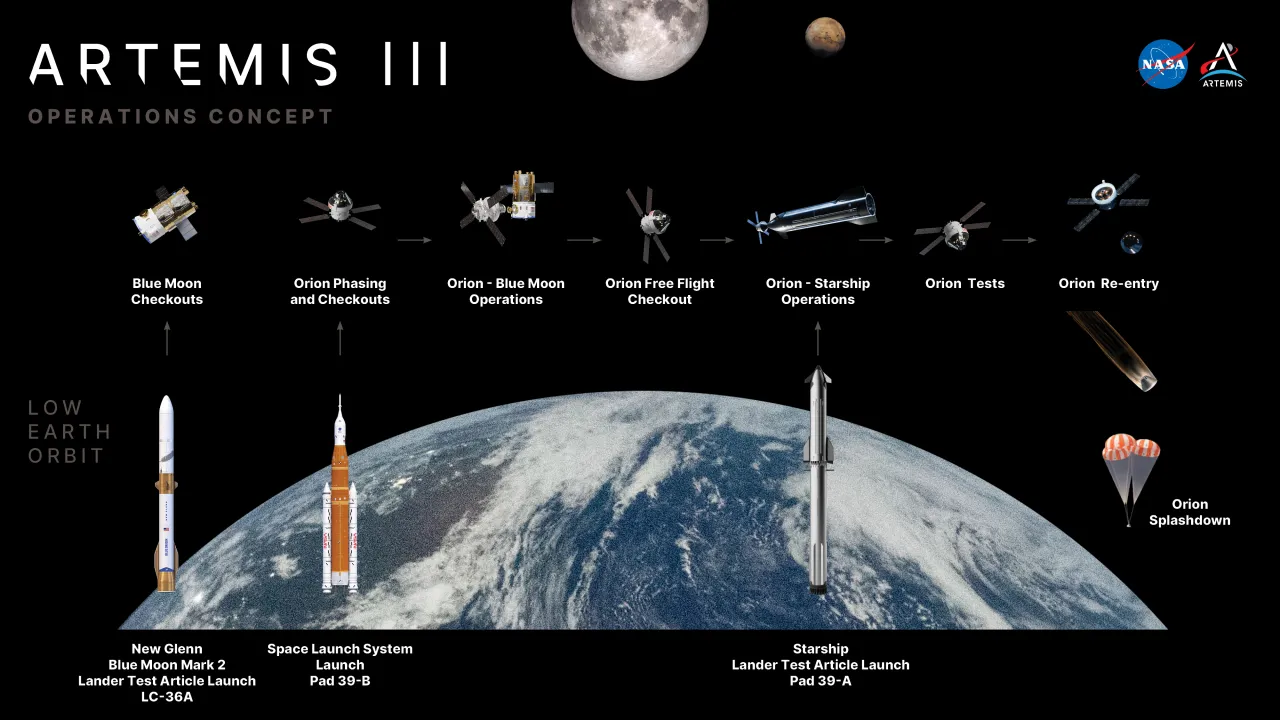
The Artemis III mission, set for 2027, will involve a series of maneuvers to transition to a circular orbit at about 345 miles for thermal stabilization before rendezvousing with the Blue Moon lander test article.
The Artemis program will use Blue Origin's Blue Moon Mark 2 lander, which will be launched into a circular low Earth orbit approximately 273 miles above Earth.
NASA's Artemis program will also involve SpaceX's Starship, which continues to be a core enabler of the Artemis program’s goal to establish a permanent, sustainable presence on the lunar surface.
Patience is essential for becoming an astronaut, as noted by Frank Rubio, who holds the U.S. Endurance record for 371 consecutive days in space.
NASA Administrator Jared Isaacman emphasized the importance of the new astronaut class, stating, “Today we take another bold step in humanity's return to the Moon, building on the extraordinary foundation laid by the Artemis II astronauts.”
What this adds
NASA expects to make its final selection by late 2027, with the new candidates beginning their training by early 2028.
The Artemis program will involve a combination of in-house and partner motion-based simulators to prepare astronauts and engineering support teams for piloting commercial human landing systems to the Moon.
The Artemis II mission will not include a lunar flyby, serving as a dress rehearsal for the following year's Artemis IV mission that will attempt to land two astronauts near the lunar south pole.
The Artemis program aims to establish a permanent U.S. human presence on the Moon, with plans for more rovers, robots, structures, and power grids to be launched.
Background
NASA is accepting applications for a new astronaut class that will help grow the Artemis program.
What's confirmed
- NASA is accepting applications for a new astronaut class that will help grow the Artemis program.
- Patience is essential for becoming an astronaut, noted Artemis III's Frank Rubio, whose 371 consecutive days in space is a U.S. endurance record.
- With only 32 active astronauts, the space agency needs more recruits as it looks to expand humanity’s presence beyond low-Earth orbit as quickly as possible.
- NASA expects to make its final selection by late 2027, with the new candidates beginning their training by early 2028 — the same year that NASA intends to return astronauts to the lunar surface after an absence of more than half a century.
- NASA astronauts Reid Wiseman, Victor Glover, and Christina Koch, and Canadian Space Agency (CSA) astronaut Jeremy Hansen — the crew of NASA’s Artemis 2 mission — are expected to travel more than 230,000 miles (37,0149 kilometers) from Earth and 4,600 miles (7,403 km) beyond the far side of the Moon during their 10-day trip.
- More than 8,000 applied, with 10 making the final cut in September 2025.
- The moon base will materialize as more rovers, robots, structures and power grids are launched.
- April's lunar flyaround by the Artemis II crew kicked off the lunar campaign.
- -- Want to fly to the moon and help build a permanent lunar base?
- Their mission will stick close to Earth — no lunar flyby — and serve as a dress rehearsal for the following year's Artemis IV mission that will attempt to land two astronauts near the lunar south pole.
- NASA’s last call for new astronauts was two years ago.
What's still developing
- Opening applications for the latest expansion of its Artemis program, the US agency said successful candidates would help “shape humanity’s future in space” as it builds a base on the moon and plans the first crewed missions to Mars.
- During the planned 14-day mission, crews and flight controllers will practice the rendezvous, docking, habitation, and operational procedures that will be essential when Artemis astronauts begin landing near the Moon’s South Pole in 2028.
- Students at Ysgol Cemaes were able to put their questions to Frank Rubio on Wednesday, who is set to be part of the crew for the Artemis III mission.
- And barring any last-minute hiccups, four astronauts on Wednesday will begin a journey that sends them farther from Earth than any human has gone before.
- The Artemis campaign kicked off in 2022 with the uncrewed Artemis 1 mission, after which engineers discovered unexpected issues with the heat shield enshrouding NASA’s Orion crew capsule.
- NASA's revised Artemis schedule puts SpaceX and Blue Origin on a tight path toward the first crewed lunar landing in more than 50 years.
- They are two out of the three companies who were originally competing for the LTV contract announced by NASA in 2024, which would’ve resulted in the selection of just one rover.
- “FLIP was always going to be a test bed for LTV, that’s why FLIP has extremely large tires because they were meant to be the LTV tires and big overpowered wheel actuators and large batteries,” Jaret Matthews, Astrolab’s CEO and founder, told Spaceflight Now following NASA’s May 26 Moon Base event.
- The New York Times framed it as NASA still aiming for the next Moon landing in 2028, NBC News called it a major overhaul of the Artemis moon program, and CBS News, Florida Today, Space Policy Online, WRAL and the Orlando Sentinel carried their own versions.
- "Our last astronaut candidate class was greater than 50% female. We'll assemble the best astronauts to undertake and complete the objectives set up for the following mission."
- They’ll be put to the test during next year’s Artemis 3 mission, and NASA announced the schedule for it on October 23.
- At the 2026 Fast Company Innovation Festival, Texas A&M former students Ronny Baccus ’94 and Trey Perryman ’99 highlighted what it means to be the support for astronauts and how critical every minute was during the Artemis II mission.
Sources
- ABC News - Breaking News, Latest News and Videoslink
- Astronomylink
- Houstonpublicmedialink
- KETVlink
- NBC Newslink
- SciTechDailylink
- Spacepolicyonlinelink
- Storieslink
- Tech-Insiderlink
- The Guardianlink
- USA Todaylink
- NASAlink
- BBClink
- Dailygalaxylink
- Spaceflightnowlink
- Smithsonianmaglink
- FOX43 News — video link
- NewsNation — video link