
Home · Technology · Nov 8 archive
I watched a humanoid robot clean my apartment. It felt like a taste of the future.
Confirmed
In Short: Despite the challenges, the increasing adoption of humanoid robots in real-world applications suggests a promising future for this technology.
I watched a humanoid robot clean my apartment. It felt like a taste of the future.. Everything For AI
Humanoid robots are increasingly being used for cleaning services and traffic control, signaling a shift towards broader commercial applications. Agility Robotics, a pioneer in the field, announced that GXO would expand the use of Digit robots from a Georgia warehouse to facilities in North Carolina and Tennessee.
Tau Robotics, a startup, is sending humanoid robots to clean San Francisco homes. Initially priced at $30 for an hourlong cleaning session, the cost has since risen to $60 for a weekly cleaning with two robots, or $100 for a one-time visit.
In a significant development, humanoid robots are now serving as traffic police at the 2026 Hangzhou Marathon. These robots can operate in extreme temperatures ranging from -20°C to 55°C, demonstrating their versatility and reliability.
Unitree Robotics, a Chinese company, has introduced the H2 humanoid robot, which stands approximately 1.8 meters tall and weighs around 154 pounds. The base model is listed at $29,900, though North American buyers may pay up to $40,900 due to additional costs.
Agility Robotics is now facing a significant challenge: producing 185 times more robot-hours than it has ever logged. This reflects the growing demand for humanoid robots in various applications.
Jonathan Hurst, co-founder and chief robot officer at Agility Robotics, emphasized the lower risk for customers using robots as a service, stating, 'When we are doing robots as a service, it is much lower risk for customers to use it because they are getting a return on investment on day one.'
Despite the growing interest, humanoid robots remain unproven at scale compared to industrial robots, which have decades of proven track records in warehouses and factories.
Chinese companies continue to dominate the global humanoid robot market, with over 97% of units shipped in the first half of the year coming from China. Shanghai-based AgiBot, the world's largest humanoid robot maker by shipments, delivered more than 8,600 units in the first half of 2026.
The use of humanoid robots in cleaning services and traffic control highlights the potential for these machines to revolutionize various industries, from healthcare to transportation.
What this adds
The use of humanoid robots in cleaning services and traffic control marks a significant step towards wider commercialization, despite the technology's unproven track record at scale.
Background
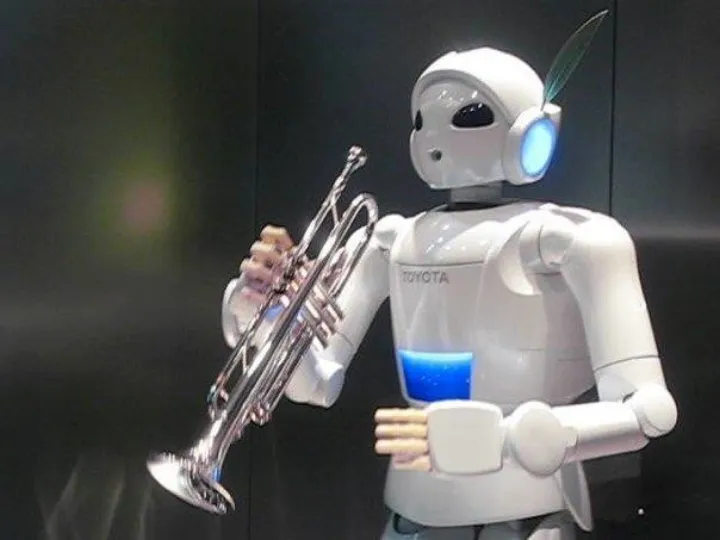
Toyota is also entering the humanoid robot market with its units called ELEY.
What's confirmed
- Humanoid robots are increasingly being used for cleaning services and traffic control, signaling a shift towards broader commercial applications. Agility Robotics, a pioneer in the field, announced that GXO would expand the use of Digit robots from a Georgia warehouse to facilities in North Carolina and Tennessee.
- Tau Robotics, a startup, is sending humanoid robots to clean San Francisco homes. Initially priced at $30 for an hourlong cleaning session, the cost has since risen to $60 for a weekly cleaning with two robots, or $100 for a one-time visit.
- In a significant development, humanoid robots are now serving as traffic police at the 2026 Hangzhou Marathon. These robots can operate in extreme temperatures ranging from -20°C to 55°C, demonstrating their versatility and reliability.
- Unitree Robotics, a Chinese company, has introduced the H2 humanoid robot, which stands approximately 1.8 meters tall and weighs around 154 pounds. The base model is listed at $29,900, though North American buyers may pay up to $40,900 due to additional costs.
- Agility Robotics is now facing a significant challenge: producing 185 times more robot-hours than it has ever logged. This reflects the growing demand for humanoid robots in various applications.
- Despite the growing interest, humanoid robots remain unproven at scale compared to industrial robots, which have decades of proven track records in warehouses and factories.
- Chinese companies continue to dominate the global humanoid robot market, with over 97% of units shipped in the first half of the year coming from China. Shanghai-based AgiBot, the world's largest humanoid robot maker by shipments, delivered more than 8,600 units in the first half of 2026.
- The use of humanoid robots in cleaning services and traffic control highlights the potential for these machines to revolutionize various industries, from healthcare to transportation.
What's still developing
- A promotional video released on Wednesday shows the robot disarming a knife-wielding intruder, smashing a car door, lifting a vehicle to free a trapped victim, and pulling a pedestrian away from an oncoming car.
- The Unitree H2 is publicly listed at $29,900 on Unitree's official store, one of the only full-size humanoids with a real list price, though at our July 17 check the listing showed out of stock (contact sales).
- The number comes with fine print nobody puts in a headline: the base robot ships with non-functional placeholder hands, secondary development requires the EDU edition (quote-only), and North American buyers ordering through Unitree's regional partner pay from $40,900.
- For example, a baseline Unitree G1 humanoid robot designed for robot developers and researchers sells for $13,500, not including shipping costs, while the Unitree R1 robot intended for more casual consumers sells for $4,900.
- According to AgiBot, all 110 robots were standard production models rather than machines specially modified for the performance.
- Johnson told the Wall Street Journal’s CEO Brief this week that today’s bipedal robots go well beyond back flips and making coffee, and that humanoid robotics has moved into real paid deployments.
- The 4-foot-tall humanoid robot that’s in front of me seems, quite honestly, a bit drunk.
- Mecka AI, a startup that collects and analyzes human motion data to train humanoid robots and other kinds of robots, announced it has raised a $60 million Series B round led by Sequoia, with participation from Nvidia, Microsoft’s venture fund M12, and others.
- Other startups that collect real-world data for robot training include XDOF, which was in talks to raise a Series B round at a $1.2 billion valuation according to TechCrunch’s previous reporting.
- Unitree’s home city of Hangzhou is about 110 miles from Shanghai.
- From balancing to crawling: Humanoid robot navigates obstacle course-Xinhua From balancing to crawling: Humanoid robot navigates obstacle course Source: Xinhua Editor: huaxia 2026-11-02 21:48:16 Defying obstacles: The AGIBOT X2 humanoid robot carefully navigated a series of narrow stepping posts before crawling under a low barrier, putting its balance, mobility, and agility to the test.
- Brett Adcock, a serial entrepreneur and founder and CEO of Figure AI, building general purpose humanoid robots for labor automation.