
Home · World · Nov 7 archive
New Zealand Election Too Close to Call as National and Labour Remain Neck-and-Neck
Confirmed
In Short: New Zealand's election results show the National Party and Labour Party are neck-and-neck, with neither securing a majority.
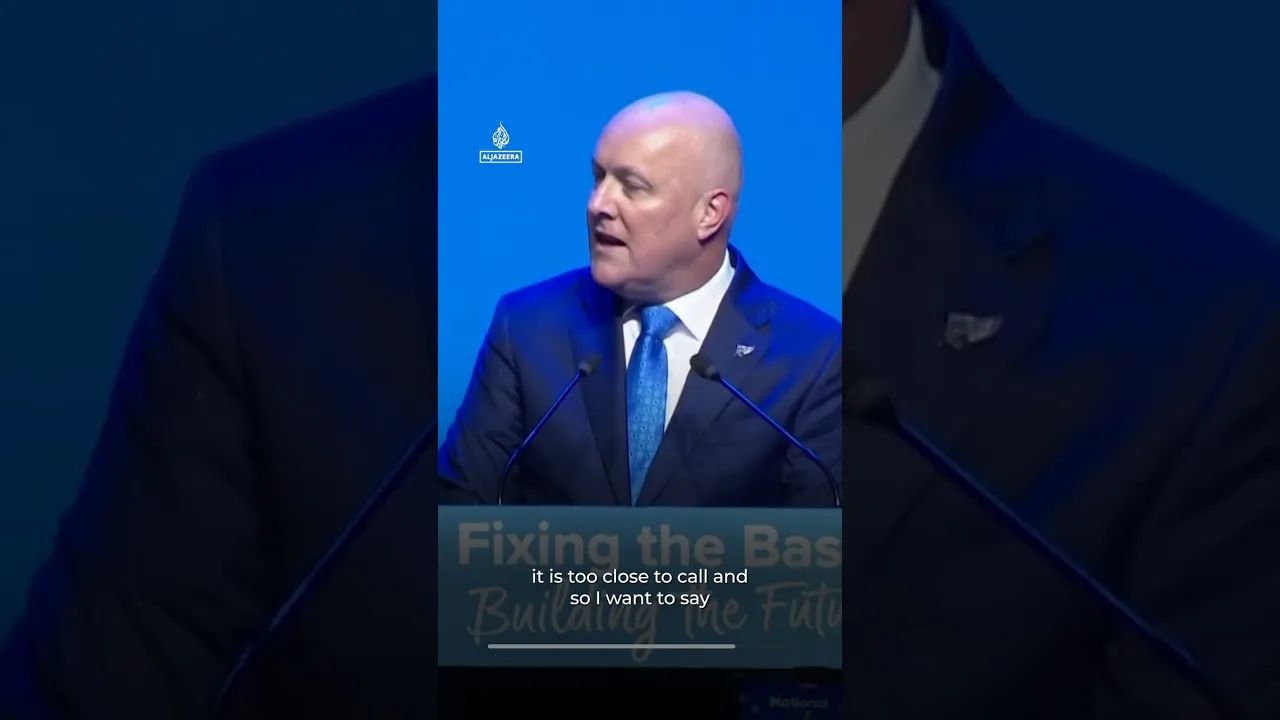
New Zealand's election results show the National Party, led by Prime Minister Christopher Luxon, won 42 seats, but fell short of the 61 seats needed for a majority. The Labour Party, led by opposition leader Chris Hipkins, secured 36 seats, leaving the outcome uncertain as more than 99% of votes have been counted, with both parties neck-and-neck in terms of vote share.
The Greens secured 16 seats, ACT 13, New Zealand First 12, the Opportunity Party 7, and Te Pāti Māori 5, indicating that one or more of the smaller parties will likely participate in a governing coalition. The electoral commission is expected to announce the official result on November 27.
Hipkins, meanwhile, showed no signs of conceding, emphasizing that the 'shape of the next government' would remain uncertain for a while. He acknowledged that 'the people have spoken' and that it may take longer to determine the outcome.
The election was dominated by concerns over the economy and rising costs of living, with the war in the Middle East and the subsequent global fuel shock blamed for the hit to New Zealand's trade-dependent economy. Luxon expressed satisfaction with his party's performance, stating, 'Considering that we've governed through that period, we're actually doing quite well.'
With nearly 100% of the regular votes counted, National secured 42 seats, ACT 13, and New Zealand First 12. The combined 67-seat majority is wafer thin, with the left bloc just three seats behind. The electoral system makes coalitions the norm, and the tightness of this year’s race means one or more of the country’s smaller parties will almost certainly participate in a governing coalition.
Electorate winners earn a seat in parliament, which typically has 120 seats, unless a so-called 'overhang' leads to more lawmakers being returned to parliament, along with the highest-ranked members of the party based on their national party vote. The final results will determine the composition of the next government, with meaningful negotiations expected once the final results are confirmed.
Background
New Zealand's 2026 election results show National and Labour parties neck-and-neck, with neither securing a majority.
What's confirmed
- Incumbent Prime Minister Cristopher Luxon, who heads the National Party, said that his party "is once again the largest party in parliament, and we have a pathway to forming the next government."
- A projection from New Zealand’s Electoral Commission showed the current three-party ruling coalition led by National would have a majority of just one seat, after an election dominated by a struggling economy and voter disillusionment with the two biggest contenders.
- WELLINGTON: The outcome of New Zealand’s election remained too close to call as early results began to roll in on Saturday, with none of the parties expected to secure a majority after a campaign dominated by worries over rising costs of living and the economy.
What's still developing
- Elsewhere, Labour leader Kipkins said "the people have spoken", adding: "It may take a bit longer to work out what they've said."
- She tells our reporter in Wellington : "I think we're all tired... that's one of the reasons I want change" Edited by Rorey Bosotti, with Tiffanie Turnbull reporting from Wellington Polls closed about eight hours ago, and the preliminary results of New Zealand's election are 100% in.
- New Zealand PM Christopher Luxon says the election is "too close to call" - how does NZ's mixed member proportional voting system work?
- The two were neck and neck, both recording under 30% of the vote — underscoring opinion polls before election day that showed little public enthusiasm for either party.
- He said on Friday he was sure his party would "exceed expectations".
- To form a government in New Zealand, a party or coalition must have the confidence of a majority of members of parliament, although this does not necessarily require 61 votes, since a minority executive can also govern if it obtains the support or abstention of other parties in key votes, such as confidence or budgets.