
Home · Business · Nov 5 archive
Bank of England Raises Rates Amid Iran War Uncertainty
Confirmed
In Short: The Bank of England raised interest rates to 4% from 3.75%, the first increase in over three years, citing inflationary pressures from the Iran war.
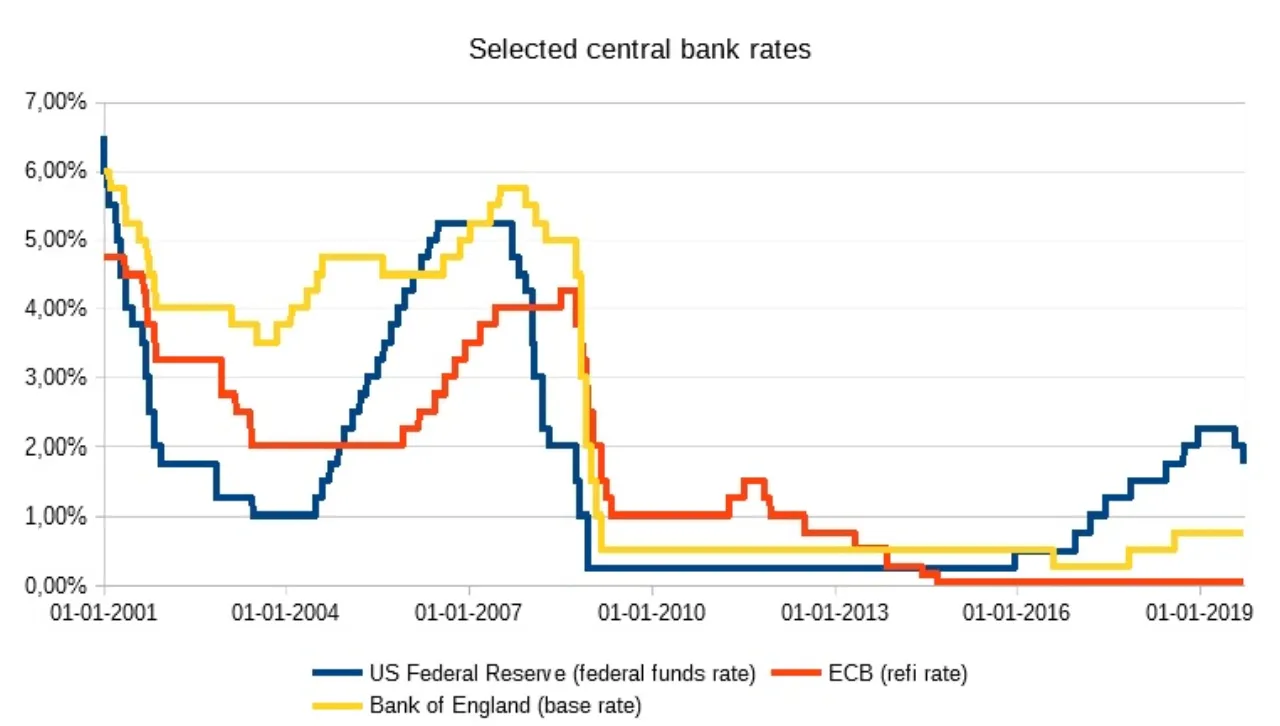
The Bank of England raised its main interest rate to 4% from 3.75% on Thursday, marking the first increase since August 2023. Governor Andrew Bailey said the decision was warranted due to inflationary pressures caused by rising energy prices.
Bailey noted that the outlook for future rate hikes largely depends on the resolution of the conflict in the Middle East. He emphasized that unless the war with Iran is resolved, more rate hikes could be necessary.
The bank's latest Market Participants Survey indicates that respondents expect the Bank Rate to reach 4% in November and 4.25% in February. This forecast underscores the ongoing uncertainty surrounding the conflict's impact on inflation.
Despite the recent decline in oil and gas prices, which could temper inflation expectations, the bank remains cautious. Brent crude, currently trading at $96 per barrel, is still significantly higher than last year's prices.
Bailey acknowledged that the best outcome would be resolving the conflict in the Middle East, which would reduce the need for further rate hikes. He stressed that the current hike should not be seen as the start of a long sequence of increases.
The Bank of England's Monetary Policy Committee voted overwhelmingly to increase interest rates, citing the war in Iran as a key factor driving inflation. The committee's decision reflects the central bank's efforts to combat rising prices.
British inflation is expected to peak at around 5% in the middle of 2027, more than double the central bank's target. This projection poses a challenge for Prime Minister Andy Burnham, who has sought to ease cost-of-living pressures.
The bank's decision to raise rates comes amid a complex economic landscape, with the resolution of the Iran war holding the key to future monetary policy decisions.
While the decline in energy prices could lower the anticipated peak in inflation, the bank noted that there is still limited evidence that higher energy costs are feeding through to other prices and wages.
Bailey's comments suggest that the central bank will remain vigilant and responsive to developments in the Iran conflict, which could significantly impact future rate decisions.
What this adds
The Bank of England's decision to raise rates is a response to inflationary pressures stemming from the ongoing conflict in the Middle East, rather than any direct control over energy prices.
What's confirmed
- The Bank of England has raised interest rates for the first time in more than three years, and the cost it is fighting is one it has no power to lower.
What's still developing
- “The path for interest rates is hanging in the balance, with U.S.-Iran hostilities holding the key," said Suren Thiru, ICAEW's chief economist.
- The movie's first trailer is here, showing off the astonishing origins of Narnia, and a lovingly recreated 1950s England that might seem almost as fantastical to modern eyes.
- FOXBOROUGH, Mass. -- Quarterback Drake Maye said Wednesday the physical condition of his right shoulder hasn't affected his throwing ability, instead highlighting the need to make better decisions to reverse his early-season struggles in the New England Patriots ' 1-2 start.
- Here is the complete week-by-week 2026 NFL schedule (all games on CBS will be streaming on Paramount+, NFL Network, Fox, NBC, ABC, and ESPN will be streaming on fubo : BYES: Houston, New Orleans, NY Giants, San Francisco BYES: Atlanta, Cleveland, Green Bay, LA Rams, New England, Seattle Note: The teams playing in the Saturday tripleheader and the Sunday primetime game in Week 18 won't be announced until January.
- Senate leader Phil Berger’s primary campaign raised 34 times as much money as his challenger, Rockingham County Sam Page, but Page’s candidacy was boosted by four outside groups — most of which haven’t disclosed much about their donors and spending.
- The former England captain is seriously deluded if he thinks Brook is better than Pietersen Thanks a lot, skip, I owe you one.
- Reem Ibrahim | From the October 2026 issue In the British documentary series Clarkson's Farm (Amazon's Prime Video), former Top Gear presenter Jeremy Clarkson, a self-described libertarian, attempts to run a 1,000-acre farm in West Oxfordshire, England, with no prior farming experience.
- “I ran out of superlatives to describe your performances a long time ago, but I’m delighted to see that you have now been formally recognised by the football world,” said England head coach Thomas Tuchel.
- And now, in his fourth season at Bayern Munich, he is a Ballon d'Or winner, one who has ended a 25-year wait for England.
- The resignation raises questions about the timing of the move — especially given the difficulties facing Iraq, home to the Chaldean patriarchal see — and the broader Middle East amid the horrors of war and renewed conflicts.
- Some Fed-watchers believe the Fed is likely to raise rates mainly out of concern for what might happen if they don’t: if investors lose confidence that the Fed is willing to raise rates to control inflation, they might demand higher interest rates for treasury bonds, which could hurt the economy at a time when bond yields are already surging to multi-year highs.