
Home · Entertainment · Nov 4 archive
Tinto Brass, Director of 'Caligula,' Dies at 93
Confirmed
In Short: Italian filmmaker Tinto Brass, known for his controversial and erotic films including 'Caligula,' has died at the age of 93.
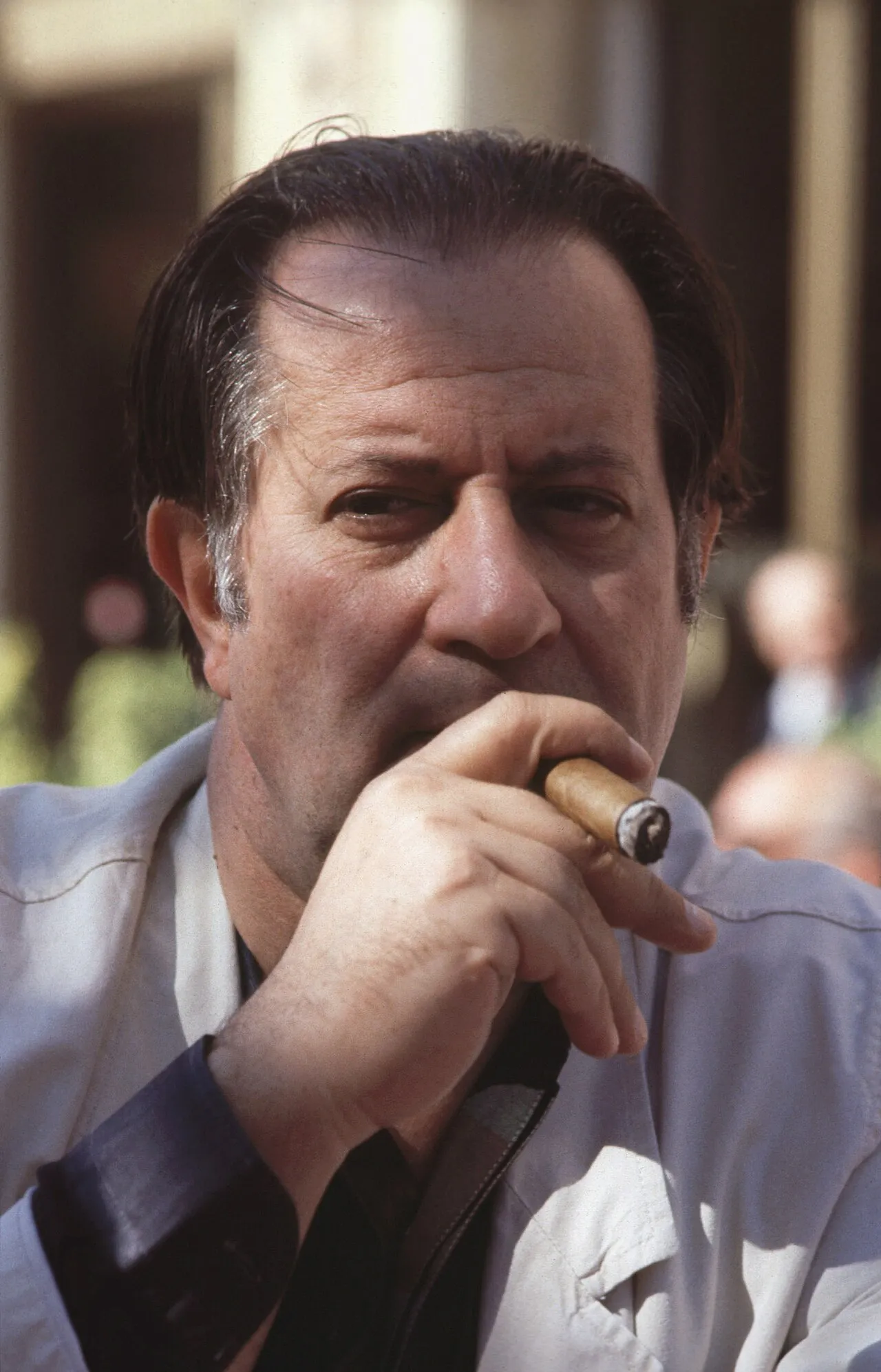
Italian filmmaker Tinto Brass, known for his controversial and erotic films including 'Caligula,' died Wednesday in Rome, his family announced. Brass, born Giovanni Brass in Milan on March 26, 1933, was 93.
Brass’ career began in the 1960s with experimental films such as his debut, 'Who Works Is Lost,' which followed a day in the life of an unemployed designer. He later pivoted to erotic cinema, with 'Salon Kitty' in 1976 and 'Caligula' in 1979.
'Caligula,' an X-rated historical epic starring Malcolm McDowell, was written by Gore Vidal and produced by Penthouse founder Bob Guccione. The film was re-edited and re-cut several times, but it bombed at the box office when it opened in the U.S.
Despite its initial failure, 'Caligula' gained a cult following over the decades. In 2023, an 'Ultimate Cut' version of the film, which adhered closer to Vidal’s script, received rave reviews and was showcased at Cannes.
Brass’ family, including his wife Caterina Varzi and children Bonifacio and Beatrice Brass, did not provide a cause of death.
Before his career in film, Brass earned a law degree and worked as an archivist at the Cinémathèque Française in Paris. He also served as an assistant director to Roberto Rossellini and Alberto Cavalcanti.
Brass’ family was well established in the art world, with his grandfather, Italico Brass, a painter and art dealer in Venice.
Throughout his career, Brass directed more than two dozen films, including 'Vacation,' which won 'Best Italian Film' at the Venice Film Festival in 1971.
Brass’ work often faced censorship and battles with censors due to his personal nonconformist libertarian vision.
In 1970, Brass won the Golden Bear at the Berlin International Film Festival for his surrealist comedy 'The Howl,' which he also wrote.
What this adds
Brass’ family was already well established in the art world when he was born Giovanni Brass in Milan on March 26, 1933.
His grandfather, Italico Brass, was a painter and art dealer in Venice and nicknamed the young Brass 'Tintoretto,' which family members later abbreviated.
Brass spent much of the late 1960s and early 1970s in London shooting a trio of films spanning 'Deadly Sweet' (1967), 'Attraction' (1969), and 'Dropout' (1970).
Brass and Vidal clashed during production and would disown the feature — the director was unhappy with the editing (done after he was fired), the screenwriter with how Brass rewrote his script.
Background
Gaius Julius Caesar Augustus Germanicus, also called Gaius or Caligula, was the third Roman emperor, ruling from AD 37 until his assassination in AD 41. He was the son of the Roman general Germanicus and Agrippina the Elder, Augustus's granddaughter, members of the first ruling family of the Roman Empire.
What's confirmed
- His wife Caterina Varzi and children Bonifacio and Beatrice Brass told Italian news agency Ansa that Brass had died, but did not give a cause.
- With 1976’s “Salon Kitty,” a historical drama set in a Berlin brothel during the Nazi era, Brass moved into erotic filmmaking.
What's still developing
- But it was “Caligula,” an infamous look at one of Rome’s most notorious emperors, that made a name for Brass.
- Brass started out in the 1960s with avant-garde films before he pivoted to erotic cinema, with his other features in the genre including Salon Kitty (1976), The Key (1983), Paprika (1991), All Ladies Do It (1992), Frivolous Lola (1998) and Cheeky (2000).
- Brass and Vidal clashed during production and would disown the feature — the director was unhappy with the editing (done after he was fired), the screenwriter with how Brass rewrote his script.
- Budgeted at $25 million in 1979, Caligula was hailed as one of the most expensive independent movies ever made at the time.
- Brass spent much of the late 1960s and early 1970s in London shooting a trio of films spanning Deadly Sweet (1967), Attraction (1969) and Dropou t (1970).
- Throughout the 1960s and early 70s, Brass mainly focused on avant-garde filmmaking, with his credits including two experimental shorts commissioned by Umberto Eco entitled Tempo Libero and T empo Lavorativo.
- Brass made his directorial debut in 1963 with the Venice-set tale “In Capo Al Mondo,” later retitled “Chi Lavora è Perduto,” about a young unemployed man with antisocial tendencies that received enthusiastic acclaim at the Venice Film Festival.
- It was followed by “Attraction” (1969) and “Dropout” (1970).