
Home · Technology · Nov 4 archive
Macronix Ends ROM Chip Production, Potentially Raising Costs for Nintendo Switch Cartridges
· Confirmed
In Short: Chip manufacturer Macronix has announced it will end ROM chip production, potentially raising costs for Nintendo Switch cartridges.
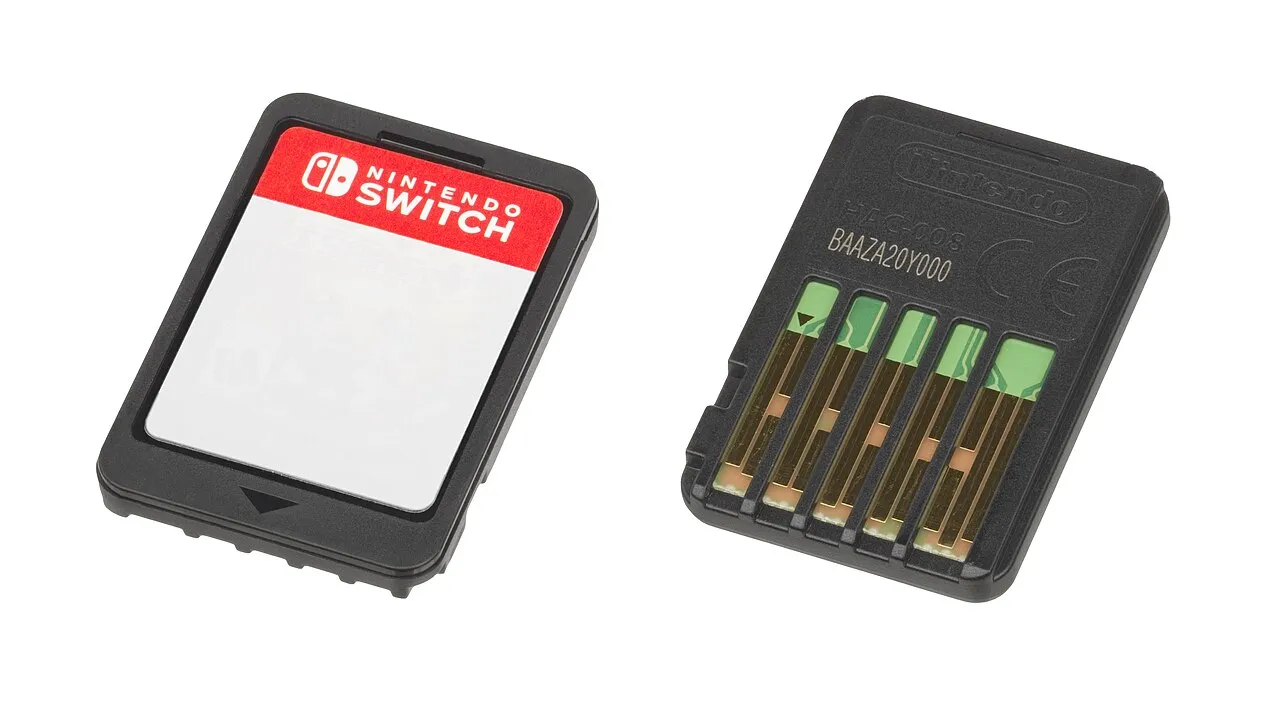
Chip manufacturer Macronix has announced it will end ROM chip production, potentially raising costs for Nintendo Switch cartridges. The company's third-quarter earnings report revealed that ROM chip production 'has reached its end,' as reported by Taiwanese news site BigGo Finance and Ars Technica.
Macronix, which has been Nintendo's primary supplier of ROM chips for physical game cartridges, is shifting focus to more profitable memory types like NOR and NAND. ROM chips now represent only 5 percent of Macronix's business, down from 26 percent a year ago.
The company's decision to exit the ROM chip market is part of a broader industry trend, as demand for data center memory has surged. This shift is likely to impact Nintendo, which relies heavily on physical cartridges for game sales.
According to industry analyst David Gibson, digital software sales now account for 61.5 percent of Nintendo's business, up slightly from the previous year. However, physical games still make up a significant portion of Nintendo's sales, with physical titles accounting for 38.5 percent of its games sales.
Macronix's exit from the ROM business could complicate cartridge production and increase costs for Nintendo and game publishers. The company's ROM revenue fell 39 percent compared to last year, while revenue from NOR memory rose 158 percent and NAND memory surged 768 percent.
Nintendo has no immediate plans to abandon physical game cartridges, as the company stated it has 'no plans' to ditch them in the near future. However, the shift in Macronix's priorities could affect the cost and availability of ROM chips for Nintendo's cartridges.
Nintendo's main ROM chip supplier, Macronix, is ceasing production of ROM chips entirely, according to reports from Nintendolife and Engadget. This decision could potentially raise the cost of producing Switch cartridges, as Nintendo may have to rely on alternative suppliers like Rohm and Lapis Semiconductor.
Despite the shift, Nintendo's commitment to physical games remains strong. The company has already announced that it will continue to produce physical games, and the impact on Switch 2 cartridges, which use NAND flash memory, may be less significant.
Industry analysts suggest that while the shift could complicate cartridge production, it is unlikely to stop Nintendo from producing physical games anytime soon. Digital sales have already made up more than 60 percent of Nintendo's total sales during Q4 2026 and Q1 2027, but this tends to fluctuate based on major game releases.
Macronix's decision to exit the ROM chip market comes nearly a year after Micron shut down Crucial, its consumer RAM and SSD brand, to focus on meeting AI data center demand. This broader industry trend is likely to continue, potentially impacting the gaming industry as a whole.
Nintendo's financial release, due this week on November 5th, may address this development further. The company's reliance on ROM chips for physical game cartridges and the potential impact on future production costs will be closely watched by industry observers.
What this adds
The shift in Macronix's priorities could affect the cost and availability of ROM chips for Nintendo's cartridges, potentially raising production costs.
While the shift could complicate cartridge production, it is unlikely to stop Nintendo from producing physical games anytime soon, as physical games still make up a significant portion of Nintendo's sales.
What's confirmed
- Chip manufacturer Macronix announced in its third-quarter earnings report that the company’s production of ROM chips “has reached its end” and that it will begin “gradually decoupling from the game industry,” as reported by Taiwanese news site BigGo Finance.
- Physical Nintendo Switch games could become costlier to produce after a major component supplier announced plans to abandon the type of memory used in the console's cartridges.
What's still developing
- With Macronix’s production capacity stuck at 25,000 12-inch wafers a month—and $1.2 billion in planned new capacity taking a year or more to spin up—less profitable ROM chips are taking up wafer space that can earn more through other types of chips.
- And last year, Japanese publisher Inin only committed to a full Switch cartridge release for R-Type Dimensions III after it said “two new smaller cartridge [storage capacity] sizes for Nintendo Switch 2” lowered the cost of producing those carts.
- The potential change comes as the gaming industry faces a wider memory shortage, with demand from artificial intelligence companies pushing up costs for hardware such as consoles and PC graphics cards.
- Nintendo ROM supplier Macronix is leaving the business as demand for its data center memory booms. Nintendo ROM supplier Macronix is leaving the business as demand for its data center memory booms. Posts from this author will be added to your daily email digest and your homepage feed.
- Macronix just announced a record-high net profit of $337 million for Q3 2026, but Wu says many of its new customers have issued a "demand for NOR used in data centers."
- This is potentially terrible news for those who love physical media.
- Also, this doesn't impact Switch 2 cartridges in quite the same way.
- It's "a kick in the nuts" for everyone who likes to keep whatever they've paid money for cause corporate servers are a fickle and fleeting thing. @GravyThief To be clear, the 60% is referring to first-party games and comes directly from Nintendo's own financial data.
- Now this is an objective reason that could make Nintendo stop using these cartridges after this gen (seriously doubt they'd do so before the end of the Switch 2 one), but even then the remaining partners might be enough anyway - that said, I seriously doubt Nintendo are stopping releasing games physically anytime soon if ever as not only physical is still around 40% of their sales according to the latest financial results, but also these specific cartridges aren't the only solution so we'll just have to wait and see what Nintendo come up with for their next system!
- For now, we've removed the mention of 'Switch 1 & 2' from the headline and will investigate further.
- Macronix, which has supplied Nintendo with hardware components for years, is preparing to exit ROM manufacturing.
- Given the fact that there are alternative suppliers, Gibson’s view on this situation is that Nintendo’s physical card sales “will likely carry on for some time,” but at the same time, digital Game-Key Cards or otherwise entirely digital sales will continue to grow.