
Home · Science · Nov 4 archive
China Reveals Details of Upcoming Manned Lunar Mission
· Confirmed
In Short: China released additional details of its planned manned lunar mission, including the use of the Long March-10 rocket and the Lanyue lunar lander, in a video presented by the China Manned Space Agency.
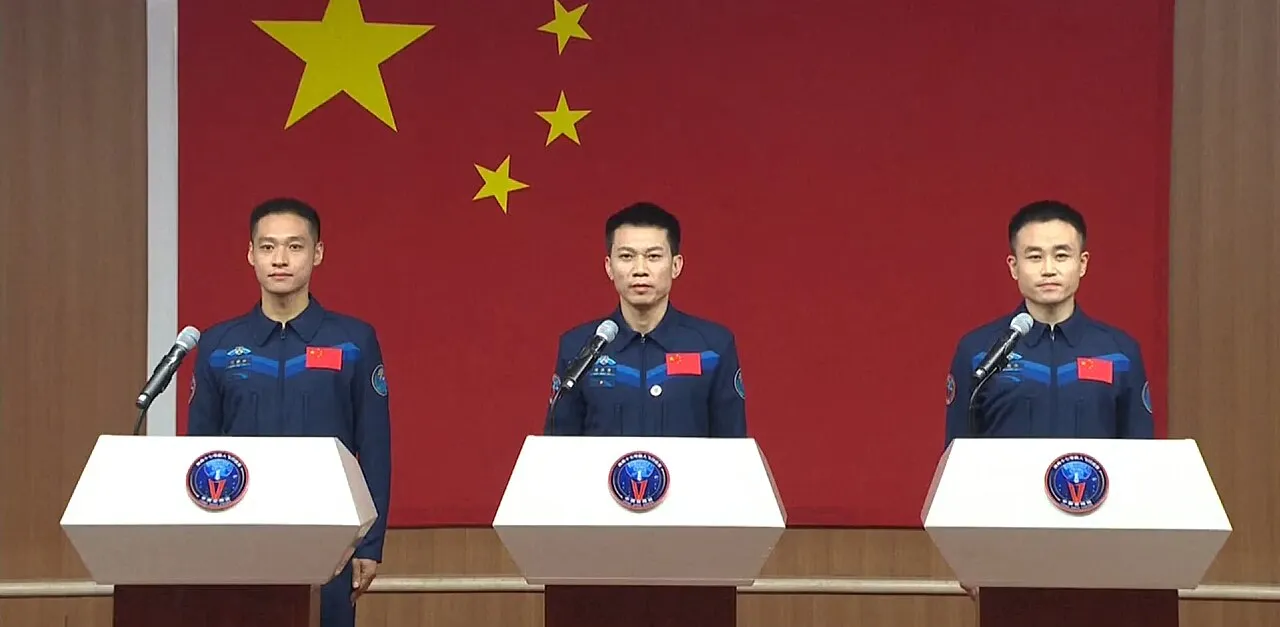
The Daily CPEC reported that China will launch its first manned lunar mission using the Long March-10 rocket, carrying the Lanyue lunar lander. The mission will involve astronauts conducting various activities on the moon's surface, such as landing, roving, sampling, and research.
Universe Today noted that two Long March-10 rockets will launch the mission elements separately, emphasizing the complexity of the operation. The mission's theme at the Human Space Symposium was 'Gathering Wisdom for the Galaxy: Digital and Intelligent Empowerment for High-Quality Development of Manned Spaceflight,' attracting over 800 experts.
Spaceanddefense highlighted the importance of international partnerships in advancing planetary exploration, as demonstrated by China's mission. Lindsey Hayes, Acting Director of NASA’s Planetary Science Division, emphasized the significance of global collaboration in achieving ambitious science goals.
Fox News detailed how the mission will include a three-day driving route for the lunar rover, with the landing zone at the center. The astronauts will operate the rover on the moon's surface, showcasing China's technological advancements.
The Daily CPEC and Universe Today both reported that the mission will focus on mastering key technologies, such as manned Earth-to-moon round trips, short lunar surface stays, and human-robot collaborative exploration. Both publications also noted the mission's emphasis on international cooperation.
The mission will involve a series of complex maneuvers, including the launch of the Long March-10 rocket, the rendezvous of the Mengzhou manned spacecraft with the Lanyue in lunar orbit, and the astronauts' transfer to the lander for their descent to the moon's surface.
The Daily CPEC and Universe Today both highlighted the importance of the mission in advancing China's space program and demonstrating its technological capabilities. The mission's detailed planning and execution reflect China's commitment to becoming a leader in space exploration.
The Daily CPEC and Universe Today also noted that the mission will include activities such as landing, roving, sampling, research, and returning to Earth, underscoring the comprehensive nature of the mission.
The mission will be a significant milestone for China's space program, marking the country's first manned lunar mission and showcasing its technological advancements.
The mission will involve the use of the Long March-10 rocket and the Lanyue lunar lander, highlighting the complexity and sophistication of the mission's planning and execution.
The Daily CPEC and Universe Today both emphasized the importance of the mission in advancing China's space program and demonstrating its technological capabilities, marking a significant step forward in the country's space exploration efforts.
What this adds
The mission's details, including the use of the Long March-10 rocket and the Lanyue lunar lander, were revealed in a video presented by the China Manned Space Agency at the Human Space Symposium.
What's confirmed
- The Daily CPEC reported that China will launch its first manned lunar mission using the Long March-10 rocket, carrying the Lanyue lunar lander. The mission will involve astronauts conducting various activities on the moon's surface, such as landing, roving, sampling, and research.
- Universe Today noted that two Long March-10 rockets will launch the mission elements separately, emphasizing the complexity of the operation. The mission's theme at the Human Space Symposium was 'Gathering Wisdom for the Galaxy: Digital and Intelligent Empowerment for High-Quality Development of Manned Spaceflight,' attracting over 800 experts.
- Spaceanddefense highlighted the importance of international partnerships in advancing planetary exploration, as demonstrated by China's mission. Lindsey Hayes, Acting Director of NASA’s Planetary Science Division, emphasized the significance of global collaboration in achieving ambitious science goals.
- Fox News detailed how the mission will include a three-day driving route for the lunar rover, with the landing zone at the center. The astronauts will operate the rover on the moon's surface, showcasing China's technological advancements.
- The Daily CPEC and Universe Today both reported that the mission will focus on mastering key technologies, such as manned Earth-to-moon round trips, short lunar surface stays, and human-robot collaborative exploration. Both publications also noted the mission's emphasis on international cooperation.
- The mission will involve a series of complex maneuvers, including the launch of the Long March-10 rocket, the rendezvous of the Mengzhou manned spacecraft with the Lanyue in lunar orbit, and the astronauts' transfer to the lander for their descent to the moon's surface.
- The Daily CPEC and Universe Today both highlighted the importance of the mission in advancing China's space program and demonstrating its technological capabilities. The mission's detailed planning and execution reflect China's commitment to becoming a leader in space exploration.
- The Daily CPEC and Universe Today also noted that the mission will include activities such as landing, roving, sampling, research, and returning to Earth, underscoring the comprehensive nature of the mission.
- The mission will be a significant milestone for China's space program, marking the country's first manned lunar mission and showcasing its technological advancements.
- The mission will involve the use of the Long March-10 rocket and the Lanyue lunar lander, highlighting the complexity and sophistication of the mission's planning and execution.
- The Daily CPEC and Universe Today both emphasized the importance of the mission in advancing China's space program and demonstrating its technological capabilities, marking a significant step forward in the country's space exploration efforts.
What's still developing
- China revealed additional details of its upcoming manned lunar mission in a video released on Thursday.
- Once the astronauts complete their exploration on the moon, the lander will return them to lunar orbit, where they will re-dock with the spacecraft, beginning their journey back to Earth.
- The JAXA-led spacecraft is expected to arrive at Mars in August 2027, conduct detailed observations of the two moons and collect surface material from Phobos no earlier than December 2028.
- “We’re demonstrating the power of global partnerships to achieve ambitious science goals for the benefit of humanity.” One of the mission’s central scientific objectives is to determine how Phobos and Deimos formed.
- The pause in fighting in Oleshky started around 3 a.m. local time as "part of a humanitarian mission being carried out with the mediation and coordination of U.S. first lady Melania Trump, in cooperation with Yana Lantratova, Russia’s commissioner for human rights," according to Dmytro Lubinets, the Ukrainian Parliament commissioner for human rights.
- Beckman details how the first lady successfully brokered a ceasefire in Oleshky, allowing critical aid to reach the town and evacuate elderly residents.
- Senior South Korean officials on Wednesday presented the details of the so-called Korea Green Transformation (K-GX) Strategy through 2035, which includes targeting 100 gigawatts (GW) of renewable energy capacity by 2030, and electric and hydrogen vehicles topping 70% of new vehicle sales by 2035.
- The report did not offer any details about the number or type of casualties.
- A meteorite that originated on Mars billions of years ago reveals details of ancient impact events on the red planet.
- “Everybody there in that booth.” After the “Mission: Impossible” star confessed that Swift was showing him the ropes, Fallon couldn’t believe it.
- At the 2026 Fast Company Innovation Festival, Texas A&M former students Ronny Baccus ’94 and Trey Perryman ’99 highlighted what it means to be the support for astronauts and how critical every minute was during the Artemis II mission.
- With the nation’s first crewed journey around the moon in more than 50 years earlier this year, excitement about the details of Artemis II’s historic mission was on display during Fast Company’s Innovation Festival.