
Home · Science · Nov 3 archive
Scientists Find Fossilized Red Blood Cells in 115-Million-Year-Old Dinosaur Bone
Confirmed
In Short: An international team of scientists, led by Kliti Grice at Curtin University, has reported finding traces of heme and what appear to be red blood cells in the hind limb bones of a Brazilian dinosaur, Aratasaurus museunacionali, which lived 115 million years ago.
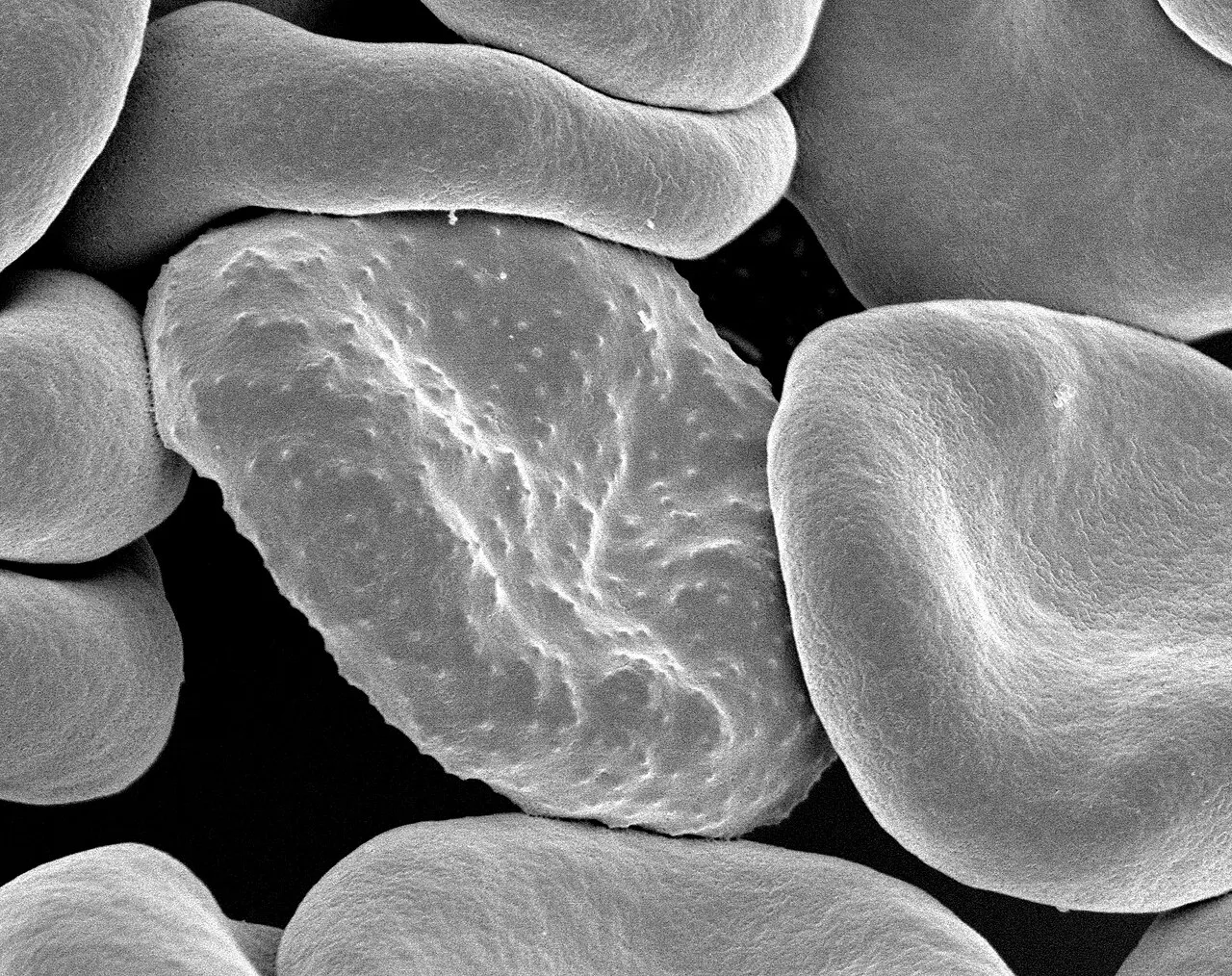
An international team of scientists, led by Kliti Grice at Curtin University, has reported finding traces of heme and what appear to be red blood cells in the hind limb bones of a Brazilian dinosaur, Aratasaurus museunacionali, which lived 115 million years ago.
The study, published in The Proceedings of the National Academy of Sciences, revealed that the bone was almost 80 percent heme, a component of hemoglobin that binds and transports oxygen.
The dinosaur, estimated to be about four years old, weighed 34 kilograms and measured 3.1 meters from head to tail.
Professor Grice said, 'It opens exciting new avenues for molecular-level paleontology, allowing us to investigate the evolution of blood, metabolism, and even activity levels in ancient animals.'
The team identified ellipsoid shapes in the bone that appeared to be about 15 microns in size, consistent with red blood cells.
The researchers believe the exceptional preservation resulted from the dinosaur's carcass being rapidly buried in a low-oxygen environment rich in microorganisms.
The study explained that the red blood cells had been mineralized by hausmannite, a mineral that acted as a natural time capsule, helping stabilize cellular structures and biological components, including amino acids associated with collagen protein.
The discovery provides confirmed chemical evidence of fossilized blood remnants, unlike previous studies that identified structures resembling red blood cells but could not conclusively establish their chemical nature.
The findings not only expand the fossil record of blood remnants but also provide a direct molecular window into the physiological characteristics of extinct animals, helping scientists better understand their biology and the environments in which they lived.
Professor Barbi said, 'Their identification still involves some interpretation, but it gives us a complete new type of evidence for studying dinosaur physiology, so how red blood cells connected with oxygen transport and metabolism.'
What this adds
The study adds to research about the preservation of dinosaur soft tissues, something once thought impossible over time periods of millions of years.
Background
Researchers discovered what appear to be fossilized red blood cells and heme biomolecules in the bones of a 115-million-year-old dinosaur in Brazil.
What's confirmed
- Scientists are testing whether they can fossilise human blood in microbial mats from Shark Bay, Western Australia.
- This suggestion came from scientists on June 9, 2015 in Nature Communications as they unveiled the Cretaceous cells and collagen they recently found.
- Scientists have discovered molecular traces of blood in the bone of a dinosaur that lived 115 million years ago, the Daily Mail reports.
- Published in The Proceedings of the National Academy of Sciences, mineralised red blood cells and intact heme biomolecules were discovered in limb bones of a 115-million-year-old theropod dinosaur known as Aratasaurus museunacionali, recovered in northeastern Brazil.
- A nondescript 115-million-year-old fragment of leg bone has yielded spectacularly preserved red blood cells, which may be the earliest ever found in dinosaurs.
- On rare occasions, researchers have even identified the ancient indentations of a dinosaur’s skin or feathers.
- A 115-million-year-old fossil dinosaur bone encased in a dense mat of microbes found in Brazil contains tiny structures resembling red blood cells, and molecular traces of blood.
- There’s a lot we can tell about life millions of years ago from fossils dug up today, but dry bones cannot give us the full story.
- Researchers believe this exceptional preservation resulted from the dinosaur's carcass being rapidly buried after death in a low-oxygen environment rich in microorganisms.
What's still developing
- "Still, that is quite remarkable considering the age of the fossil."
- Well-preserved fossils occasionally contain soft tissues like blood and collagen, a fact repeatedly documented since Mary Schweitzer’s controversial 2005 discovery of red blood cells and pliable blood vessels in a T.
- For example, still-soft, flexible material was recovered after demineralization of well-preserved bones from the Late Cretaceous dinosaur Tyrannosaurus 13, whereas proteinaceous material was found to be preserved in another dinosaur, Brachylophosaurus 14.
- Density-dependent colour SEM 21 obtained from the surface of minute pieces broken off from samples with tweezers revealed numerous low-density structures suggestive of soft tissue in sample NHMUK (Natural History Museum, London, UK) R12562, an ungual claw of an indeterminate theropod dinosaur ( Fig. 1 and Supplementary Figs 1,3,4 ).
- The cells she found were abundant: in a single slide, just a fifth of a millimetre wide, there were 20 blood cells.
- The fossils suggest a dinosaur measuring over 10 feet long and weighing about 75 pounds, but given its young age, A.
- “Any extraordinary claim needs extraordinary analytical evidence,” she said.
- A fractured rib from Scotty, the largest Tyrannosaurus rex skeleton ever discovered, is giving researchers a rare look at dinosaur biology from 66 million years ago.
- "Scotty's rib contains a vast network of mineralized blood vessels that has never before been observed in a fossil." Soft tissues such as blood vessels usually disappear during decomposition long before fossilization is complete.
- UCLA scientists have perfected a method to measure a dinosaur’s temperature from its teeth and found that T. rex was a relatable 97 degrees Fahrenheit — almost the same as humans.
- While the presence of fossils in Alaska suggested that this prehistoric ancestor of birds was already on the evolutionary path from cold-blooded reptile to warm-blooded avian, there wasn’t a way to take T.
- A 2020 clumped-isotope study of dinosaur eggshells found elevated temperatures across all three major dinosaur groups.
Sources
- ABC News & Headlines – Australian Broadcasting Corporationlink
- ASHARQ AL-AWSAT Englishlink
- Answers in Genesislink
- BGNESlink
- Discover Magazinelink
- IFLSciencelink
- Mirage Newslink
- National Geographiclink
- New Atlaslink
- New Scientistlink
- Popular Sciencelink
- Sci.Newslink
- ScienceAlertlink
- The Conversationlink
- The Guardianlink
- qz.comlink
- Science News — video link